


T1D Guide
T1D Strong News
Personal Stories
Resources
T1D Misdiagnosis
T1D Early Detection
Research/Clinical Trials
Diabetes Connections’ Stacey Simms Hosts Moms’ Night Out
Stacey Simms, longtime host of Diabetes Connections and a prominent advocate in the diabetes community, joins T1D Strong to discuss the challenges of parenting a child with diabetes. She shares how her podcast has evolved over the years and why she created Moms’ Night Out—a space for T1D moms and women living with type 1 to connect, recharge, and explore the latest in diabetes care.
.webp)
With more than a decade at the helm of her award-winning diabetes podcast, Simms reflects on the shifting conversation around type 1, including mental health, early screening, and the critical role mothers often play in managing their child’s care. She also shares how her son Benny’s diagnosis at just 23 months old reshaped the course of her life.
About Stacey Simms
Stacey Simms began her career as a television health reporter and news anchor before transitioning to radio, where she hosted her own program. When her son Benny was diagnosed with type 1 diabetes (T1D) at just 23 months, Simms turned to blogging to process and share her family’s experience. That path eventually led her to launch the long-running podcast Diabetes Connections and found Stacey Simms Media.
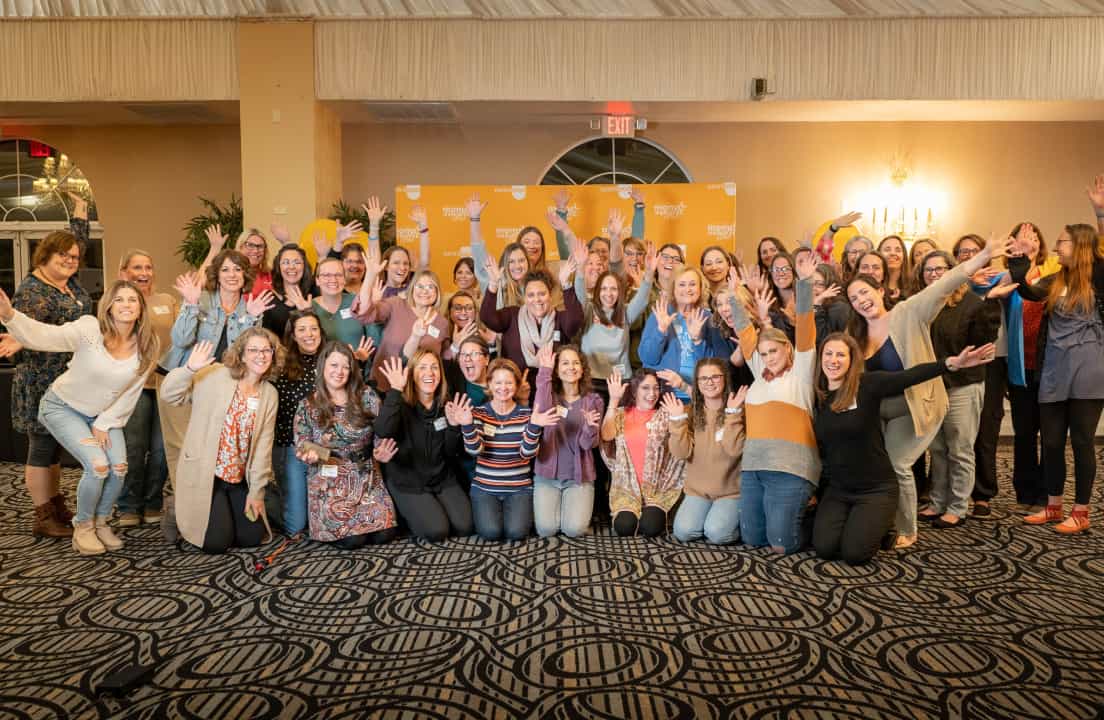
She has since authored two books about her journey as a T1D mom and, in 2023, founded Moms’ Night Out, a unique event designed to spark honest conversations, foster meaningful relationships, introduce the latest diabetes technologies, and give mothers a well-deserved break.
Benny’s Diagnosis
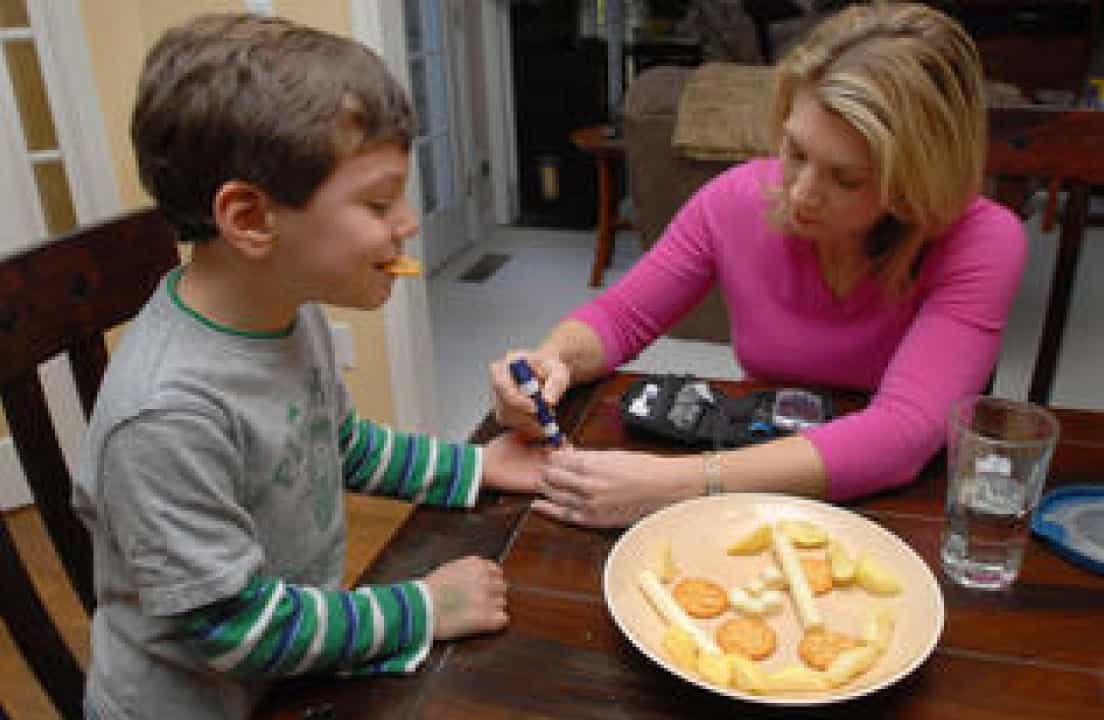
With no close family relatives with type 1, Benny’s diagnosis as a toddler came as a shock to Simms and her husband, Slade. Fortunately, Simms recognized the signs: frequent urination and increased thirst. Her mother also noticed that he had lost weight.
“We went to the pediatrician, and his fasting blood glucose was 80, which puzzled everybody, but his A1c was 11.5. They sent us to the hospital for three days for education and then back home. Congratulations, here’s your new life.”
As a TV news health reporter, Simms was familiar with type 1 and had established many connections. “We were welcomed in immediately. I had a community.”
At the time, Simms was doing a morning radio show. After explaining that Benny now had type 1, she decided to start a blog to educate listeners. This led to future speaking engagements and a community blogger badge from the Animas Corporation.
Simms eventually left her morning radio job after 13 years due to scheduling conflicts with her family’s lifestyle, then transitioned to podcasting.
Enter Diabetes Connections
Even before the podcast rage, Simms was an avid listener. “I always loved podcasts, and there have always been diabetes podcasts, like since the beginning. But there weren’t any shows doing what I wanted to hear – news, information and storytelling.”
“I’d be walking my dog and yelling, ‘Follow up on that!’ or ‘You know, that’s not true!’”
Rather than waiting for the perfect podcast to materialize, she decided to launch her own.
What Simms enjoys most is bringing her community’s real-life questions directly to the CEOs of diabetes and tech companies, holding decision-makers accountable in a way few others do.
“I wanted to provide a Fresh Air-type show like NPR for the diabetes community, where you would hear the CEO of a tech company one week, a celebrity with type 1 another week, and an average person, telling their story. And I think we’ve done that.”
In June 2026, Diabetes Connections will mark the show’s eleventh anniversary. When Simms started, she said she had no intention of doing it for this long. “I just thought, this sounds like a show I want to hear, so I’m going to make it.”
Today, the award-winning weekly podcast provides news, resources and inspiration for people touched by type 1 and type 2 diabetes (T2D). Simms interviews experts, advocates, and everyday people, offering a mix of personal stories with updates on technology and research. Diabetes Connections is available on Apple Podcasts, Spotify and the Diabetes Connections YouTube channel.
Author of The Worst Diabetes Mom Ever
Early in her career, Simms wrote a cookbook for charity, I Can’t Cook, But I Know Someone Who Can. The collaboration of recipes by local chefs raised funds for Breakthrough T1D (Formerly JDRF). Consequently, the publishers encouraged her to write a book about diabetes, but the timing wasn’t right.
Around 2015, with the advent of CGMs and Night Scout, Simms explained that there was a proliferation of social media posts in which parents compared their kids’ blood glucose numbers. “Look at that straight line. I’m a bad mom because I don’t have a straight line. I saw more and more of this dialogue.”
Simms recalled a conversation where she said to someone, “These kids are going to be okay. All the studies show that with proper medical care, a parent who’s engaged, and modern technology, they’ll do great. It doesn’t all come down to how low the A1c is.”
She remembered joking at the end of the exchange, “Well, I must be the world’s worst diabetes mom.” And just like that, she realized it would make the perfect book title. “That’s really what I’m all about,” she explained. “Showing parents that you don’t have to be perfect. With type 1 diabetes, perfection isn’t possible and chasing it will only stress you out and put pressure on your child.”
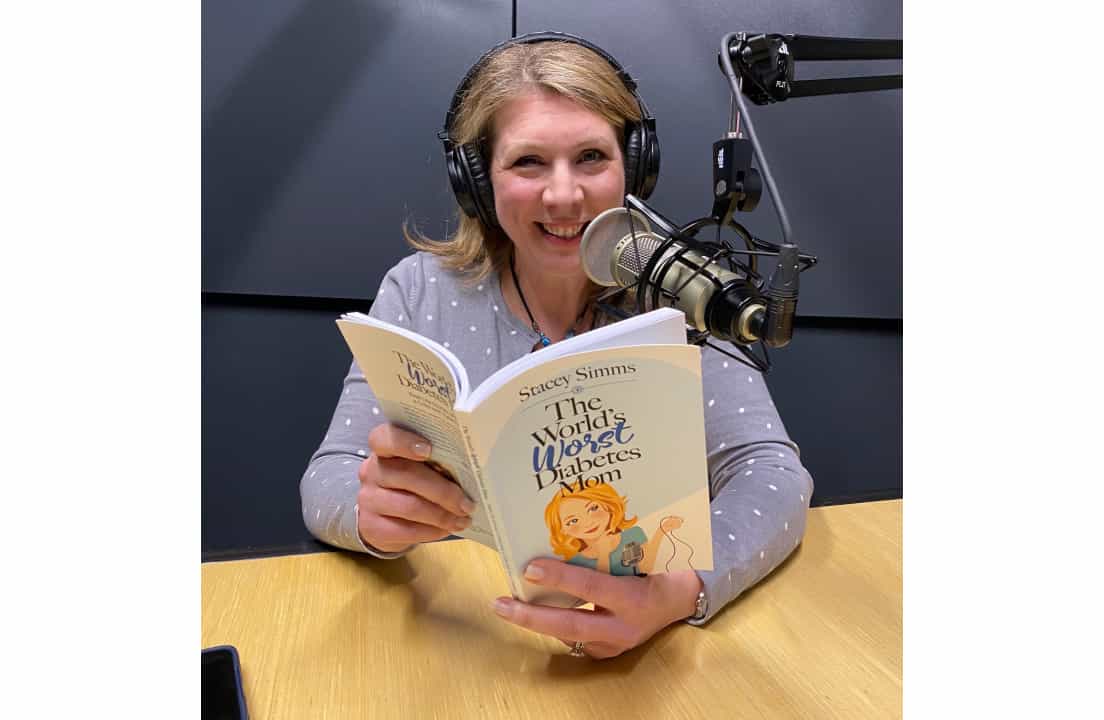
Simms books, The World’s Worst Diabetes Mom: Real-Life Stories of Parenting a Child with Type 1 Diabetes, and Still The World’s Worst Diabetes Mom, can be found on Amazon and Audible.
Support for Diabetes Moms
Over the years, Simms has conducted more than 700 interviews with elite athletes, prominent media figures, and leaders in the diabetes space, including NFL tight end Mark Andrews, ESPN insider Adam Schefter, and Peloton VP and instructor Robin Arzón. But one that stuck with her was an interview with Dr. Stephen Ponder, a pediatric endocrinologist who has lived with type 1 diabetes for 55 years. He revealed that children with type 1 diabetes do well when their mothers feel supported by family and medical staff, a finding confirmed by studies.
“He said, ‘It has nothing to do with technology, it’s not where you live, it’s not how much money you make, it’s all about how supported the mother is. If she feels like she’s got a team and a community, then that kid is going to do great.’”
While fathers are certainly affected, research from the National Institutes of Health (NIH) shows that mothers more often assume the primary caregiving role, which can intensify feelings of burnout, isolation, and guilt.
Simms emphasized that while she would love to create similar events for other groups, she believes moms specifically need this kind of support. “I would love to see an organization or a meetup for dads, but I’m a mom of a kid with type 1. I’ve been to a billion diabetes events since 2006 and always felt like I needed something more.”
Moms’ Night Out
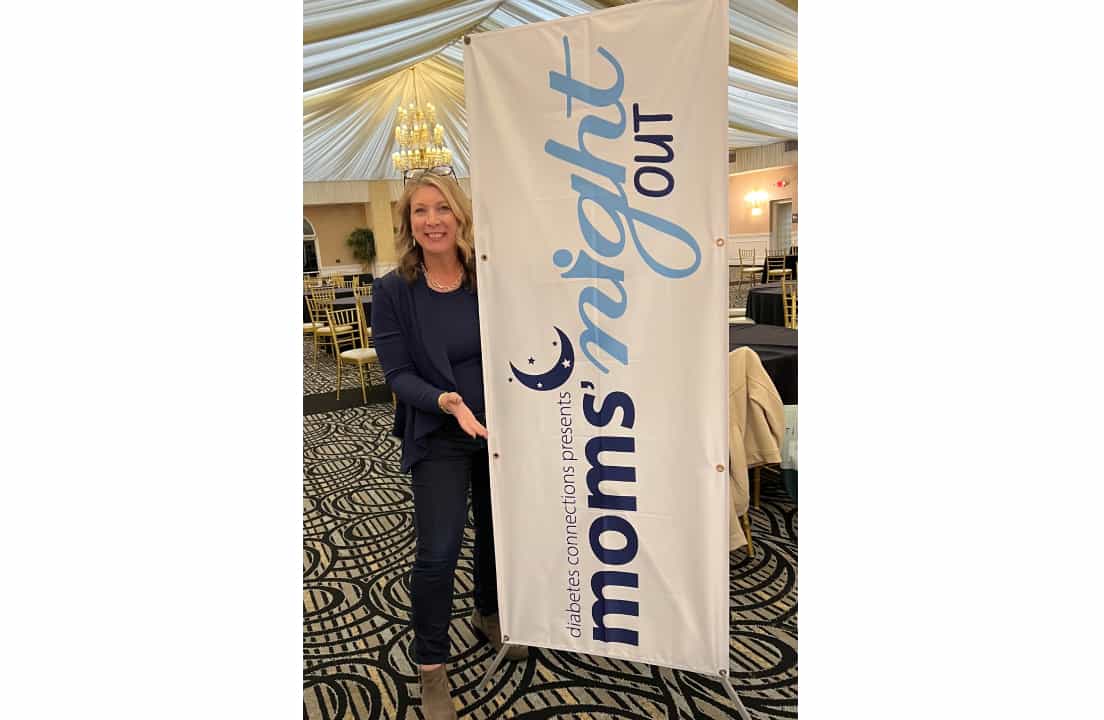
Her own experience and years of listening to personal stories motivated Simms to create Moms’ Night Out, a traveling supportive community where mothers of children with type 1 and type 1 women enjoy socializing and educational talks on technology and mental health.
Simms’ first Moms’ Night Out took place in 2023, a few years after COVID, when people were seeking in-person gatherings again. Simms said the events are similar to Breakthrough T1D Summits but are geared toward mothers and women with type 1. “I didn’t realize in the beginning how much we’d be learning from them.”
The two-day conference features dinner and cocktails, vendor tables and special presentations from diabetes experts. Attendees learn about the latest T1D technology, with insulin pump and CGM manufacturers displaying new tools, as well as sessions with mental health professionals.
“My goal is to connect everybody locally. We ask Breakthrough T1D to come, some of the diabetes camps and other local community organizations, so when you leave, you have contacts and should know what’s happening with diabetes in your town.”
“Moms’ Night Out may be the best thing I’ll ever do,” said Simms, who’s received feedback from mothers through the years, telling her how much the event meant to them.
“The demand is there, and the attendance keeps growing. I try to pick a city where I know somebody, I know the organization a little bit, and I want to go there. Geographically, it makes sense because we try to spread them out during the year.”
Moms Night Out 2026 Schedule:
- Washington, D.C. (February 20-21)
- Nashville (March 6-7), TN
- Detroit, MI (September 18-19)
- Seattle, WA (October)
It’s Simms’s fourth year doing the event series, and she has no plans to stop. With connections across the country, several cities have shown an interest. Fortunately, Simms’ husband, who recently retired, can share the workload. “He’s basically come on board as my Event Planner Plus. We were in three cities the first year, and then four in 2024, four in 2025 and four this year.”
What’s Changed and What’s Remained in the Type 1 Conversation
When asked how the diabetes conversation has evolved through the years, Simms said, “It’s changed mostly around technology—the advent of CGMs (continuous glucose monitors) and time-in-range, and now it’s shifting to GLP-1s.”
“One of my predictions for 2026 is that we will be hearing more and more about type 1 with GLP-1s, which is an easy prediction to make, because we were already hearing it last year, but I do think this year we’ll get a conclusive study and possibly a filing for the FDA, which would be great.”
“I think what hasn’t changed is access to technology and affordability. Certainly, the price of insulin has come down in many ways, and it varies by state. It’s still a big issue, but it has kind of slipped to the background as these companies focus more on GLP-1s.”
Simms added, “What hasn’t really changed, except for talking about it more, is mental health, which is a huge part of type 1 diabetes. I’m hoping that continues to be part of the conversation. As a parent, and this is another thing about Moms’ Night Out, we don’t have diabetes, so we’re doing our best to help our kids through an experience, but we don’t know what this feels like: fitting in with their friends, the fact that they’re wearing things on their bodies their entire lives. What does that do? How does that feel?”
T1D Screening
Another change Simms has seen is the discussion on T1D screening. “Now we have clinicians talking about how type 1 is being redefined into stages, and the UK is talking about screening everybody now.” Simms had one mother attend Moms’ Night Out, who said her child had the autoantibodies, but they hadn’t progressed to needing insulin yet.
Studies now show that detecting type 1 diabetes at its earliest stages leads to better health outcomes and lower A1c levels. “Benny was not diagnosed with DKA (diabetes ketoacidosis), thankfully. And as scary as that is to have to go through, more studies show that if you’re diagnosed with DKA, your blood sugars are more difficult to control.”
Learn, Laugh and Connect
Parenting a child with type 1 diabetes requires around-the-clock vigilance, and that constant strain can take a toll, fueling exhaustion, chronic anxiety, and emotional fatigue, particularly for mothers.
As a type 1 caregiver, it’s important to surround yourself with a supportive community, both online and in person. Check out the Diabetes Connections podcast, and find a Moms’ Night Out event near you. “It’s tailor-made for moms,” Simms said. “The perfect chance to learn, laugh, and connect.”


.webp)
.jpeg)


















.jpg)






.jpg)




%20(1).jpg)




.jpg)
.jpg)
.jpg)
.jpg)
.jpg)
.jpg)
.jpg)
.jpg)
.jpg)
.jpg)
.jpg)
.jpg)
.jpg)
.jpg)
.jpg)
.jpg)

.jpg)
.jpg)
.jpg)
.jpg)
.jpg)
.jpg)

.jpg)

.jpg)
.jpg)

.jpg)
.jpg)

.jpg)
.jpg)



.jpg)
.jpg)
.jpg)


.webp)
.svg)