


T1D Guide
T1D Strong News
Personal Stories
Resources
T1D Misdiagnosis
T1D Early Detection
Research/Clinical Trials
Streamlining Type 1 Diabetes Education with animaT1D
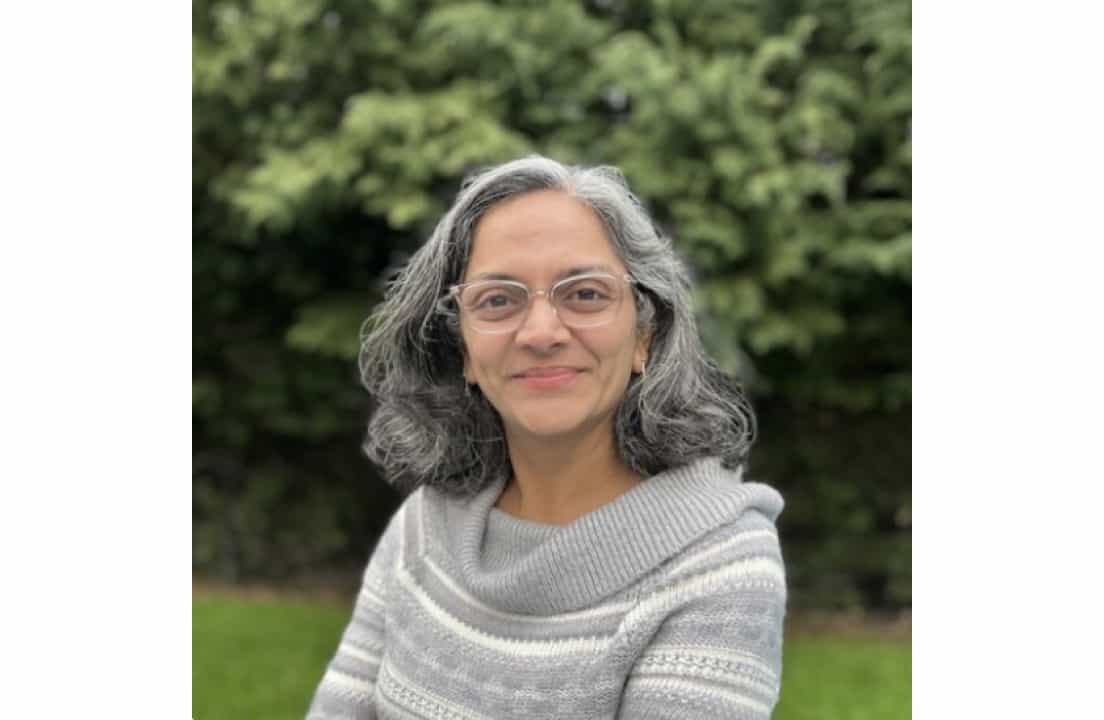
Pediatric endocrinologist Radhika Purushothaman, MD, and cofounder Molly Barry, mom to a neurodivergent teen with type 1, identified a critical gap and filled it brilliantly with their nonprofit, animaT1D. Through short, scripted stories (in English, Spanish, and several other languages), they explain visually what type 1 diabetes is, how to manage it, and its many components, from burnout and screening to exercise and insulin therapy.
.jpg)
.webp)
The animated series’ mission is to pare down medical knowledge and demystify type 1 diabetes (T1D) through engaging videos created and written by Purushothaman, a pediatric endocrinologist with nearly 20 years of experience.
The videos are designed to empower individuals and families with the essential tools to thrive.
In addition to the fabulous content created by animaT1D, Dr. Purushothaman also discusses the advantages and importance of T1D screening.
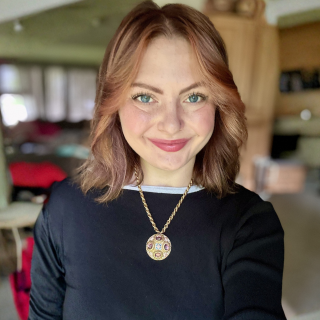
Meet Radhika Purushothaman
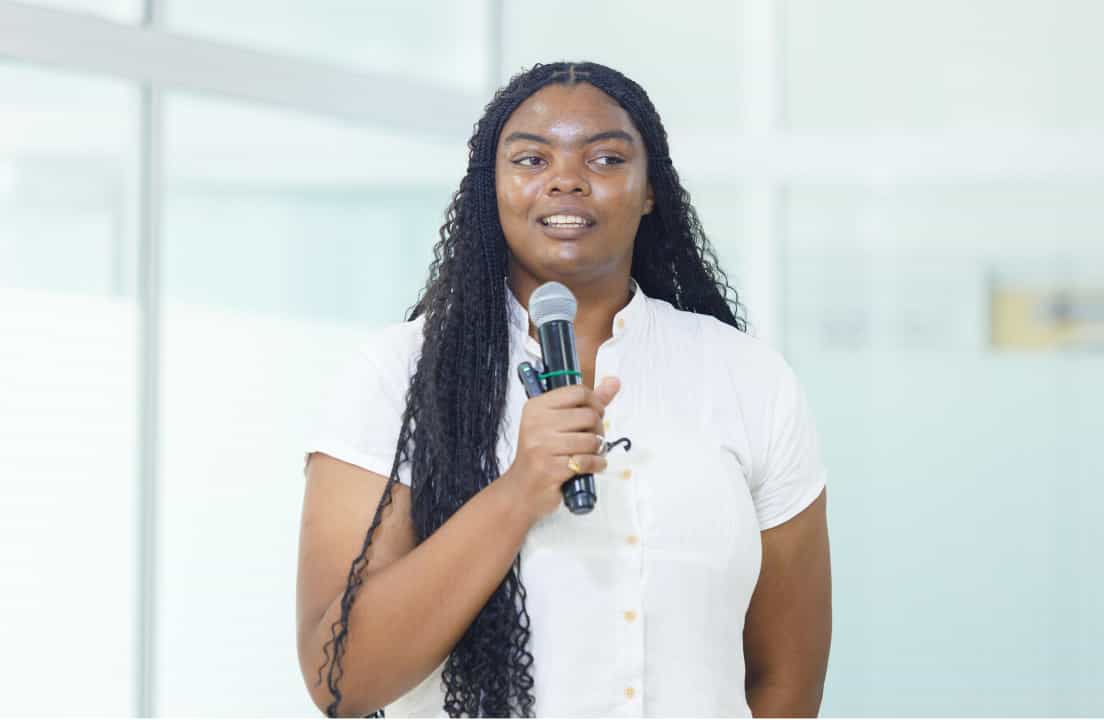
Dr. Radhika Purushothaman, MD, began her career in India, inspired by her mentor, an adult endocrinologist. “The world of endocrinology was fascinating to me, but there weren’t many pediatric endocrinologists in the country,” she said. “We didn’t have structured programs; many general practitioners and adult endocrinologists doubled up.”
Today, Purushothaman works at the Randall Children’s Hospital in Portland, Oregon. “We see about a thousand patients with T1D in our practice. I don’t have any personal connection with type 1, but I’d like to think that all the families I see are my personal connection.”
How animaT1D Came to Life
Cofounder of animaT1D, Molly Barry, reached out to Purushothaman’s practice seeking help for her neurodivergent daughter with T1D. Neurodivergent children and teens may experience sensory processing differences and learning disabilities. Barry explained how the diabetes material they received wasn’t conducive to learning. Her daughter was highly functioning and managed some elements of her diabetes independently, but not everyone learns the same way.
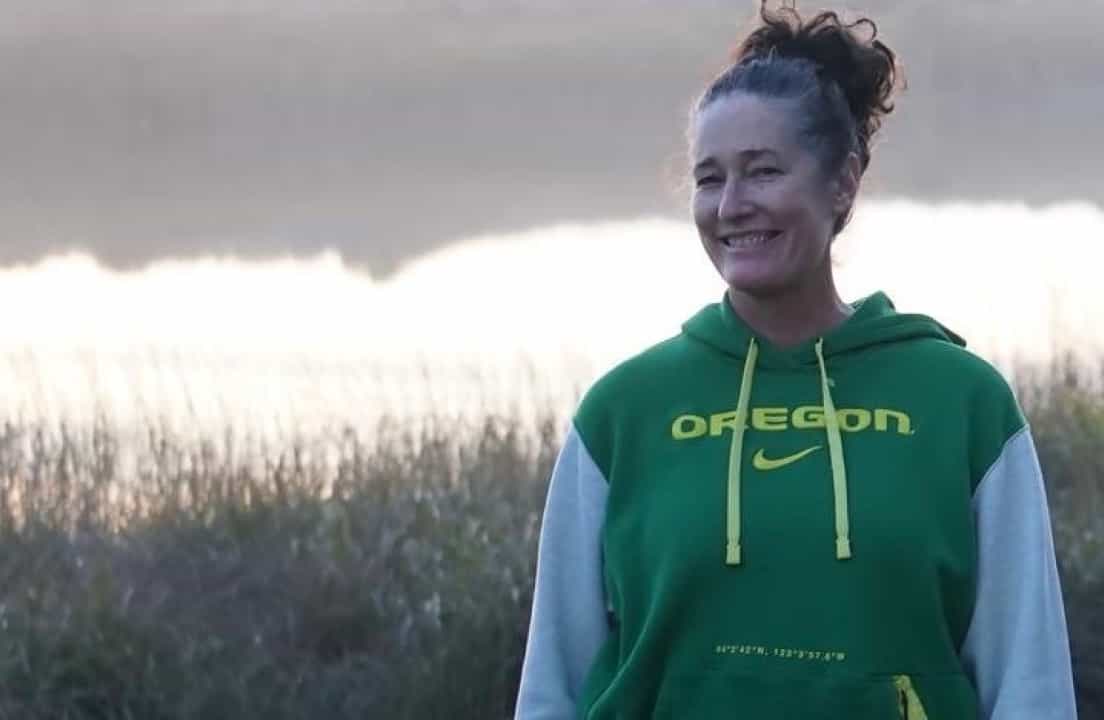
In fact, around 65% of the general population, including children, are visual learners, meaning they learn best through images, diagrams, and videos. What’s more, some sources suggest even higher percentages for school-aged kids (80-85%).
“The creation of animaT1D is very serendipitous, actually,” said Purushothaman. “A colleague introduced me to Molly. He knew that I was always one to think outside the box, and he could tell this mom was too. She’s super savvy and very proactive.”
In the fall of 2023, the two connected. “I asked her if money wasn’t an object, and you had all the resources, what would that look like for your daughter? And she kept hitting on the phrase ‘visual stories.’ Of course, making that happen was the harder part,” Purushothaman said. “We weren’t even thinking of doing this ourselves when we started.”
Purushothaman reached out to other institutions, which confirmed the need, but the project sounded too expensive. The founders met one medical animation company that charged $15,000 for a five-minute video and would keep the copyright.
Purushothaman researched websites like Canva but couldn’t find the right look and sound until she discovered a DIY website that provided the basics, so she took over from there, creating the videos for their English and Spanish channels herself.
In January 2024, the two founders ran a video creation by Barry’s daughter, who confirmed they were on the right path.
animaT1D is Not Just for Kids
Since 60-70% of people identify as visual learners, adults are invited to engage as well. As some of the subject matter might be too complex for kids, parents are encouraged to watch the shorts with their children. The video library provides subjects like:
- Active insulin time
- How protein gets converted to glucose
- What causes the rise in sugar hours later
- How do you dose for pizza
- How to get involved with a diabetes camp
A Grassroots Effort
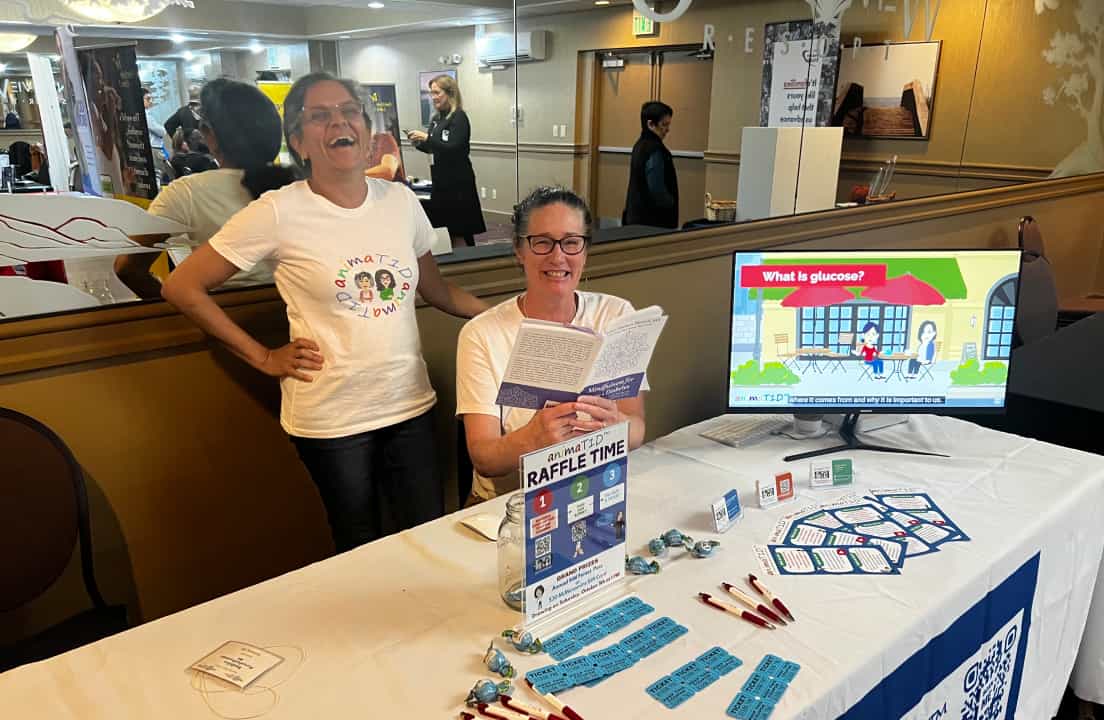
Purushothaman and Barry are actively spreading the word, personally spearheading animaT1D’s marketing efforts. You can find the videos on YouTube with links on social media. “We’re partnering with organizations, like our local Breakthrough T1D chapter, Breakthrough T1D Español, and we’ll be at the Children with Diabetes conference in Orlando, FL, in 2026.
The Global Reach & Spanish animaT1D
The Spanish animaT1D channel has two bilingual diabetes educators. “My Spanish is decent, but I wouldn’t bank on it, so I translate it first, make the characters culturally appropriate and then our educators will look at it and give me feedback. animaT1D is measuring the impact of their videos in the US, Costa Rica and India.
Also, animaT1D has two videos made in Amharic, a language spoken in Ethiopia. And that was a collaboration with Life for a Child, a global program that supports youths with diabetes in under-resourced areas.
“Our next step is to create a beginner/starter playlist in English first, then translate it to Hindi for the Indian population, and also to Spanish. We’ve been discussing projects with folks in Kenya and Tanzania, but that’s taking its time,” Purushothaman said.
Among the broad range of topics, animaT1D addresses the critical issue of T1D screening.
The Importance of T1D Screening
When asked why screening for T1D matters, Purushothaman gave multiple reasons. “Let’s break it down to two parts. You’ve got population screening, and you’ve got screening for the higher risk group, which is folks with other autoimmune conditions and family members, who have a 15 times higher risk.”
Purushothaman confirmed that having other autoimmune conditions significantly increases the risk of developing type 1.
Families Hesitant to Screen
Purushothaman stressed that most importantly, screening decreases the risk for the life-threatening condition of DKA (diabetic ketoacidosis), which has an incidence rate of 40-60% in newly diagnosed cases in the U.S. Studies have shown that screening programs reduce the incidence to 3-4%.
More Screening Benefits
Besides avoiding a hospital admission and avoiding being super sick, “Screening actually sets you up for a less rocky course. When it’s not DKA, it reduces a lot of emotional stress off the bat. That’s the main thing that I feel is important,” she added. “If one of your children comes in with DKA, you can see the value of screening the others.”
“There are enough studies that say if you catch it early and have a lower A1c at diagnosis, it projects a lower A1c later. So you’re just setting them up with a softer takeoff,” she added.
Advantages like teplizumab (Tzield)
Purushothaman added a second reason for screening: disease-modifying therapies (DMTs), including teplizumab and other DMT agents. The FDA is reviewing Sanofi’s application to expand the use of Tzield (teplizumab) for children as young as one year old with Stage 2 T1D to delay the disease’s progression. The decision is expected by April 29, 2026.
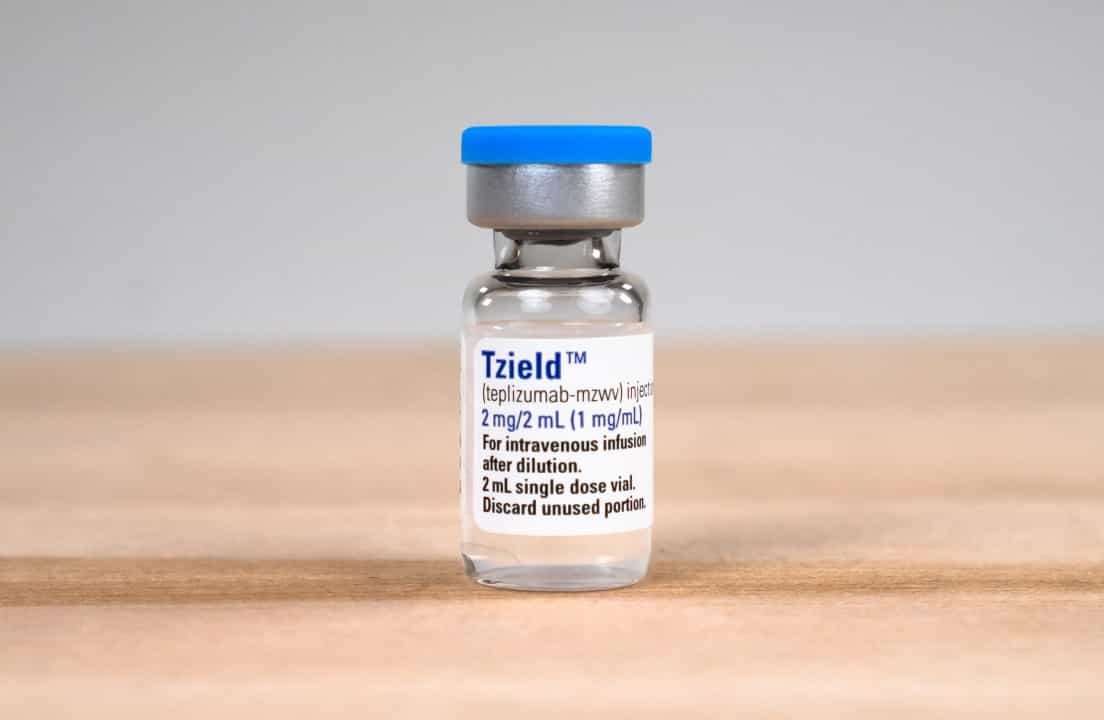
“There’s a very narrow window when they can qualify for and receive Tzield, or explore clinical trials that they may meet criteria for that are currently recruiting.”
Click here for animaT1Ds easy screening steps to follow, and here is a video about screening first-degree relatives. The founders hope to launch a follow-up video for families returning antibody-positive and a third video for families returning antibody-negative.
Setting Up a Screening Clinic
The Randall Community Hospital is the only center in Portland that can do teplizumab infusions for children. “We created the logistics, and we have the order set, and our day treatment unit staff are trained, so we have all the machinery in place,” Purushothaman said.
The Tzield Process
“The Tzield therapy is a 14-day infusion. So it’s not just a one-and-done, here’s a pill, or here’s a one-day injection. It really is a commitment,” said Purushothaman. “With young kids, we’d probably have them do it in the hospital. They won’t need to be in the hospital for 14 days, but you come in for your 4-hour infusion, go home, and come back the next day. 14 days of your life need to be set aside for it.”
Global Disparity & the Future of T1D
We have a lot of collaborations with animaT1D, in Costa Rica and India, and you can tell that there’s still a big disparity,” Purushothaman said. “In the U.S. and several countries in Europe, they’re talking about a cure, infusions, and disease-modifying agents, but access to insulin is still a struggle for many countries like India and Pakistan.”
“My hope is for much greater parity. Access to insulin has to be unquestioned, and hopefully, type 1 diabetes will be cured one day, and we don’t have to worry about this at all.”
“As much as I want it cured, I also want the peace of mind for families that if they need supplies, they should be able to get it—be it here, be it India, Pakistan, wherever. They shouldn’t have to worry about whether they have their next vial of insulin ready. That’s my vision.”
.jpg)
To follow animaT1D, and learn more, follow the links:


.webp)

.jpeg)










.jpg)






.jpg)


.jpg)


%20(1).jpg)


.jpg)

.jpg)
.jpg)
.jpg)
.jpg)
.jpg)
.jpg)
.jpg)
.jpg)
.jpg)
.jpg)
.jpg)
.jpg)
.jpg)
.jpg)
.jpg)
.jpg)
.jpg)


.jpg)
.jpg)

.jpg)
.jpg)
.jpg)
.jpg)
.jpg)


.webp)
.svg)