


T1D Guide
T1D Strong News
Personal Stories
Resources
T1D Misdiagnosis
T1D Early Detection
Research/Clinical Trials
IDF‑ISPAD Policy Brief: Detecting Type 1 Diabetes Early
Type 1 diabetes (T1D) is a serious condition that often goes unnoticed until symptoms become severe. To address this, the International Diabetes Federation (IDF) and the International Society for Pediatric and Adolescent Diabetes (ISPAD) released a new policy brief emphasizing the importance of early detection. Their main message is simple but crucial: spotting T1D early can save lives.
.jpg)

The IDF-ISPAD Policy Brief
The policy brief, Detect Early, Act Early: Improving Diagnosis of Type 1 Diabetes, explains why early detection matters, how families and healthcare providers can take action, and what strategies can prevent serious complications. It provides practical recommendations to help communities, health systems, and policymakers support people at risk before severe symptoms appear.
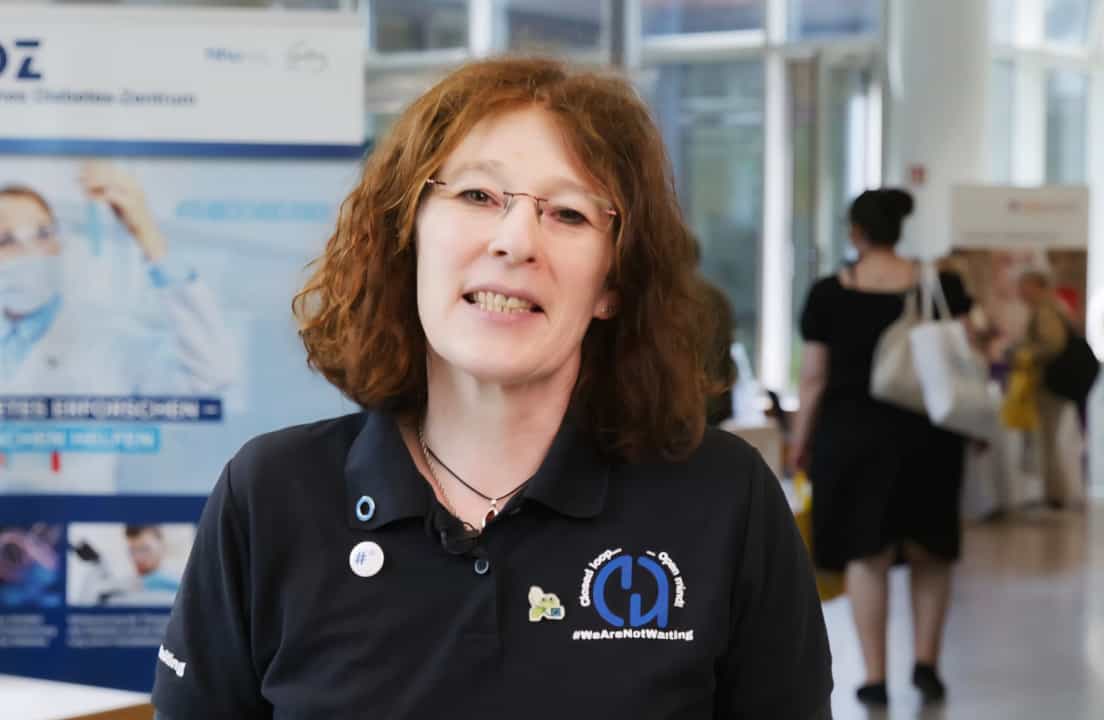
On February 6, 2026, the International Diabetes Federation and the International Society for Pediatric and Adolescent Diabetes hosted a webinar to launch a new brief on type 1 diabetes (T1D). The event brought together medical experts, advocates, and people living with T1D, including Ana Álvarez, Nkiruka Okoro, and Anita Sabidi. I also participated in the discussion as a person living with T1D.
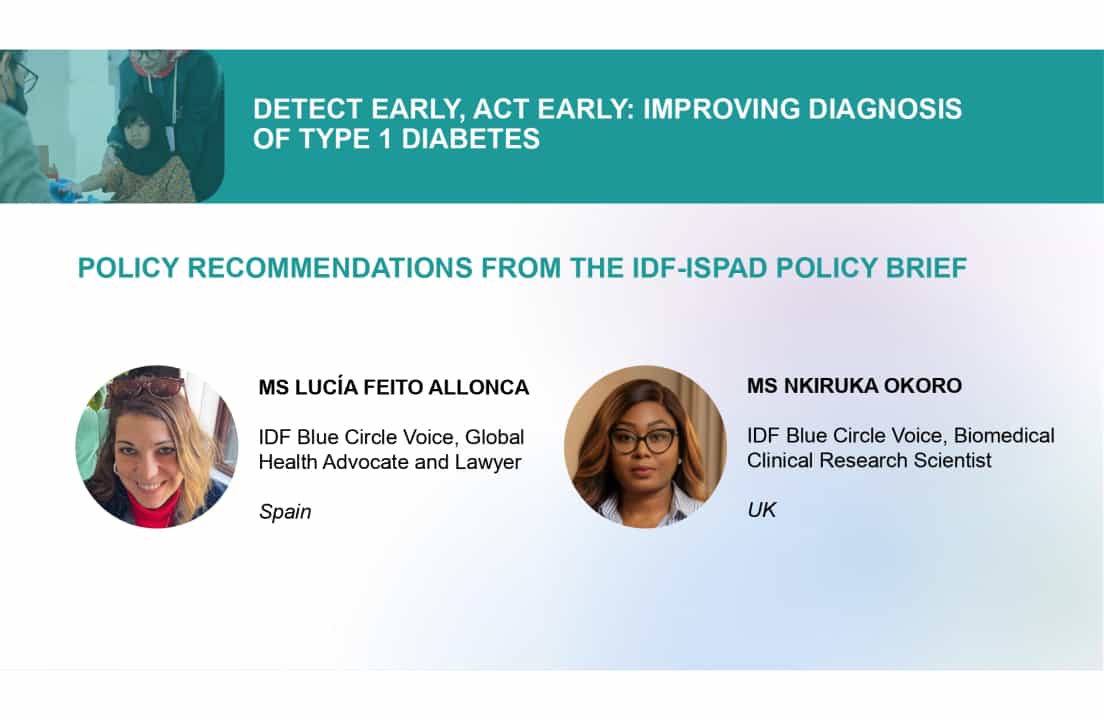
The panel shared insights on early detection, screening methods, and strategies to support individuals and families affected by T1D. The discussions highlighted the serious consequences of delayed diagnosis and emphasized how early recognition can make a profound difference in people’s lives.
One of the most moving moments came from John Story, who spoke about his daughter Lyla. Tragically, Lyla died from diabetic ketoacidosis (DKA), a life-threatening complication that occurs when type 1 diabetes goes undiagnosed, and the body lacks insulin, causing dangerously high blood sugar and ketone levels. Her story underscores the urgent need for awareness, timely diagnosis, and proper medical care for children.
In response to this tragedy, Lyla’s family started Lyla’s Law, a campaign aimed at improving early detection of T1D in children. The law proposes routine testing for children who show warning signs—often summarized as the “4 Ts”.
Detailed Breakdown of the 4 Ts:
- Toilet: Increased frequency of urination, or a child suddenly starting to wet the bed or having heavier diapers.
- Thirsty: Excessive, unquenchable thirst.
- Tired: Persistent fatigue and having no energy.
- Thinner: Losing weight without trying, or looking thinner than usual
These simple tests, like a finger-prick blood glucose or urine test, could help healthcare providers identify diabetes before it reaches a dangerous stage. The campaign has gained widespread public support in the UK and is set to be debated in Parliament, reflecting a growing push to prevent delayed diagnoses and protect children from preventable complications of type 1 diabetes.
What is a Policy Brief and Why it Matters
A policy brief is a concise report designed for decision-makers, healthcare authorities, and advocates. Unlike clinical guidelines, it does not instruct doctors exactly how to treat patients. Instead, it explains why an issue matters and recommends practical steps to improve outcomes.
This brief is designed to help people spot the early signs of type 1, encourage those who might be at risk to get screened, and make it easier for everyone to access the care they need quickly and efficiently.
By catching T1D early, we can prevent serious health emergencies, reduce complications, and give people a much better chance to live healthy, full lives from the very start. It’s all about awareness, timely action, and getting the right support when it matters most.

Why Early Detection of T1D Is Critical
Type 1 diabetes occurs when the immune system attacks insulin-producing cells in the pancreas, which are responsible for regulating blood sugar. Without insulin, blood sugar rises to dangerous levels, potentially leading to DKA or long-term complications in organs like the kidneys, heart, and eyes.
Data from the Centers for Disease Control and Prevention (CDC) show that many children and adults are only diagnosed after severe symptoms appear. This means that with earlier detection, treatment could have started sooner, reducing risks and improving long-term health outcomes.
Early detection allows people to begin insulin therapy promptly, monitor their blood sugar, and adopt lifestyle strategies to manage the disease effectively. The benefits are significant: fewer hospitalizations, fewer emergency situations, and better quality of life over time.
Recognizing Early Signs
T1D develops slowly in stages over months or even years before symptoms become obvious, so it’s important for families, teachers, and healthcare providers to know what to watch for. Early signs often include excessive thirst, frequent urination, fatigue, unexplained weight loss, and changes in mood or irritability. Spotting these signs early can help prevent serious complications like diabetic ketoacidosis.
In addition, healthcare systems can use autoantibody screening to identify people at risk even before symptoms appear. Autoantibodies are proteins that show the immune system is attacking the pancreas, which can help predict who might develop type 1 in the future.
Monitoring those at high risk allows doctors to step in early and guide families on preventive care.
Recommendations from the IDF‑ISPAD Policy Brief
The brief outlines the following recommendations to build best practices and create sustainable change:
1. Improve Access to Care, Treatment and Technologies
The goal is to make sure that everyone with diabetes can access the medicines and devices they need, such as insulin, glucose meters, and test strips, at affordable prices. It also aims to provide emotional support and stress management, including counseling, to help people newly diagnosed with type 1 diabetes and their families cope with the condition.
Health insurance or subsidy programs should cover these treatments to prevent high out-of-pocket costs and protect patients’ finances. To improve care, regional specialized centers would offer advanced treatment, coordinate complex cases, and provide ongoing training for healthcare professionals.
Finally, in countries with universal diabetes coverage, teplizumab (Tzield) should be added to the national list of essential medicines, and continuous glucose monitoring (CGM) should be supported for people living with type 1 diabetes.

2. Strengthen Public and Professional Awareness
Mass media campaigns can help raise awareness about the symptoms of type 1 diabetes and the importance of early diagnosis. Schools, workplaces, and community organizations can partner to improve education, reduce stigma, and prevent discrimination.
Healthcare workers should also have ongoing professional development to ensure accurate diagnosis and effective treatment.
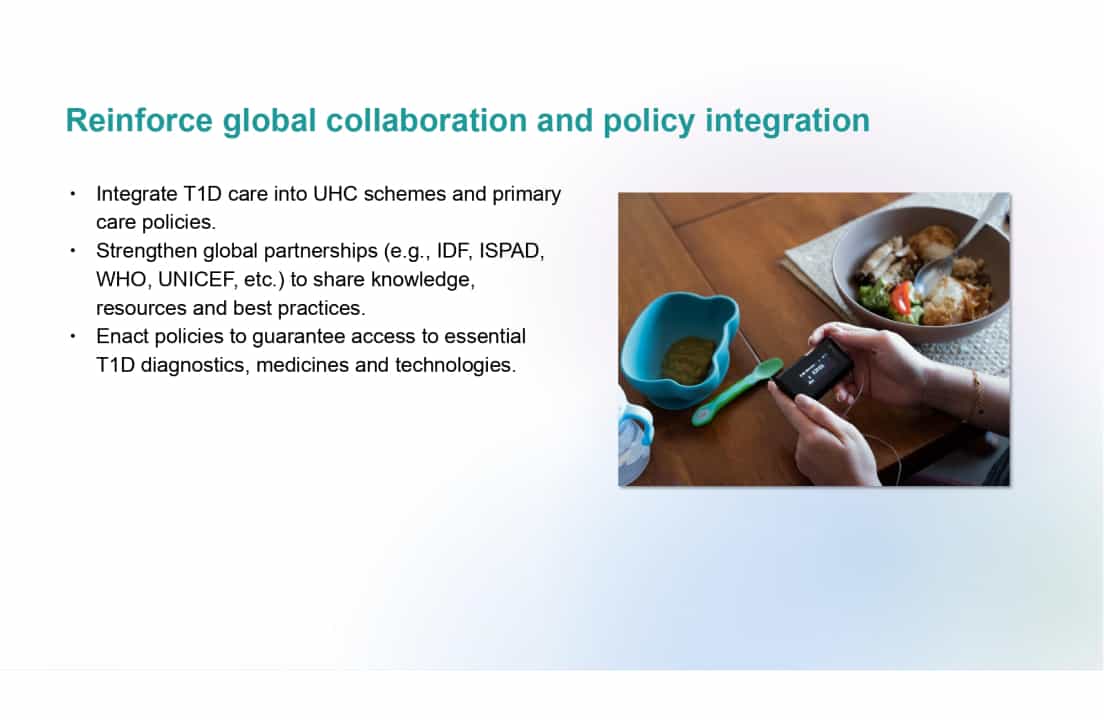
3. Reinforce Global Collaboration and Policy Integration
The brief asks for integration of T1D care into universal health coverage schemes and primary health care policies by strengthening global partnerships, such as IDF, ISPAD, WHO, UNICEF, to share knowledge, resources and best practices and enacting policies to guarantee access to essential type 1 diagnostics, medicines, and technologies.
4. Invest in Research and Innovation
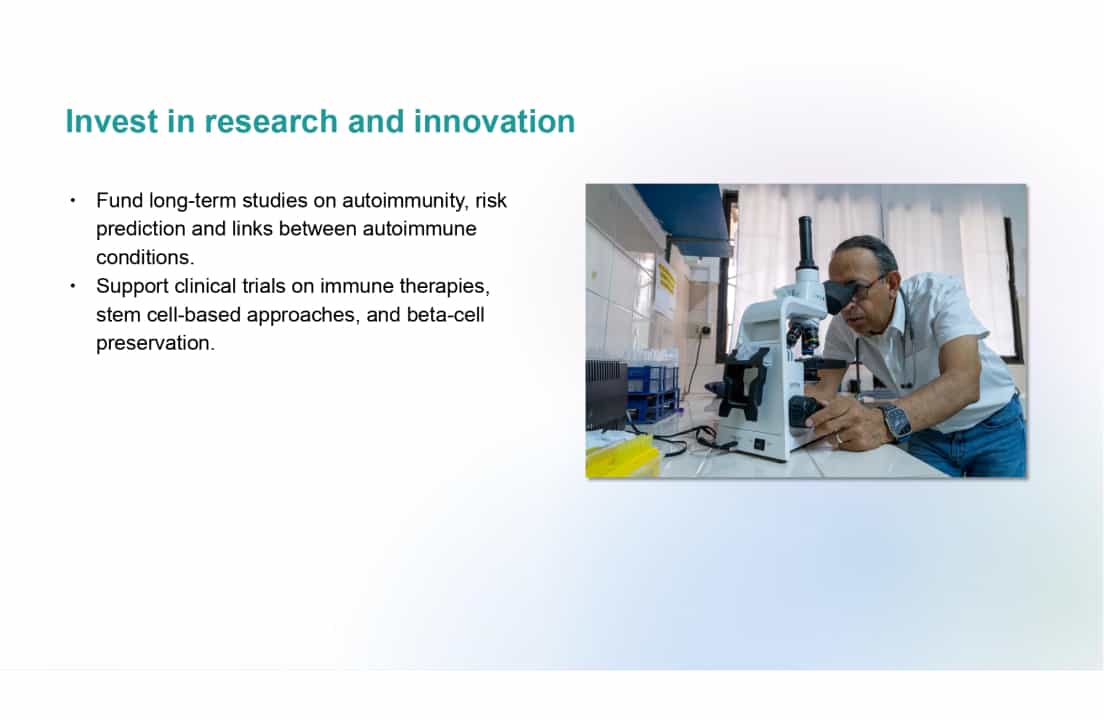
Funding long-term studies can help researchers understand how the immune system attacks the body in different ethnic groups, which could improve tools for predicting who is at risk and clarify the connections between autoimmune diseases. Supporting clinical trials for new treatments, including therapies that adjust the immune system, stem cell approaches, and other emerging methods, could help delay or even prevent the onset of type 1 diabetes.
5. Expand Early Detection and Screening
Regional and national programs can help catch type 1 diabetes early by screening for islet autoantibodies, especially in families at higher risk. Using electronic health records and outreach systems can make it easier to identify, track, and follow up with people in the early stages of the disease. Screening can also be done in local communities by trained health workers, so that people in both cities and rural areas have fair access to testing.

Taking Action Early
The IDF‑ISPAD policy brief makes one thing very clear: detecting type 1 diabetes early can save lives. Raising awareness, offering screenings, coordinating care, and supporting research are all key parts of managing T1D effectively.
For families, healthcare providers, and advocates, the brief acts as a practical guide for making real change. Taking action early can prevent serious emergencies like diabetic ketoacidosis, improve long-term health outcomes, and give people the confidence and support they need to manage T1D safely from the very beginning.
By sharing knowledge, putting screening programs into practice, and supporting families, communities can help ensure that far fewer people experience the severe complications that often come with a late diagnosis.


.webp)

.jpeg)



.webp)






















.jpg)







.jpg)




.jpg)





%20(1).jpg)




.jpg)

.jpg)
.jpg)
.jpg)
.jpg)
.jpg)
.jpg)


.jpg)

.jpg)

.jpg)
.jpg)
.jpg)

.jpg)
.jpg)

.jpg)
.jpg)
.jpg)
.jpg)


.jpg)
.jpg)

.jpg)
.jpg)
.jpg)
.jpg)
.jpg)


.webp)
.svg)