


T1D Guide
T1D Strong News
Personal Stories
Resources
T1D Misdiagnosis
T1D Early Detection
Research/Clinical Trials
A Mother’s Story of Screening, Survival and Strength: One Family with Multiple Children at Risk for Type 1 Diabetes
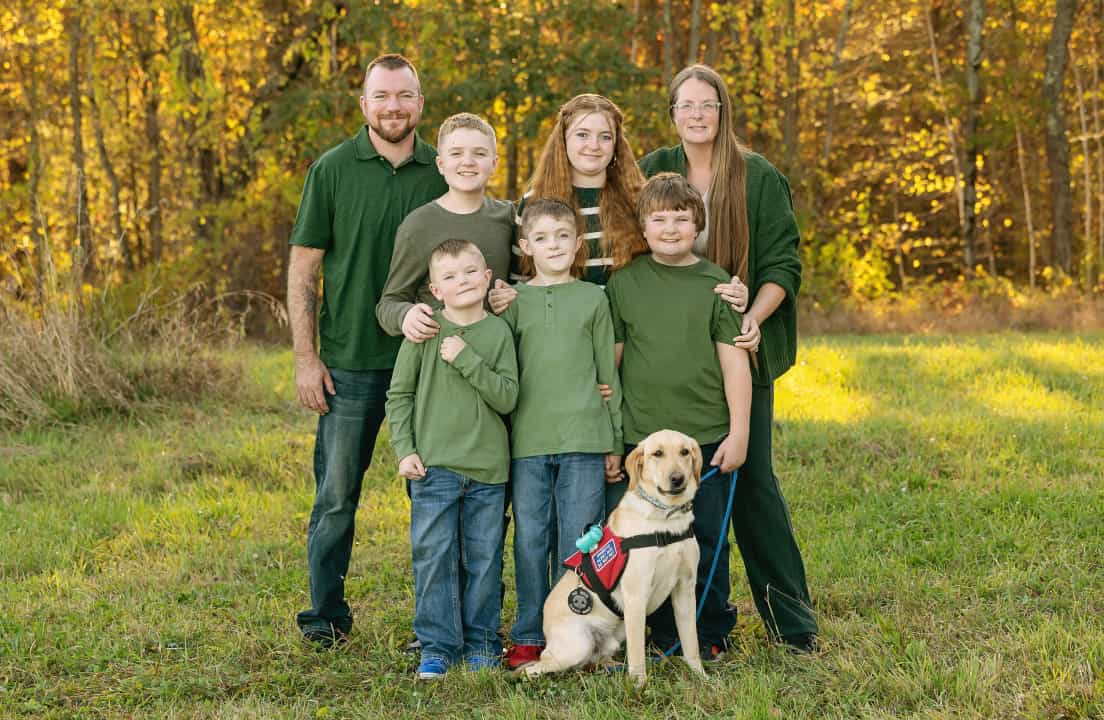
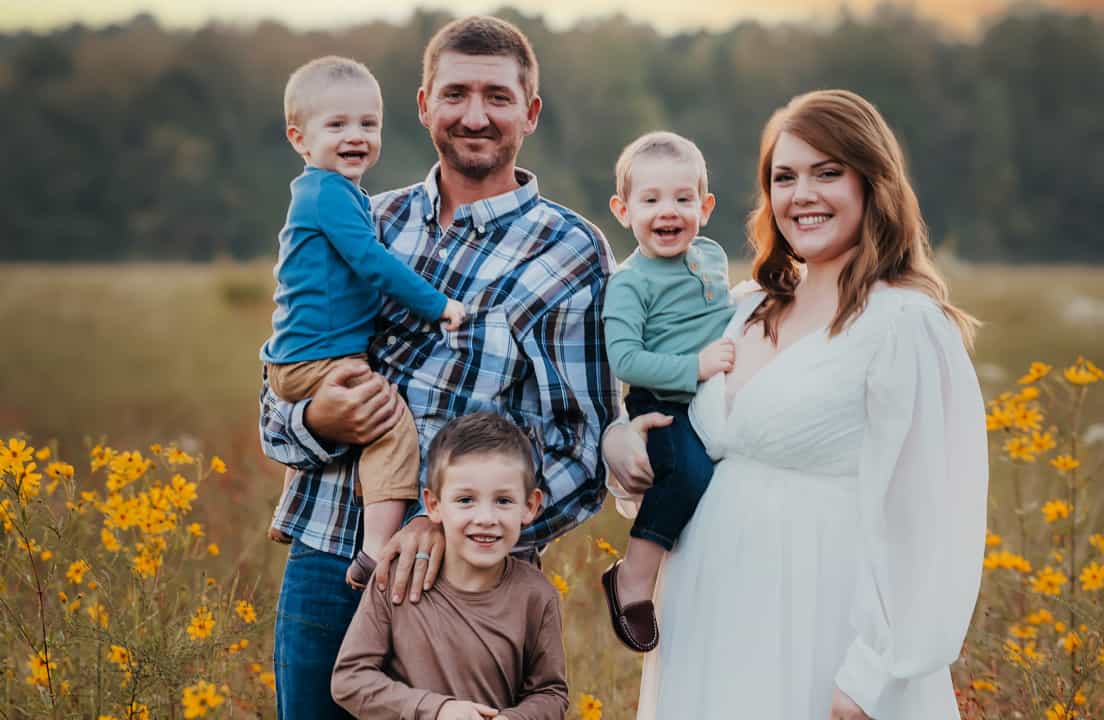
Meg and John DeMalia never expected one diagnosis would reshape their entire family’s future. After their 14-month-old son, Lucas, was diagnosed with type 1 diabetes (T1D), they decided to have their four other children screened. What they discovered was life-changing: three of the four siblings tested positive for T1D-related autoantibodies, and their daughter, who tested negative, has also shown signs of dysglycemia.
.webp)
Since their initial screening, the DeMalias, who reside in Hubbardston, Massachusetts, are raising two sons living with type 1 diabetes, while closely monitoring their other children, who remain at elevated risk.
Here, Meg shares how she manages the daily realities of caring for two children with T1D, while living in a constant state of vigilance over her other three.
She also discusses the critical support provided by their diabetes alert dog and offers essential, life-saving advice for families preparing to leave the hospital after a diagnosis.
Through it all, the DeMalias continue to navigate their unique situation with resilience, proving that knowledge, preparation, and support can make all the difference. And despite the uncertainty, screening their kids has been the best decision for their family.
Lucas’ Diagnosis
In October 2018, the DeMalia’s son, Lucas, was diagnosed with type 1 at just 14 months old in diabetic ketoacidosis (DKA). “I thought he just had an ear infection. I’d even sent him to daycare that day. But then I received a call that they didn’t feel comfortable putting him down for a nap because he was breathing weird.”

Meg picked Lucas up and drove straight to his pediatrician’s office, where the doctor immediately checked his blood sugar, which was HIGH. “He was in and out of consciousness the whole ambulance ride. He never really woke up from his nap until he was in the PICU.”
Life-threatening DKA symptoms often develop quickly, within 24 hours.
DKA Signs include:
- Extreme thirst
- Urinating often
- Vomiting or upset stomach
- Having belly pain.
- Being weak or tired
- Shortness of breath
- Having fruity-scented breath
- Confusion
Decision to Screen
Meg knew a little about type 1 diabetes from her brother, who was diagnosed at age seven. In 2020, right before the COVID lockdown, the DeMalias decided to screen their four other children through TrialNet. “Every single one came back with zero autoantibodies,” Meg said.
“They said not to worry—and even told us that they don’t typically retest. We lived in what I now realize was a false sense of security. I truly believed we would only ever have one child with type 1.”
However, in 2024, TrialNet emailed the DeMalias and said they were eligible for retesting because more information had come to light. “I followed the link, but I never heard back,” she said. “I even sent them an email.”
Four years later, Meg received a shock when she randomly checked her nine-year-old son Ben’s blood sugar. “It was 190, and he hadn’t eaten much. I assumed it was a fluke, but I reached out to TrialNet again. They responded, saying, ‘It’s rare to develop autoantibodies later. And no follow-up came after that.”
This didn’t feel right to Meg, so she reached out to the Autoimmunity Screening for Kids (ASK), a free, Denver-based research study for children ages 1-17. ASK detects the early stages of T1D and Celiac Disease (CD).
They received four at-home blood test kits for their other kids and didn’t expect anything to come from it, but they were wrong. On National Diabetes Day, Meg received a phone call that changed everything. Her three other sons tested positive for the type 1 diabetes autoantibodies.
- Ben tested positive for three autoantibodies (GAD, IAA, ZnT8).
- Joey tested positive for one (ZnT8).
- Colt tested positive for one (ZnT8).
- Emily had none.

They were told it could be a long time before any diagnosis, but Meg still called her doctor and asked, ‘What do I do with this?’
That’s when things escalated.
“We had Joey and Ben retested at the Joslin Diabetes Center in Boston. Joey and Ben both came back positive for all five autoantibodies, but Joey’s were off the chart.”
Meg previously said that Joey’s autoantibodies had always tested higher than Ben’s, yet Ben was diagnosed first. “It was the strangest thing. It’s always been mind-blowing to me that Joey’s still holding on, and yet he has a higher autoantibody value than Ben ever did.”
A Second Type 1 Diagnosis
Ben made it until June 2025 before requiring insulin therapy, and by July, he was on an insulin pump. “With Ben, we thought the diagnosis was going to be horrible. We thought he would never take care of himself because he’s our middle child, but he’s proven us wrong,” said Meg.
Having two type 1’s is constant vigilance with ongoing alarms. “Before the alert dog, we didn’t know who was beeping, but we got the dog, like, the week Ben was diagnosed, and it’s constant alarms, and I never know who is beeping at that time. They definitely battle over who feels low, and the other one’s like, no, I feel low, or who has it worse, and… it’s definitely…: a competition.”
DeMalia admitted have multiple T1Ds is more challenging than expected. “I thought it wasn’t going to be too bad. I already knew what I was doing. But it’s definitely double the work. They can both eat the same exact breakfast and have different experiences.”

Also, having multiple T1Ds makes it harder to keep track of nighttime lows and ordering prescriptions. “I feel like I’m constantly calling and saying, which kid didn’t get their supplies. It’s definitely a lot more work.”
Tzield and Other Disease-Modifying Therapies
In addition to avoiding life-threatening DKA at diagnosis, another reason to screen is to enroll in FDA-approved disease-modifying therapies (DMTs), such as Tzield (teplizumab-mzwv). In some cases, if Tzield is taken early in T1D, it can delay the onset of clinical stage 3 T1D by up to 2 years. The DeMalias did start to pursue Tzield for Ben before he developed stage 3 T1D, but when they first tried, their insurance didn’t approve it because Ben’s HA1c was low, like 5.4, and he didn’t have dysglycemia on the oral glucose test. He missed failing it by two points.
During their appeal process, Ben developed mono, during which they couldn’t enter the trial while sick, and then his illness quickly led to his stage 3 type 1 diagnosis.
Joey does want to pursue Tzield, but they don’t want to put him through the Oral Glucose Tolerance Test (OGTT) until they know that he’s closer to failing it.
Waiting and Watching
Meg said their insurance has very strict parameters for Tzield, and Joey wouldn’t qualify right now, so they haven’t even bothered. They monitor Joey’s Dexcom continuous glucose monitor (CGM) every three months. “We watch, and he’ll go up to the 200s, but he instantly comes right back down.”
Colt has unpredictable spikes into the high 200s that come right back down, also. Emily still has zero antibodies—but even she is showing signs of dysglycemia, Meg said.
So the DeMalias are waiting and watching with no clear timeline or answers. “For now, we monitor as best we can—using Dexcom continuous glucose monitors. Ben and Luke wear their CGMs every day. Joey, we do every 3 months.”
ASK provided Dexcoms for the children, and even monitored Emily, the oldest, who had zero antibodies in 2014. “We did put a Dexcom, and she had spikes up to 250, but she comes right back down, and her HA1c is 4.8,” said Meg. “The Dexcoms from ASK are blinded (meaning the glucose levels are hidden), and I didn’t love that.”
Another way the DeMalias monitor their two T1Ds is with their life-saving medical alert dog, named Kev.
“Kev” The DeMalia’s Diabetic Alert Dog
Back when they thought Lucas would be their only type 1 child, John and Meg pursued purchasing a diabetic alert dog—a process that took years but was well worth the difficult experience.
They went through a foundation where you don’t get to pick your trainer, and have to do some training on your own. Meg said Kev is also very nervous in public and is too anxious to go to school with them, but his alerts are amazing at home. Another bonus is that he’s 90% right with all the kids. “He’ll go and show us which kid is low,” said Meg.

Kev sometimes beats the Dexcom.
Recently, Kev alerted that Lucas was low, and he was very persistent, but Lucas said he felt fine. We tested Lucas’ finger, and he was 67. Even when the boys are out playing in the snow, Kev can smell the lows and tell us which kid.
“I would just give them Skittles, and I didn’t even check blood sugars because I trusted him that much. And you’re able to treat before they’re really low and feeling crappy. It’s crazy how far they can smell, too,” said Meg. “But yes, I would 100% recommend an alert dog, and I would 100% do it again, but just differently. I would do more research into the trainer before.”
Be Your Own Advocate
Meg said they initially left the hospital with Lucas without a Dexcom, and that was a mistake. “Now, if I ever had to again, I would demand a continuous glucose monitor,” she said. “None of my kids would go into DKA, because I follow them now. But now, anybody who’s in that situation, I would tell them, ‘Do not leave the hospital without a Dexcom. Don’t leave. Even though you need to learn how to finger stick and how to watch it, I tell everyone, push for that Dexcom.”
“My biggest advice is— don’t leave that hospital without a CGM, especially as a newly diagnosed, and it blows my mind that they don’t give them, because they want us to finger stick, but just that security in the middle of the night is so important.”
Key Reasons Screening Matters
In addition to reducing the risk of DKA, early detection of T1D enables intervention, monitoring, and access to therapies. It also provides crucial time for families to adjust. “We were able to prepare ourselves. And with Joey, he knows he’ll have type 1. He knows what his future is and can prepare for it.”
“The hardest part with everything is not knowing the timeline,” she added. “That’s what kills me. With Ben, it was overnight. Ben went downhill fast from, like, 100, and then he just shot up to 300 and never came back down.
Meg and her husband have tested themselves a few times and have no autoantibodies. “I think more people should be 100% screened,” said DeMalia. “And pediatricians should be watching for it too, especially with the heredity component. And it feels like nobody does. So I think if you have a type 1 child or a type 1 parent, it would be crazy not to screen your kid.”


.webp)
.jpeg)





















.jpg)






.jpg)



%20(1).jpg)



.jpg)
.jpg)
.jpg)
.jpg)
.jpg)
.jpg)
.jpg)

.jpg)
.jpg)
.jpg)
.jpg)
.jpg)
.jpg)
.jpg)
.jpg)

.jpg)
.jpg)
.jpg)
.jpg)
.jpg)

.jpg)

.jpg)
.jpg)

.jpg)

.jpg)
.jpg)


.jpg)
.jpg)


.webp)
.svg)