


T1D Guide
T1D Strong News
Personal Stories
Resources
T1D Misdiagnosis
T1D Early Detection
Research/Clinical Trials
Best Insulin Pumps for Type 1 Diabetes in 2026 (Top 6 Compared)
Most new insulin pumps today work as hybrid closed-loop systems. These artificial pancreas technologies mimic the insulin-producing beta cells in the pancreas, secreting insulin all day and night. These systems also automatically and amazingly adjust insulin dosing based on continuous glucose monitoring (CGM) data, to keep glucose levels in range.

.webp)
Editor’s Note: Disclaimer: This article is for informational purposes only and does not constitute medical advice. Consult your doctor to determine if an insulin pump is right for your diabetes management.
Here, T1D Strong covers which pumps endocrinologists recommend most frequently for type 1 diabetes (T1D), the best pump for kids versus adults and the CGMs the pumps integrate with—which can be a big deciding factor.
Whether you choose to wear a device or use multiple daily injections (MDI) as your insulin therapy is a personal decision to make with your doctor. An additional point to consider is the use of insulin pens.
While pumps can provide greater precision and automation in dosing, the insulin pens today offer simplicity and portability. The physical freedom for many is a deal-breaker.
Pros of Using Insulin Pumps vs. Pens
- Improved blood sugar control: Pumps can often reduce severe hypoglycemic episodes by shutting off delivery when the blood sugar drops
- Greater flexibility with meals and precision dosing: Users can fine-tune insulin delivery (micro-dose) and adjust for certain meals (high carb like pizza), and offer exercise modes tailored to the individual
- Fewer Injections: No need for multiple daily shots; typical sites change every 2-3 days.

Cons of Using Insulin Pump vs. Pens
- High costs: Pumps and supplies can be expensive, even with insurance.
- Constant Attachment: Wearing the device 24/7 can be physically or emotionally uncomfortable for some individuals.
- Issues with skin irritation or infection: If not rotated properly, there is a potential for infection at the site. Some people suffer from adhesive allergies.
- Risk of Diabetic Ketoacidosis (DKA): If the pump malfunctions, the loss of long-acting insulin can lead to rapid-onset DKA and emergency side effects.
- Learning Curve: The technical side for pump users requires training, troubleshooting and having backup injections ready.
So, with all that said, let’s look at the six best FDA-approved insulin pumps on the market today. The good news is that they keep getting better and better.
Here’s a Quick Breakdown of 6 Insulin Pumps
1. Insulet Omnipod 5 (Tubeless Pump)
The Insulet Omnipod 5, by the Insulet Corporation, is extremely popular among pump users because it is the first tubeless, waterproof, wearable patch pump with an integrated automated insulin delivery (AID) system that communicates directly with a CGM to adjust insulin every five minutes. It offers superior convenience, discretion, and control through a smartphone app.

Omnipod 5 Pros:
- Completely tubeless patch pump worn on several parts of the body, including the abdomen, back of the upper arm, front thigh or upper buttocks
- Automated insulin delivery system compatible with Dexcom G7, Dexcom G6, Abbott FreeStyle Libre 3 Plus
- Controlled by smartphone or controller.
- Pods are replaced every 3 days.
- The Omnipod 5 Automated Insulin Delivery System is FDA-cleared for children aged two years and older

Omnipod 5 Cons:
- This pump is physically attached to your body, not via a tube.
- The Omnipod 5 holds up to 200 units of U-100 rapid-acting insulin per Pod, which lasts for up to three days. While it holds a significant amount, it is not the largest capacity on the market compared to some tubed pumps that hold 300 units.
Best for
- People who want no tubing and a discreet pump.
2. Tandem t:slim X with Control-IQ
The Tandem t:slim X2 has been known to significantly increase time-in-range, while reducing high and low glucose levels. It’s remote-predictive technology features a user-friendly touchscreen that enables remote, convenient mobile bolusing. Control-IQ is a leading hybrid closed-loop system used with Tandem t:slim X2 and Tandem’s Mobi pumps.
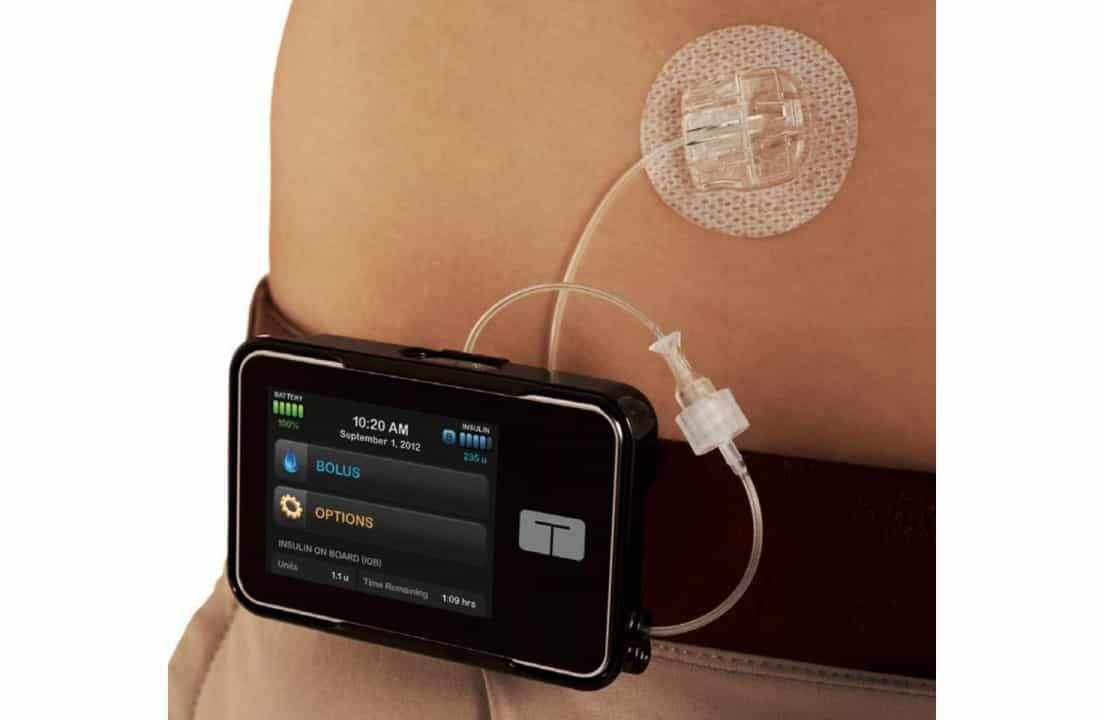
Tandem t:slim Pros:
- Control-IQ algorithm: It predicts glucose levels 30 minutes in advance and automatically adjusts basal insulin every five minutes, and can deliver correction boluses (up to once per hour) to help keep users in a safe target range.
- Integrates with Dexcom G6, Dexcom G7 and Abbott FreeStyle Libre 3 Plus sensors.
- Software updates can be downloaded to the pump.
- T:slim design with touchscreen.
Tandem t:slim Cons:
- It’s a tubed pump, which can snag on clothing. It is only water-resistant, not fully waterproof.
- Some users complain that the cartridge refill process is tedious and time-consuming, and that it is prone to insulin wastage.
Best for
- Users who prefer Dexcom integration and customizable control.
3. Beta Bionics iLet “Bionic Pancreas”
The Beta Bionics iLet “Bionic Pancreas” is an outstanding AID system that simplifies diabetes management for individuals aged six and older by automating 100% of insulin dosing. The waterproof, tubed pump has many benefits, including automatic insulin corrections and no need for user-pre-set basal rates. It also eliminates traditional carb counting, allowing you to select small, medium, or large meals.
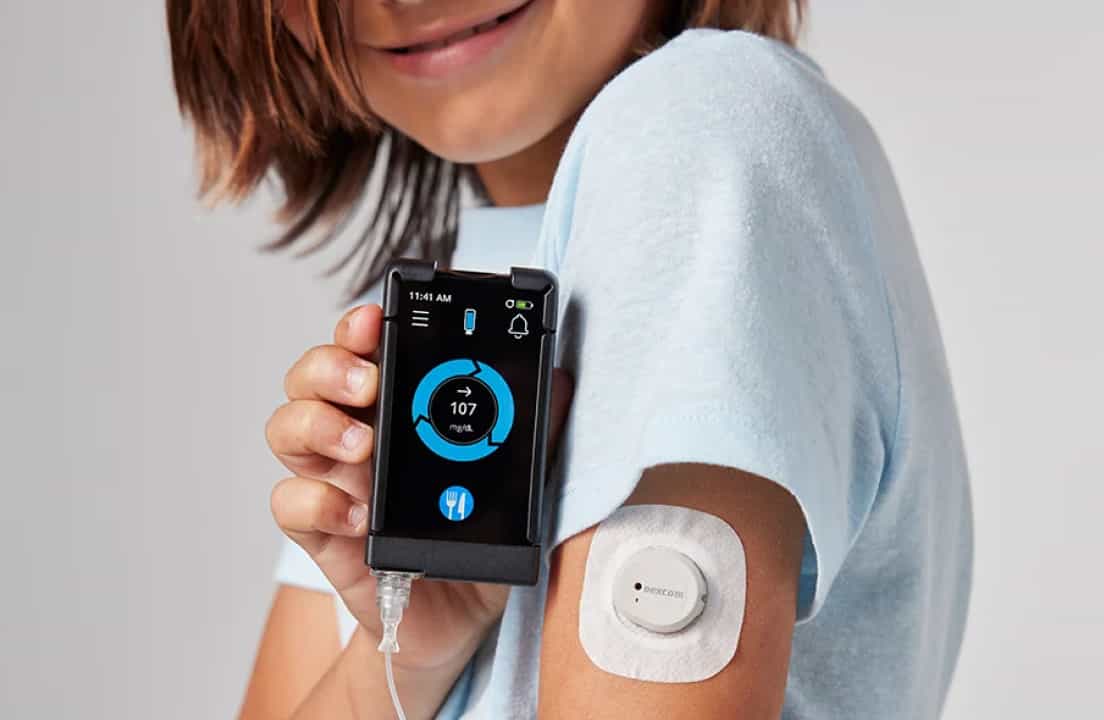
Pros for the iLet Bionic Pancreas:
- The iLet is a durable, user-friendly device that offers a touchscreen interface and a rechargeable battery.
- Simple setup and operation
- Diabetes without Numbers: users don’t need to compute carbohydrates or calculate insulin doses.

Cons for the iLet Bionic Pancreas:
- Limited Customization & Control: Users can’t set their own basal rates or manual correction boluses, which may frustrate those who prefer precision.
- Accidental Input: The touchscreen can be accidentally pressed, requiring careful management, notes the Beta Bionics User Guide.
Best for
- The iLet Bionic Pancreas is best for individuals seeking to reduce mental burnout and decision fatigue, as the system makes 100% dosing decisions and corrections.
4. Twiist Automated Insulin Delivery System
The new twiist™ AID System, developed by Sequel Med Tech and founded by DEKA Research and Development, received FDA clearance in March 2024.
Twiist features proprietary iiSure™ sound wave technology for high-precision, direct, minute-by-minute dosing measurements, enabling up to 9x faster detection of insulin blockages. Cleared for people with T1D ages six and older, twiist offers unmatched personalization with a broad 87-180 mg/dL glucose target range, full Apple Watch control, and a durable 300-unit capacity.

Twiist uses the Tidepool Loop algorithm to automatically adjust insulin delivery every five minutes based on CGM data. It’s one of the first pumps to measure insulin flow and volume for each microdose directly, improving dosing accuracy.
Interesting Fact: The Twiist pump is the first commercial pump built around the open-source Loop algorithm ecosystem, which many people in the DIY diabetes community had been using unofficially for years. That’s why some endocrinologists see it as a major shift toward more customizable automated insulin delivery systems.
Twiist Pros include:
- CGM compatible with FreeStyle Libre 3 Plus, Eversense 365
- Lifestyle Customization: Includes pre-meal and activity presets (up to 250 mg/dL) to manage, for example, exercise.
- Simplified Access: Available through retail pharmacies with potentially lower upfront costs for the durable component
- twiist is also the first FDA-approved AID system that an Apple Watch can directly control
.jpg)
Twiist Cons include:
- No integrated adhesives: The pump is designed to be worn in a pocket or via a clip, not directly on the skin like a patch pump, though adhesives are planned for later.
- Some users say the cartridge filling port is very small, making it challenging for those with poor vision or dexterity.
- No Site-Change Reminders: users must manually track when to change their infusion set.
Best for
- Users who want high-precision, direct, minute-by-minute dosing measurements and smartphone-based pump control.
5. Tandem Mobi
The Tandem Mobi is an ultra-small, durable, AID pump designed for discretion and convenience. It also features Control-IQ technology, which delivers automatic correction boluses using an algorithm that predicts and helps prevent high and low glucose levels.
Pros for the Tandem Mobi
- It’s roughly half the size of the t:slim X2.
- Works with Dexcom G6 and Dexcom G7 CGMs.
- Other benefits include flexible, on-body wear options with five-inch tubing.
- On-Pump Bolusing: An alternative physical button allows for easy insulin delivery without using the phone app.
- The Mobi is water-resistant up to eight feet for up to two hours.

Cons for the Tandem Mobi
- No Screen: All programming, including blousing, requires the iPhone app. If the phone is lost, broken, or out of battery, managing the pump can be challenging.
- As of early 2025, it is mainly for iPhone users, limiting accessibility for Android users.
- Tubing and Size: While small, it is not truly tubeless. The 5-inch tubing option is only available with a 90-degree soft cannula infusion set, notes Integrated Diabetes Services.
- The pump holds 200 units of insulin, which can result in more work to refill. While the t:slim holds 300 units.
Why it’s notable:
- Mobi is one of the smallest durable insulin pumps available and uses the Control-IQ algorithm for excellent blood sugar control.
6. MiniMed (formerly Medtronic) 780G
MiniMed 780G Insulin Pump System is an advanced insulin delivery system featuring five-minute auto-corrections to manage highs and lows. Key benefits include Meal Detection™ technology that compensates for missed doses or undercounted carbs, a low 100 mg/dL glucose target, and 7-day infusion set wear, significantly reducing diabetes management burden and improving time-in-range.

Interesting Fact: At the recent ADDT Conference, MiniMed introduced its upcoming MiniMed Flex insulin pump with the FDA and has begun studying its next-gen Vivera closed-loop algorithm, which removed the necessity for meal bolusing!
Pros of the MiniMed 780G:
- The Advanced SmartGuard algorithm automatically adjusts insulin every five minutes.
- Can deliver automatic correction boluses if glucose runs high.
- Uses Guardian 4 CGM.
- Very precise dosing increments (0.025 units).
Cons of the MiniMed 780G:
- Usability and Alarms: There is no remote bolus capability, requiring users to handle the physical pump for corrections. The system can be prone to frequent, annoying alarms.
- Software and Support: The Carelink reporting program is considered outdated and complex.
Best for
- People who want maximum automation and tight glucose control.
Choosing the Right Pump
As noted above, it’s best to review your needs and personal preferences with your physician and diabetes care team when deciding which pump is right for you. Endocrinologists generally recommend AID systems that integrate with continuous glucose monitors for optimal diabetes management. Pediatric endocrinologists often recommend the Omnipod 5, Tandem t:slim X2, and the Medtronic MiniMed 780G for children because their hybrid closed-loop features automatically adjust insulin delivery to improve time in range and reduce hypoglycemic events.

Ultimately, choosing an insulin pump is a personal decision—but it doesn’t have to be permanent. Many pump companies offer trial periods, allowing you to evaluate different systems and find the one that best fits your lifestyle.


.webp)

.jpeg)







.jpg)




.jpg)





.jpg)






.jpg)

.jpg)
.jpg)
.jpg)
.jpg)


.jpg)

.jpg)
.jpg)

.jpg)
.jpg)
.jpg)

.jpg)

.jpg)

.jpg)
.jpg)



.jpg)


.jpg)




.jpg)
.jpg)



.jpg)

.jpg)


.jpg)
.jpg)
.jpg)
.jpg)
.jpg)
.jpg)
.jpg)

.jpg)
.jpg)

.jpg)


.jpg)
.jpg)

.jpg)

.jpg)


.webp)
.svg)