


T1D Guide
T1D Strong News
Personal Stories
Resources
T1D Misdiagnosis
T1D Early Detection
Research/Clinical Trials
The Dexcom G8 Breakthrough: Why Everyone Is Talking About It
Once again, Dexcom has transformed and enhanced diabetes management with its new Dexcom G8. For all the worrisome things AI brings, we have to focus on the positive health outcomes—and we have to adapt. Dexcom is doing just that by introducing its ‘self-adapting’ technology.
.jpg)
.webp)
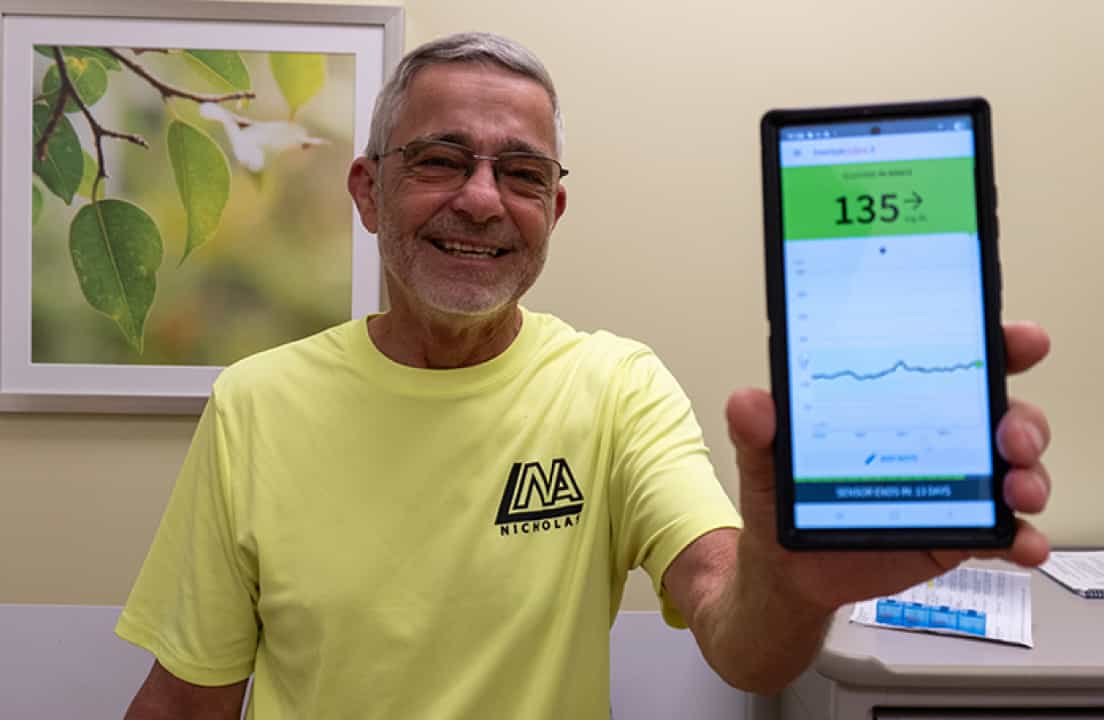
I remember the days of having to squeeze my four-year-old son’s calloused fingers, ignoring his wails, because I had to get that single droplet of blood that revealed his blood sugar. The idea of no more fingerpricks was transcendent to me, no more constant calibration, no more scanning. The Dexcom continuous glucose monitor (CGM) and similar devices have transformed diabetes care and helped eliminate more than 11 billion fingersticks worldwide.
G8’s redesigned silicon chip and AI algorithms adjust to your body’s physiological changes in real-time to eliminate irregular readings and improve accuracy.
Dexcom Backstory
Founded in 1999, Dexcom launched the world’s first real-time, integrated CGM system. In 2004, Dexcom introduced its short-term sensor (STS), and in 2007, the SEVEN system was the first FDA-approved sensor to last up to seven days. From there, the revolutionary device continued to improve with the Dexcom G4, G5 (compatible with smartphones), G6, and G7, which provide up to 15 days of wear time and a 12-hour grace period.
Why This New CGM Is a Game Changer
While it’s still under development, the new Dexcom G8 is expected to launch in late 2027 or early 2028 and is a massive breakthrough. Here’s a closer look at the hype:
G8 Key Advancements
Size & Design
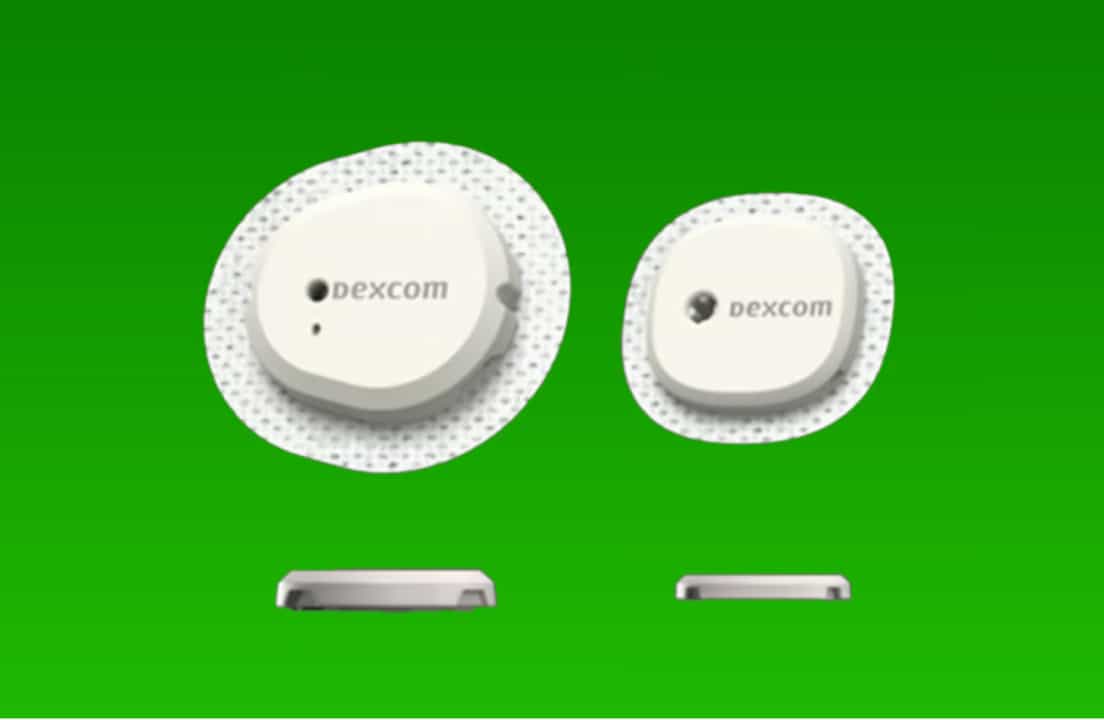
The G8 will be 50% smaller than the current Dexcom G7, which is about the size of a quarter. The Dexcom G8 CGM will not be quite as tiny as a dime, but its sleek design brings it closer to the size of the FreeStyle Libre 3, the smallest CGM available today.
Wear Time
Like the G7, the sensor is designed for an extended 15-day wear time and a 12-hour grace period.
Most importantly…
Adaptive Accuracy
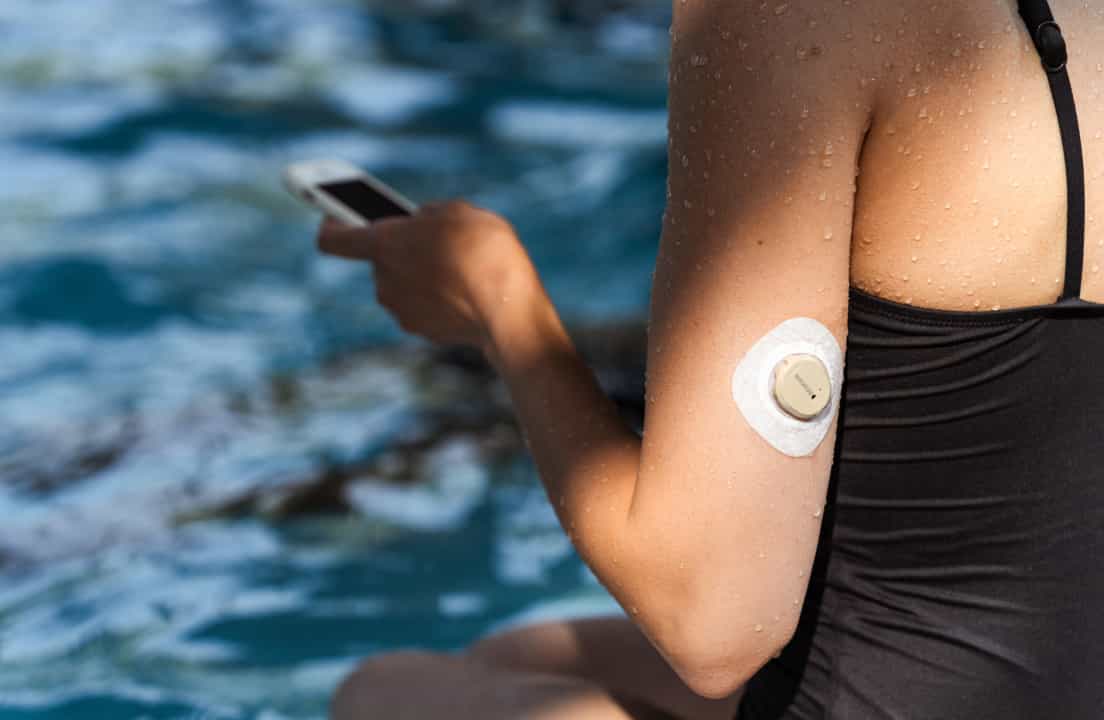
The new adaptive technology, which self-adjusts to an individual’s body and physiology over time, delivers more reliable and accurate readings.
Future Capabilities
The G8 platform is exploring the potential to track ketones and potassium levels alongside blood sugar levels.
We know how crucial it is to track ketones to prevent risky side effects like diabetic ketoacidosis (DKA), but in case you’re wondering, tracking potassium levels is also highly important because potassium imbalances, such as hyperkalemia, can be dangerous for people with type 1 diabetes (T1D).
Tracking potassium helps protect kidney function and prevent heart arrhythmias. Real-time tracking can reduce emergency room visits and allow for proactive medication adjustments.
Interesting Fact: Did you know that taking acetaminophen (Tylenol) can cause your Dexcom sensor to display falsely high glucose readings? This occurs because the medication triggers a chemical reaction in your interstitial fluid that the sensor’s electrochemical system can misinterpret as glucose.
In addition to helping individuals with T1D track blood glucose more accurately, Dexcom is expanding its scope to include people with type 2 diabetes (Dexcom Stelo CGM), prediabetes, and women with gestational diabetes.

Dexcom CEO Jake Leach told MD+DI, “It's kind of unfortunate that when someone is diagnosed with prediabetes today, they're not given a lot of tools. ... CGM is an amazingly powerful tool to help someone. CGM can help prediabetes patients reverse that diagnosis simply by learning more about the factors that impact their glucose levels.”
This Next-Gen CGM is the Biggest Upgrade Yet
While the landscape of CGM developments continues to climb with analytics-improved monitoring and long-term implantables like Eversense 365, these breakthroughs are designed to reduce the T1D burden, improve health outcomes and provide deeper metabolic insight.
Dexcom G8 is a giant step forward in glucose monitoring. Instead of just tracking glucose, this new system responds to an individual’s body in real time. That’s some high-level, final-frontier technology—and it’s only getting better.


.webp)

.jpeg)








.jpg)








.jpg)







.jpg)

.jpg)
.jpg)
.jpg)
.jpg)

.jpg)

.jpg)
.jpg)

.jpg)
.jpg)
.jpg)

.jpg)

.jpg)

.jpg)
.jpg)



.jpg)


.jpg)




.jpg)
.jpg)


.jpg)
.jpg)


.jpg)
.jpg)
.jpg)
.jpg)
.jpg)
.jpg)
.jpg)

.jpg)
.jpg)

.jpg)


.jpg)
.jpg)
.jpg)

.jpg)


.webp)
.svg)