


T1D Guide
T1D Strong News
Personal Stories
Resources
T1D Misdiagnosis
T1D Early Detection
Research/Clinical Trials
New UK Study Aims to Understand Diabetes Burnout Better
If you live with type 1 diabetes (T1D), you've probably heard the phrase "diabetes burnout." You may have even experienced it yourself. It's a topic that comes up often within the diabetes community. People talk about feeling exhausted by constant decision-making, frustrated by unpredictable blood sugars despite excellent self-management, and overwhelmed by the relentless nature of diabetes management.


Yet despite how familiar the concept feels to many people living with T1D, researchers are still working to understand exactly what diabetes burnout is, why it happens, and what can be done to help.
That's why psychologist Rachel Sumner and her team in the United Kingdom recently launched a new study focused specifically on diabetes burnout. Funded by Breakthrough T1D UK, the project takes a unique bio-psychosocial approach, examining psychological, social, and biological factors that may contribute to burnout.
Type 1 Strong recently spoke with Sumner about the study, what inspired it, and why she believes people with T1D deserve to have their experiences heard.
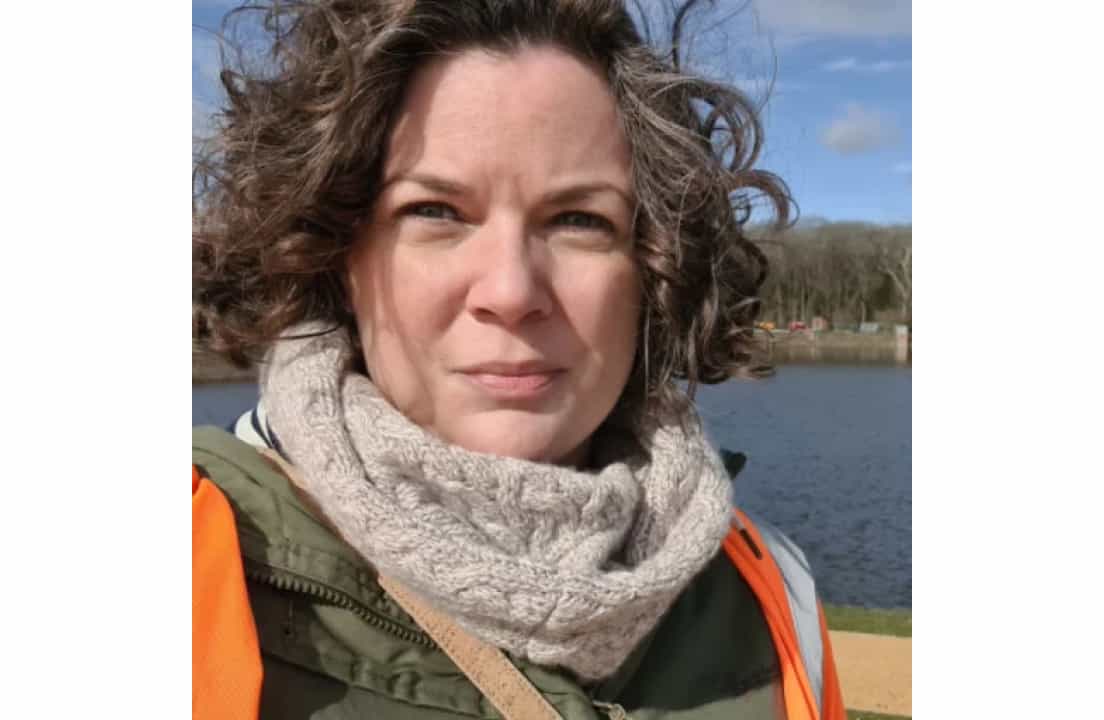
Why Researchers are Finally Taking a Closer Look at Diabetes Burnout
Sumner's background is not in diabetes research.
A psychologist specializing in psychobiology, she describes her work as sitting "where medicine and psychology meet."
"I like to look at how experiences in our day-to-day lives and things in our environment and social world can affect our health," Sumner said. "I look at that from the cellular level, so I look at immune cells and hormones and stuff, but I also look at whole-person measures of how people are feeling, physical health, mental health, things like that."
For several years, her work focused on frontline workers during the COVID-19 pandemic, studying resilience, mental health, and occupational burnout.
That research led her to become increasingly interested in burnout itself.
"I've been really interested in burnout as a concept for a long time because it's something that I think intuitively everybody gets," she said. "We talk about screen burnout, Zoom burnout, work burnout. We talk about burnout a lot."
Yet despite decades of research on burnout, many important questions remain unanswered.
"We're probably not that much closer to really understanding who is more vulnerable to it, under what circumstances, and how we might be able to prevent it effectively."
Her introduction to diabetes burnout happened unexpectedly through a conversation with a diabetologist.
"He said, 'Have you ever heard of diabetes burnout?' And I said, 'No.'"
Afterward, she began reading everything she could find.
"I was absolutely staggered to find that despite the fact that the type 1 community knows what diabetes burnout is and has been talking about it for a really long time, it really hasn't been studied a great deal."
What Diabetes Burnout Actually Means
One of the goals of the study is to help researchers better understand what diabetes burnout looks like and how people experience it.
According to Sumner, diabetes burnout resembles occupational burnout and is generally characterized by three key features.
The first is exhaustion.
.jpg)
"In the case of diabetes burnout, that's emotional exhaustion, but also physical exhaustion too," she explained. "A bit of mental exhaustion from having to juggle the numbers and the timings."
Anyone living with type 1 diabetes knows the mental workload involved. Every meal, workout, illness, stressful event, and overnight blood sugar can require attention and decision-making.
The second component is a growing sense of powerlessness.
"Feeling like you can't be enough, you can't do enough," Sumner said. "It doesn't matter what you do, the numbers aren't responding properly."
Over time, that frustration can become emotionally draining.
The third component is detachment.
"That's where people experiencing diabetes burnout start to lean away from the self-management," she explained.
For some people, that may mean skipping diabetes-related tasks. For others, it may look more like emotional disengagement.
"It is a sort of detachment from an identity of having type 1," Sumner said.
Burnout isn’t the Same as Diabetes Distress or Depression
Burnout is often discussed alongside stress, diabetes distress, and depression, but Sumner says they're not interchangeable.
"Diabetes distress is very much associated with feeling distress around the pressures associated with living with type 1," she said.
That can include the emotional impact of diagnosis, the demands of self-management, and the lifestyle adjustments that come with living with a chronic condition.
However, she notes that diabetes distress doesn't fully explain burnout.
"Diabetes distress doesn't cover when people feel disengaged from their self-management. And that's a really critical part of diabetes burnout."
That distinction is important because it helps explain why some people may move beyond feeling stressed or frustrated and begin pulling away from diabetes care altogether.
Researchers have made progress in defining diabetes burnout over the last several years. However, there is still much to learn about how it develops and how it differs from other mental and emotional challenges associated with diabetes.
The Challenge of Managing a Condition that Never Takes a Break
One of the most powerful moments in our conversation came when Sumner compared diabetes burnout to occupational burnout.
People experiencing work-related burnout may be encouraged to take vacation time, change jobs, reduce responsibilities, or step away from stressful situations.

People with T1D don't have those options.
"There is no time off type 1," Sumner said. "There is no having a break from it. No, let's change this up and try something else. It is there, and you just have to get on with it forever."
That reality makes diabetes burnout uniquely challenging.
Occupational burnout may be serious, but there are often opportunities to create distance from the source of stress. Diabetes offers no such escape.
"It's constant," Sumner said. "You don't get a break from it."
Whether you've been living with T1D for six months or six decades, the demands remain.
And while those demands may become more familiar over time, they never fully disappear.
Why Lived Experience is Shaping this Study
One of the most unique aspects of the project is the extent to which people living with T1D helped shape it.
Before launching the study, Sumner worked closely with an experienced panel of adults living with T1D and a group of young ambassadors.
She wanted to ensure the research addressed questions that actually mattered to the diabetes community.
"As researchers, we can find loads of stuff which we find cool and interesting and exciting," she said. "But if the people who the research should be for don't think it's important, then there's no point doing it."
The feedback she received reinforced just how relevant diabetes burnout is to people's lives.
The study includes questionnaires, but it also gives participants opportunities to describe their experiences in their own words.
"I really want to listen with this project," Sumner said. "I want the community to tell me what is important because people just haven't asked those questions."
Participants are being asked about everything from diabetes technology and social support to stigma, relationships, and life experiences.
"There are probably loads of stuff that we have no idea of that is super relevant in diabetes burnout," she said.
Ultimately, Sumner believes meaningful progress requires researchers to listen first.
"You have to ask people. You have to ask them what matters to them."

Burnout is Not a Personal Failure
One theme that surfaced repeatedly throughout our conversation was the need to rethink how burnout is viewed.
Historically, burnout has often been framed as a personal weakness or failure to cope.
Sumner believes that perspective misses the bigger picture.
"I think burnout for a really long time in the occupational sphere has been looked at as a personal failing," she said.
Instead, she argues that burnout is better understood as the result of ongoing burden.
"It's about being worn down by chronic burden."
That burden may come from work, caregiving responsibilities, illness, financial stress, or countless other life circumstances.
And for people with T1D, those challenges often stack on top of diabetes management rather than replacing it.
Life transitions can make burnout even more likely.
"A job, a house move, the menopause, a relationship breakdown, anything else in your life that is going on," Sumner said.
Those stressors don't happen independently of diabetes. They happen while people are still counting carbohydrates, dosing insulin, monitoring blood sugars, and managing countless daily decisions.
As a result, burnout may occur in cycles throughout a person's life.
People may recover from one period of burnout only to encounter another during a different stage of life.
"If we don't understand more about how that happens, what that looks like, in what situations it's more likely to happen, then we're not going to be able to help people."

Can Biology Help Explain Burnout Risk?
Perhaps the most novel aspect of the study is its biological component.
In addition to the survey, participants can choose to take part in a biomarker study using a simple mouth swab.
Researchers will examine a gene involved in immune and inflammatory processes.
Importantly, Sumner emphasizes that the team is not looking for a single gene that predicts burnout.
"We're not going to find this sort of gene that says this means you're going to be more likely to be burned out."
Instead, researchers hope to better understand biological mechanisms that may interact with social and psychological experiences.
"What we are hoping to find is that there may be this mechanism that this gene might be associated with, which means that some people may be more likely to suffer from burnout than others."
The goal is to better understand how multiple factors work together.
"I'm hoping to find a mechanism, a way that will explain how psychological experiences, social factors, and this biological marker may influence people's experience of burnout."
What Researchers Hope to Uncover
Although the study is relatively small, Sumner has ambitious goals for what it might reveal.
One objective is to identify circumstances that make people more vulnerable to burnout.
Researchers hope to better understand how factors such as social support, stigma, stress, life events, and biology interact to influence a person's experience.
Using a bio-psychosocial approach may help paint a more complete picture than studies that focus on only one aspect of burnout.
"We're hoping to get a lot out of a small project," Sumner said.
The findings may also provide a foundation for future research exploring diabetes burnout in different populations and healthcare systems.

A First Step Toward Better Support for People with T1D
For Sumner, the most important outcome isn't necessarily a scientific discovery.
It's making people feel seen.
"I hope that people living with type 1 will feel heard and that they will feel seen and that they will feel that somebody cares about what's going on with them and wants to help."
That perspective stems from lessons she learned while studying frontline workers during the pandemic.
"There is a real place for research to make people feel heard and to let them know that they're not alone."
While this study is currently limited to participants in the United Kingdom, the questions it seeks to answer resonate far beyond national borders.
People with T1D everywhere understand what it means to carry a condition that never pauses, never takes a vacation, and never stops demanding attention.
For a topic that the diabetes community has been discussing for years, this research represents something meaningful: a willingness to listen.
And for Sumner, it's only the beginning.
"This, for me, is a starting point," she said. "I'm going to be doing more work in this area beyond this particular project."
She hopes the diabetes community will continue helping guide that work.
"I would really love to hear from people if they can think of other things that we should be looking at, other areas we should be researching into."
After all, understanding diabetes burnout starts with listening to the people who live it every day.


.webp)

.webp)


.jpeg)


.jpg)




.jpg)




.jpg)






.jpg)

.jpg)
.jpg)
.jpg)
.jpg)


.jpg)

.jpg)
.jpg)

.jpg)
.jpg)
.jpg)

.jpg)

.jpg)
.jpg)
.jpg)



.jpg)


.jpg)




.jpg)
.jpg)

.jpg)
.jpg)


.jpg)
.jpg)
.jpg)
.jpg)
.jpg)
.jpg)
.jpg)

.jpg)
.jpg)

.jpg)


.jpg)
.jpg)
.jpg)

.jpg)

.jpg)


.webp)
.svg)