


T1D Guide
T1D Strong News
Personal Stories
Resources
T1D Misdiagnosis
T1D Early Detection
Research/Clinical Trials
The Money Behind a Diabetes Cure: How Investors Could Profit from T1D Research
When we hear about a small biotech company working on a new treatment—or even a potential cure—for type 1 diabetes, most of us focus on one question: Could this eventually help people with T1D? But there is another side of cure research that we rarely talk about: the stock market.

Note from the Editor: This article is for educational purposes only. It is not financial advice or a recommendation to buy or sell any stock. Biotech investing is especially risky, and you can lose your entire investment. The author also owns or has owned shares in several companies mentioned in this article, including Eledon, Vertex, Sernova, and Provention Bio.
Behind every clinical trial is a business. Small biotech companies need enormous amounts of money to develop a therapy, study it in humans, work through the FDA approval process, manufacture it, and eventually get it to patients. And many of these small companies are not actually planning to do all of that themselves. Their goal is often to develop something promising enough that a much larger pharmaceutical company wants to buy them.
That is where investors come in—and why understanding the business side of cure research can help us separate genuine scientific progress from stock-market hype.
You May Already Be an Investor Without Realizing It
You do not have to be a stockbroker on Wall Street to invest in the stock market. If you have a 401(k), Roth IRA, mutual fund, or retirement account, your money is probably already invested. The difference is that someone else—or a professionally managed fund—is usually choosing and managing those investments for you.
Buying individual shares of a small biotech company is different. You can open a brokerage account, transfer money into it, and buy shares in a company you believe may grow in value. If the company succeeds, your shares may become more valuable. If the research fails, the share price can collapse.
Biotech investing can be especially unpredictable because a company’s future may depend heavily on the results of just one clinical trial.
Why Small Biotech Companies Need Bigger Companies
Right now, several relatively small biotech companies are involved in research that could affect the future of T1D care.
Eledon Pharmaceuticals is studying tegoprubart, an experimental immunosuppressive therapy. Sana Biotechnology is studying gene-edited cells designed to hide from the immune system. Sernova is developing an implantable cell-therapy platform. NewCellX is working on a source of lab-grown islet cells.
These companies may be worth millions of dollars on the stock market, but that does not mean they have a successful product bringing in revenue yet.
- Eledon’s market value: $300 million
- Sernova’s market value: $45 million
- Sana’s market value: $1 billion
- Vertex’s market value: $121 billion + $12 billion in annual sales
- Cost of bringing a drug to market: $1 to $2 billion
As you can see, the smaller companies cannot afford to bring their groundbreaking therapy to market. They hope to be acquired by a larger company. That’s the game plan.
Many early-stage biotech companies have no FDA-approved drug to sell. They are hyper-focused on developing one therapy with the hope of getting acquired by a bigger company, adding it to their vast portfolio of FDA-approved therapies, and spending the one or two billion dollars required to bring that drug to the market.
They can spend years operating at a loss while relying on investors, partnerships, grants, and fundraising to keep their research moving.
.jpg)
Large companies such as Lilly, Sanofi, Novo Nordisk, and Vertex already sell approved therapies and generate billions of dollars in annual revenue. That gives them far more money and infrastructure to run large clinical trials, navigate the FDA process, manufacture a drug at scale, negotiate with insurers, and market it around the world.
This is why a small company with promising research often hopes to be acquired by a much larger company. The small company advances the science and demonstrates its potential. The larger company buys the business—or licenses the therapy—and takes responsibility for the expensive next stages.
How Investors Make Money When a Biotech Company is Acquired
I experienced this personally with Provention Bio, the company that developed teplizumab, now sold as Tzield—the only FDA-approved therapy to delay the full onset of T1D. I first learned about the company through my work writing about T1D research based on press releases from Provention Bio. I invested $5,000 of my own money in Provention Bio before Sanofi acquired the company.
When a larger company buys a smaller one, it usually agrees to pay a specific amount for each share. If that purchase price is higher than what an investor originally paid, the investor makes money. Sanofi acquired Provention Bio in 2023 in a deal valued at approximately $2.9 billion. My original $5,000 investment became worth about $13,000, leaving me with roughly $8,000 in profit.
That is the most money I have ever made from one of my individual stock-market investments. But it is important to understand that this outcome was not guaranteed. It could have gone the other way.
Breakthrough Science Doesn’t Necessarily Mean It’s Ready to Sell
Another useful example is Semma Therapeutics. Semma was founded by researcher Doug Melton, whose children were diagnosed with T1D. His work helped advance the ability to turn stem cells into insulin-producing cells—a huge scientific achievement and one of the foundations of today’s cell-replacement research.
Vertex acquired Semma in 2019 for approximately $950 million. Vertex then gained the technology and expertise that helped build its T1D cell-therapy program. The acquisition did not mean a cure was suddenly ready for everyone. It meant the research had become valuable enough that a much larger company was willing to invest heavily in taking it further.
That distinction matters.
A scientific breakthrough can be real, exciting, and important while still being many years away from becoming a safe, approved, accessible treatment.
Why Investors May Hype a Diabetes Treatment Online
I first noticed this investor world when I began talking publicly about Afrezza, the inhaled insulin made by MannKind. Some of the people who contacted me most often were not people with diabetes. They were MannKind investors.
One investor has encouraged me for years to write a book about inhaled insulin. He is a genuinely nice person, but he also owns stock in the company. More attention for Afrezza could help MannKind—and potentially help the value of his investment. That does not automatically mean his enthusiasm is dishonest. It does mean his financial interest is important in context.

The Same Thing Can Happen with T1D Cure Research
Investors may post constantly about one company, describe early results as though approval is right around the corner, or dismiss reasonable questions about safety and limitations. Excitement attracts attention. Attention can attract more investors. More demand for a stock can push its price higher.
This is why we should ask a few questions when someone makes a huge promise online:
- Does this person own stock in the company?
- Are they being paid by the company—or raising money based on its research?
- Are they sharing actual clinical-trial results or predicting what might happen?
- Are they sharing “updates” or just regurgitating old information to continue the hype?
- Are they discussing the risks and unanswered questions, too?
- Are they promising a timeline that the company, researchers, or FDA have not promised?
Owning stock does not make someone dishonest. I own biotech stocks myself. But financial interests should be disclosed, and enthusiasm should never be confused with evidence.
What This Means for Eledon and Tegoprubart
Eledon is a good example of why the business side matters. Tegoprubart is being studied as a possible alternative to tacrolimus, a powerful immunosuppressant commonly used after organ transplantation. Early results in a small University of Chicago Medicine islet-transplant study have been exciting: transplanted donor islets have produced enough insulin for participants to stop insulin therapy.
But that does not mean Eledon is about to sell a universal cure for T1D.
The current approach still involves transplanted islet cells and additional immunosuppressive medications. The islets have come from deceased organ donors, an extremely limited supply. Tegoprubart has not yet been proven safe and effective for millions of people over many years. Researchers also need to determine how long the transplanted cells will continue to function. Eledon does not manufacture a mass-produced source of lab-grown islets. It needs partners that do.
That helps explain why companies developing lab-grown islet cells might study their cells alongside tegoprubart. It also explains why Vertex and Eledon are not necessarily simple competitors. One company may have the cells, while another has a potentially useful way to protect them.
If tegoprubart continues to show promise, a larger company could eventually acquire Eledon, license the drug, or form a major partnership to bring it through later-stage trials. That possibility is also part of the investment case. I invested $10,000 in Eledon almost two years ago. I did not invest because I believe it will cure my T1D next year. I invested because it was a groundbreaking therapy with significant potential and I had money to “play with” in my personal stock portfolio.
I should add that the CEO of Eledon, DA Gross, recently explained to me that tegoprubart could become valuable as an alternative to tacrolimus in the much larger organ-transplant market.
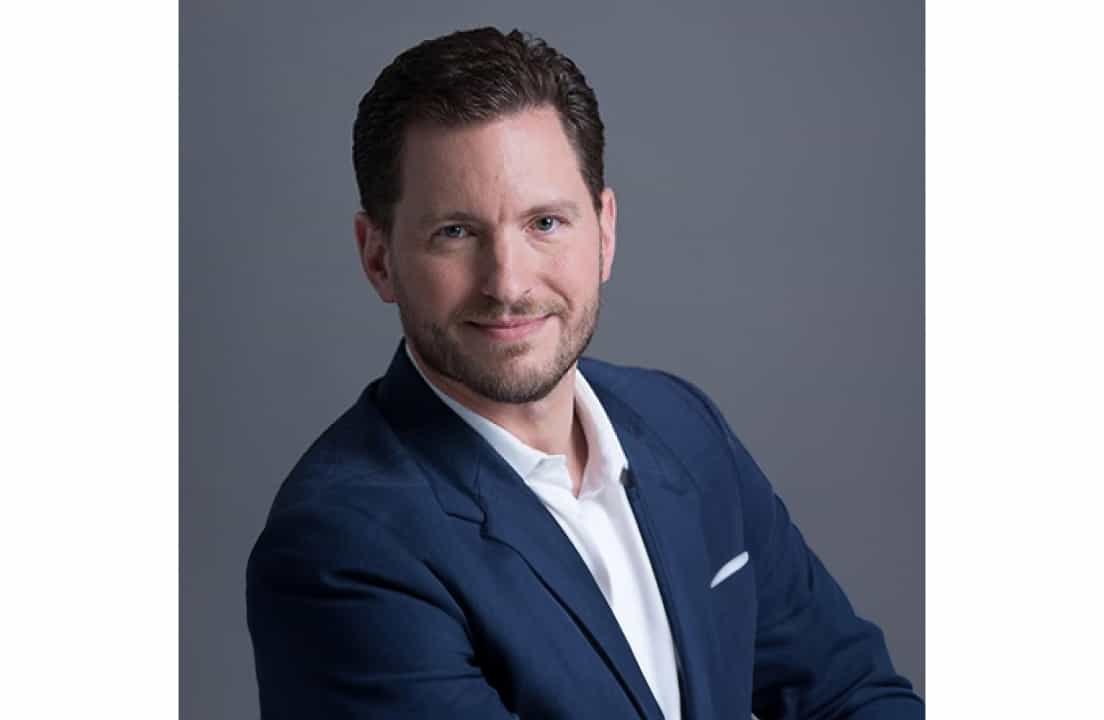
The company could succeed financially without ever producing a cure that I personally want or qualify to receive. That is an important difference between investing in a company and believing its therapy will soon change your own life.
Early Progress Can Be Real without Being a Cure
People sometimes hear that participants in an islet-transplant trial are no longer taking insulin and understandably think: “They were cured. Why can’t I have that?” I understand that reaction. I have lived with T1D for decades, and I would love a cure, too. But the therapy being tested today is not necessarily the version that could someday reach millions of people.
Researchers Still Need to Answer Major Questions
- How safe is the immunosuppression over 10, 15, or 20 years?
- How long will the transplanted cells survive and continue producing insulin?
- Can the therapy work with lab-grown cells instead of scarce donor islets?
- Can it be delivered without frequent intravenous infusions?
- Can it be manufactured and delivered at a cost that insurers and healthcare systems can support?
- Does the benefit outweigh the risks for someone whose T1D is currently managed with insulin and automated technology?
Those questions are not negative. They are exactly what clinical trials and the FDA approval process are designed to answer.
We can celebrate every participant who becomes insulin-independent while acknowledging that the treatment still has a long way to go before it becomes widely available.
Both things can be true.
You Can Lose Money, Too
My investment in Provention Bio went very well. Another biotech investment did not. I invested in a company developing a potential Alzheimer’s treatment. There was a lot of excitement around the drug—until a major study failed. The stock price plunged, and I lost a significant amount of money.
That is the reality of biotech investing.
A promising theory may not work in humans, or may work well in a small group but not prove itself in a larger study. A treatment may cause unexpected side effects. The FDA may require more research. A company may run out of money. A competitor may develop something better. Even encouraging clinical results do not guarantee that a larger company will make an acquisition offer.
My own financial advisor has reminded me that professional investors spend their entire workday studying the market. I do not. I know the T1D research world well, but that does not make any investment safe. If you are considering buying an individual biotech stock, only invest money you can truly afford to lose. Your emergency savings, insulin money, housing payment, and retirement needs should never depend on one experimental therapy succeeding.
Hope, Science, and Money Can Exist at the Same Time
It can feel uncomfortable to talk about people making money from diabetes research. But money is already part of this process. Clinical trials cost money. Manufacturing costs money. FDA submissions, medical teams, facilities, long-term safety monitoring, and worldwide distribution all cost money.
Large pharmaceutical companies may eventually make substantial profits from a successful T1D therapy. Early investors in a small biotech company may profit if that company is acquired. The researchers and founders may also make a great deal of money. That does not automatically make the science bad, or the people involved dishonest. A profitable treatment can still improve—or save—people’s lives.
Understanding Financial Incentives Helps Us Look at Cure Headlines More Carefully
We can be hopeful without being misled. We can celebrate exciting results without pretending the unanswered questions do not exist. And we can understand that when a tiny biotech company says it is developing a groundbreaking therapy, the company’s end goal may not be to sell that treatment directly to us.
Its goal may be to prove the idea, attract a buyer, and hand the next stage to a company with the money and infrastructure to take it further. That is not a conspiracy. It is the business of biotech.
Click here to see Ginger’s full podcast.


.webp)


.webp)


.jpeg)




.jpg)




%20(1).jpg)
.jpg)
.jpg)
.jpg)
.jpg)
.jpg)
.jpg)
.jpg)
.jpg)
.jpg)
.jpg)
.jpg)
.jpg)
.jpg)
.jpg)
.jpg)

.jpg)
.jpg)


.jpg)
.jpg)
.jpg)
.jpg)
.jpg)
.jpg)
.jpg)


.jpg)





.webp)
.svg)