


T1D Guide
T1D Strong News
Personal Stories
Resources
T1D Misdiagnosis
T1D Early Detection
Research/Clinical Trials
His Pancreas Is Still Making Insulin—Can Tzield Keep It Going?
A 25-year-old young man is still taking a small amount of basal insulin, but his insulin needs have fallen dramatically since participating in a clinical trial using Tzield (teplizumab) designed to preserve beta-cell function.
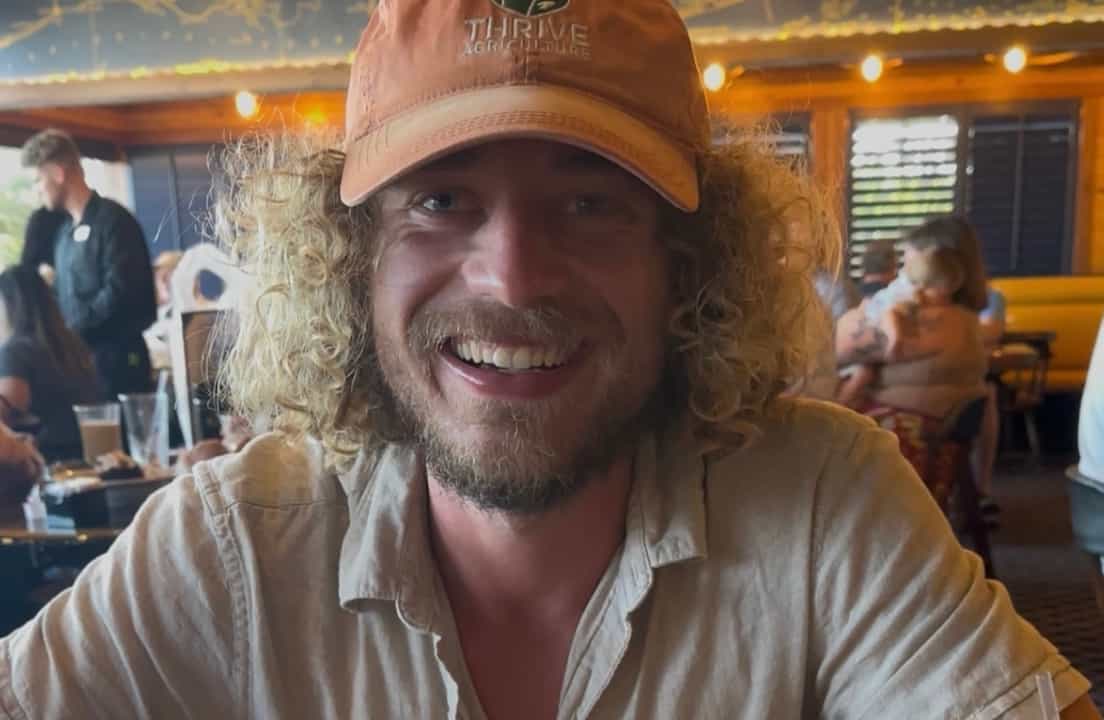

When Jacob was diagnosed with type 1 diabetes (T1D) in February 2026, he didn’t waste any time. (Actually, he was misdiagnosed with type 2 diabetes years before, but we’ll get to that in a moment.)
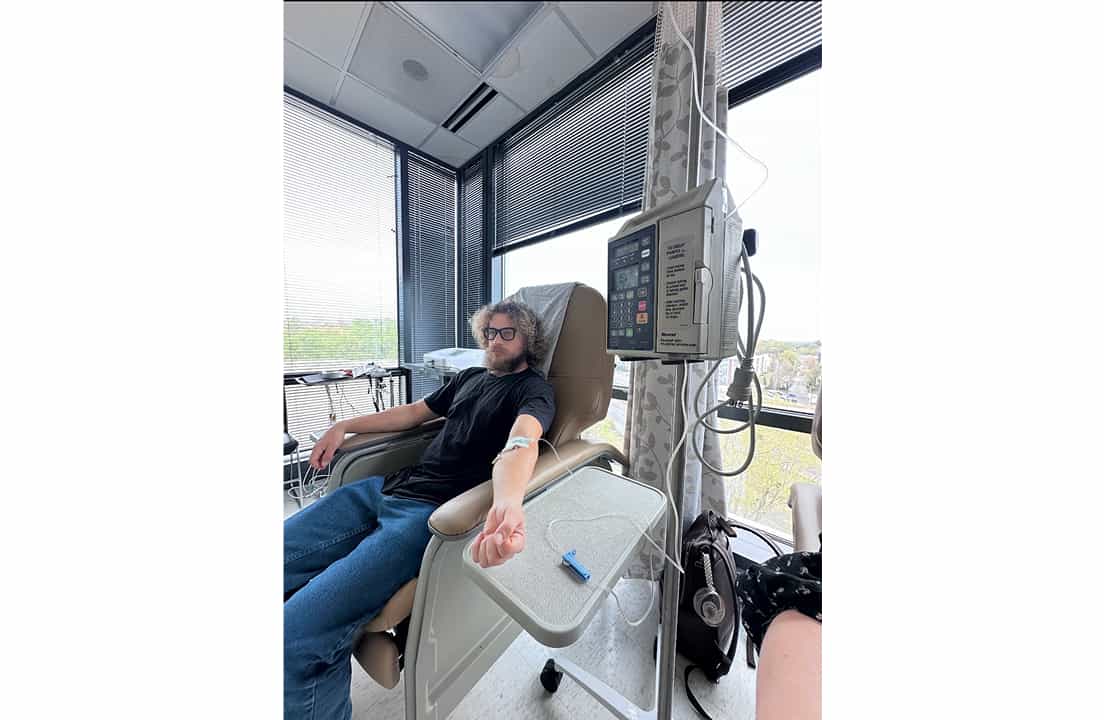
While sitting through jury duty, the 24-year-old began searching online for an endocrinologist, but he found something else along the way: a clinical trial for adults who had been very recently diagnosed with T1D. Within weeks, Jacob was sitting in an infusion chair, receiving the first of 12 daily infusions of either teplizumab—better known by the brand name Tzield—or a placebo.
Today, several months after that first infusion course, Jacob has stopped taking mealtime insulin. His long-acting insulin dose has dropped from 26 units per day to just 12 units, and his endocrinologist predicts he’ll probably need to reduce it further or come off insulin therapy completely.
“I’m hoping I’ll come off completely,” Jacob told me during our interview for the Diabetes Nerd Podcast. “No basal. Fingers crossed.”
But Jacob’s experience comes with an important caveat: This is a blinded clinical trial. Jacob does not officially know whether he received Tzield or a placebo. His results certainly suggest he may have received the drug, but neither he nor the researchers can confirm that yet.
His First Signs of Diabetes Were Missed
Jacob’s road to a type 1 diabetes diagnosis actually began several years earlier. In December 2023, he injured his foot while practicing Brazilian jiu-jitsu. When the injury took an unusually long time to heal, he went to his primary care doctor. Routine bloodwork revealed an A1C of 9.6%.
Because Jacob was overweight at the time, his doctor prescribed tirzepatide—the active ingredient in Mounjaro—but Jacob said he was never clearly told whether he had type 1 or type 2 diabetes. Based on the GLP-1 prescription, it’s clear that the doctors assumed he had type 2 and didn’t follow through with additional testing to confirm the diagnosis. Unfortunately, they also failed to communicate the full diagnosis clearly to Jacob.
His A1C improved dramatically while taking tirzepatide, eventually falling into the 5% range. But by December 2025, something was still clearly wrong.
Around the time his son was born, Jacob began waking up eight or nine times every night to urinate. He lost a significant amount of weight, dropping to approximately 135 pounds; classic symptoms of type 1 diabetes.
His A1C had climbed to 10.5%. This time, Jacob was correctly (and finally) diagnosed with type 1 diabetes.
Looking back, he wishes someone had tested him for type 1 diabetes autoantibodies when his A1C was already 9.6% in 2023. “I may have been able to catch it earlier and done Tzield three years ago instead of going through it right now,” he said. He’s right, because an earlier diagnosis could have meant starting treatment while he still had even more insulin-producing beta cells left to protect.
What is Tzield?
Tzield, or teplizumab, is a monoclonal antibody that changes how the T-cells in your immune system behave towards the cells in your pancreas that produce insulin.
Jacob described the immune system as an army whose soldiers have mistakenly started attacking their own teammates. Tzield essentially steps in and tells some of those soldiers to stand down.
The goal is not to replace beta cells or make new insulin-producing cells. Instead, Tzield attempts to slow down your immune system’s attack on your beta cells, giving the healthy ones more time to produce insulin.
Tzield was originally approved to delay the progression from stage 2 to stage 3 type 1 diabetes. In stage 2, a person has diabetes-related autoantibodies and abnormal blood sugar levels, but they’re still producing enough insulin to prevent developing classic symptoms and diabetic ketoacidosis (DKA). Most people would only notice stage 2 with intentional antibody testing.
In June 2026, the FDA also granted accelerated approval for Tzield to slow the decline of insulin production in children ages 8 through 17 who were recently diagnosed with stage 3 type 1 diabetes. That newer approval does not include adults like Jacob, which is why his treatment is still being studied in a clinical trial.
The Beta Preserve Clinical Trial
Here’s what makes Jacob’s trial with Tzield different than how it’s currently used with FDA approval: Jacob is going to get two rounds of Tzield six months apart, instead of just one round.
Let’s back up: Jacob enrolled in the Beta Preserve trial, which is studying teplizumab in adults with recently diagnosed stage 3 type 1 diabetes.
Participants are randomly assigned to receive teplizumab or a placebo. There is a two-in-three chance of receiving teplizumab and a one-in-three chance of receiving the placebo. The trial includes two 12-day courses of daily infusions, given six months apart. Researchers are studying whether this repeat treatment can preserve the body’s natural insulin production better than a single course.
To qualify for the study, Jacob had to begin treatment within six weeks of his diagnosis. His screening appointment took place on the same day as his first visit with his new endocrinologist!
C-peptide levels are an important part of measuring the therapy’s success. C-peptide is an enzyme that the pancreas produces alongside insulin. The more insulin you’re producing, the higher your C-peptide level is. Jacob’s recent C-peptide test came back at 1.15. For contrast, my C-peptide level after 27 years with type 1 diabetes is <0.01. (Basically nothing.) Jacob still had a meaningful amount of natural insulin production left. This made him an ideal candidate for a therapy designed to protect it.
Twelve Days of Infusions
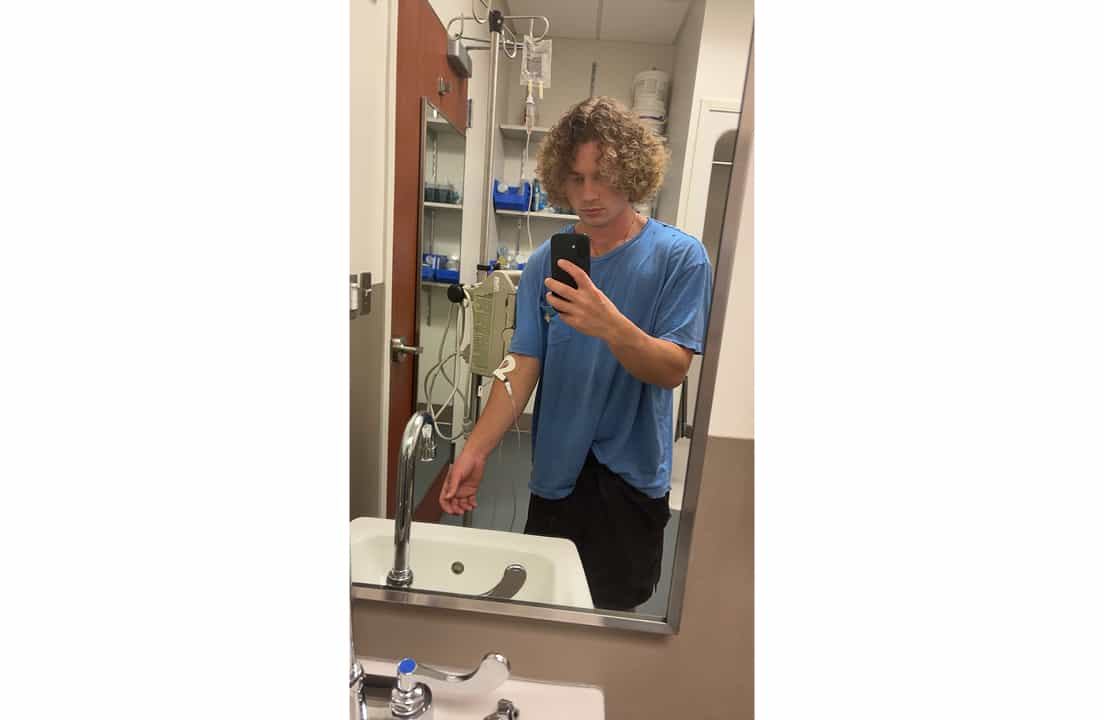
For 12 consecutive days, Jacob traveled approximately 40 minutes to the study site at his endocrinologist’s office near Atlanta. Before the first several infusions, he was given Benadryl and Tylenol to reduce potential reactions. During the first few days, they administered Tzield more slowly, presumably to see how well he tolerates the drug and give his body time to adjust.
On the first day, Jacob spent about five hours at the clinic. Researchers performed a mixed-meal tolerance test, took blood samples every 15 minutes, monitored his vital signs, administered the infusion, and then watched him for another hour. (Again, to make sure he doesn’t have any unexpected reactions.)
“The first few days were the hardest,” said Jacob. He felt tired, although he wasn’t sure whether the fatigue came from the study drug, the Benadryl, or both. On the third day, he even vomited after dinner. The study team prescribed an anti-nausea medication, and he didn’t experience that problem again. By the fourth day of infusions, he felt fine.
Then His Insulin Needs Began Dropping
The impact was nearly immediate. Around day 10 or 11 of the 12-day infusion protocol, Jacob noticed something that left me pretty envious. He ate a container of yogurt without taking insulin. His glucose “spiked” to approximately 140 mg/dL and then dropped to 90 mg/dL on its own.
A few days after completing the infusion course, he started experiencing low glucose levels overnight—a clear sign that his pancreas might be helping out more than it used to. He was eating apples and peanut butter before bed simply to prevent his glucose from dropping.
His healthcare team instructed him to reduce his long-acting insulin dose significantly—from 26 units to 16 units. By the time of our interview, he had gradually reduced it to 12 units. He has also stopped taking any mealtime insulin. His body is now handling most meals on its own. He even tested it with a Dairy Queen Blizzard while watching UFC fights with friends.
“I didn’t want to feel left out,” he explained, so he ordered a big milkshake like his friends. His glucose spiked to 195 mg/dL, but within about an hour it had fallen to around 130 mg/dL without a correction dose. It eventually settled near 90 to 100 mg/dL. All on its own.
That doesn’t mean every blood sugar stays perfectly in range. Jacob said meals containing a lot of sugar can still cause a quick spike. Potatoes and sweet potatoes tend to produce a slower, more prolonged rise.
He’s also found that getting up, even just for a few minutes of physical activity, can help a rising glucose level come down quickly. Regardless, watching his body correct those mildly high numbers without any injected insulin is remarkable. Jacob’s last update on Instagram said his A1C was down to 5.2%!
We Cannot Call This a Cure
Jacob’s response is exciting, but it’s important to keep it in perspective.
- First, Jacob is still taking basal insulin. He has not completely stopped insulin therapy. (Yet.)
- Second, this is one participant’s experience. A clinical trial must evaluate the entire group before researchers can determine whether the treatment is safe and effective.
- Third, the trial is blinded. Jacob’s sharp reduction in insulin needs and changes in his bloodwork make him suspect that he received teplizumab, but we’re merely guessing.
- Finally, even if Tzield has preserved his remaining beta cells, nobody knows how long that benefit will last. We know Tzield is approved with the anticipation of delaying the need for daily insulin by approximately 3 to 5 years, but we don’t know the impact of this second round of infusion Jacob will receive six months after the first round.
Tzield does not eliminate the autoimmune disease behind type 1 diabetes. It simply attempts to slow down the attack and protect the insulin you’re still producing if you were recently diagnosed. For some people, that benefit may last much longer than it does for others.
Jacob heard from past participants who went 17 years without needing insulin after 12-days of infusions from the first clinical trial involving Tzield. That’s incredible! But it wasn’t the norm, which is why the FDA allows the makers of Tzield (Sanofi) to state an anticipated delay of 3 to 5 years before a person might need daily insulin again.
For some people, 3 to 5 years doesn’t sound like much, right? But imagine the difference between managing type 1 in a 6-year-old versus a 10-year-old. That child’s maturity will make a significant difference, but you’re also giving them four more years of childhood development with normal glucose levels.
It’s a big deal. What can that second round of infusions six months later do? Time will tell!
Type 1 Diabetes Was Already Part of Jacob’s Family
Jacob’s father was diagnosed with type 1 diabetes at age 16. He struggled with serious complications, including retinopathy, neuropathy, and kidney disease. He eventually received both a kidney and pancreas transplant, but the transplanted pancreas developed a blood clot and had to be removed shortly afterward.
Jacob’s father died in 2016. Some of Jacob’s earliest memories involve visiting him in the hospital. “Take care of yourself if you have type 1,” Jacob said. “It was rough.”
That history makes Jacob’s current experience especially powerful. He knows how managing type 1 can be, and now he is participating in research that could change the future of type 1 diabetes for so many diagnosed after him. His brother and nephews have already been screened for type 1 diabetes autoantibodies, and all tested negative. Jacob also plans to screen his infant son when he is old enough. (I’ve screened my kids, too!)

What’s Next for Jacob?
In September, six months after his first infusion course, Jacob is scheduled to complete another 12 days of infusions.
Researchers will continue measuring his insulin production, blood sugar management, and insulin needs. After the second course, he will remain in the follow-up phase for years (hopefully) so the study team can evaluate whether two rounds of treatment offer a meaningful benefit.
Jacob hopes his insulin needs continue to decrease, down to zero. But there are no guarantees.
For now, his pancreas is clearly still producing a meaningful amount of insulin. Whether that is the result of teplizumab, a strong natural honeymoon phase, or some combination of factors will not be known until the trial is unblinded and the full results are analyzed.
Jacob also started documenting his experience on social media because he wants other newly diagnosed adults to know that trials like this exist.
“If I let somebody else know about it, it may make the trial go faster, and maybe help preserve their beta-cell function,” he said.
For Jacob, joining the study was understandably scary. It was also an opportunity he didn’t want to miss. And now, less than six months after being diagnosed with type 1 diabetes, he is eating meals without mealtime insulin while helping researchers determine whether repeat courses of Tzield could protect natural insulin production for years to come.
Thank you, Jacob, for participating in this groundbreaking science!
Click here to watch the Diabetes Nerd interview.
Follow Jacob’s journey: https://www.instagram.com/jacobt1diabetes/


.webp)

.webp)

.jpeg)















.jpg)






.jpg)





%20(1).jpg)



.jpg)
.jpg)
.jpg)
.jpg)
.jpg)

.jpg)
.jpg)

.jpg)
.jpg)
.jpg)
.jpg)
.jpg)
.jpg)
.jpg)
.jpg)
.jpg)

.jpg)
.jpg)
.jpg)
.jpg)

.jpg)

.jpg)

.jpg)
.jpg)



.jpg)

.jpg)
.jpg)


.jpg)
.jpg)


.webp)
.svg)