


T1D Guide
T1D Strong News
Personal Stories
Resources
T1D Misdiagnosis
T1D Early Detection
Research/Clinical Trials
Considering Tzield for Yourself or a Loved One? Here’s What You Need to Know
Sanofi’s Tzield (teplizumab-mzwv) recently boosted its reach beyond prevention to newly diagnosed individuals with type 1 diabetes (T1D). On June 12, 2026, the U.S. Food and Drug Administration (FDA) granted accelerated approval for pediatric patients aged 8–17 who are within eight weeks of a stage 3 T1D diagnosis, marking a significant expansion beyond its original use.

.webp)
Just months earlier, in April 2026, the FDA broadened Tzield’s stage 2 indication to include children as young as one year old. Originally approved in 2022, Tzield made history as the first FDA-approved disease-modifying therapy for type 1 diabetes, designed to delay its progression.
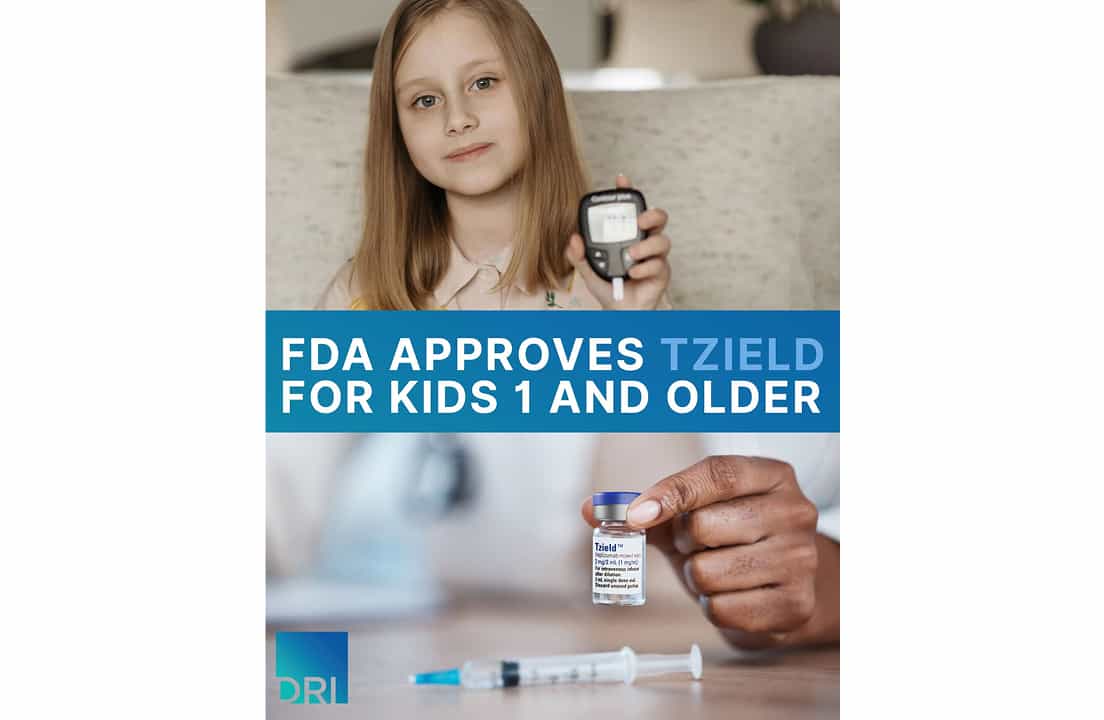
This latest shift signals a major step forward, bringing the potential of beta cell preservation to individuals newly diagnosed with type 1 diabetes.
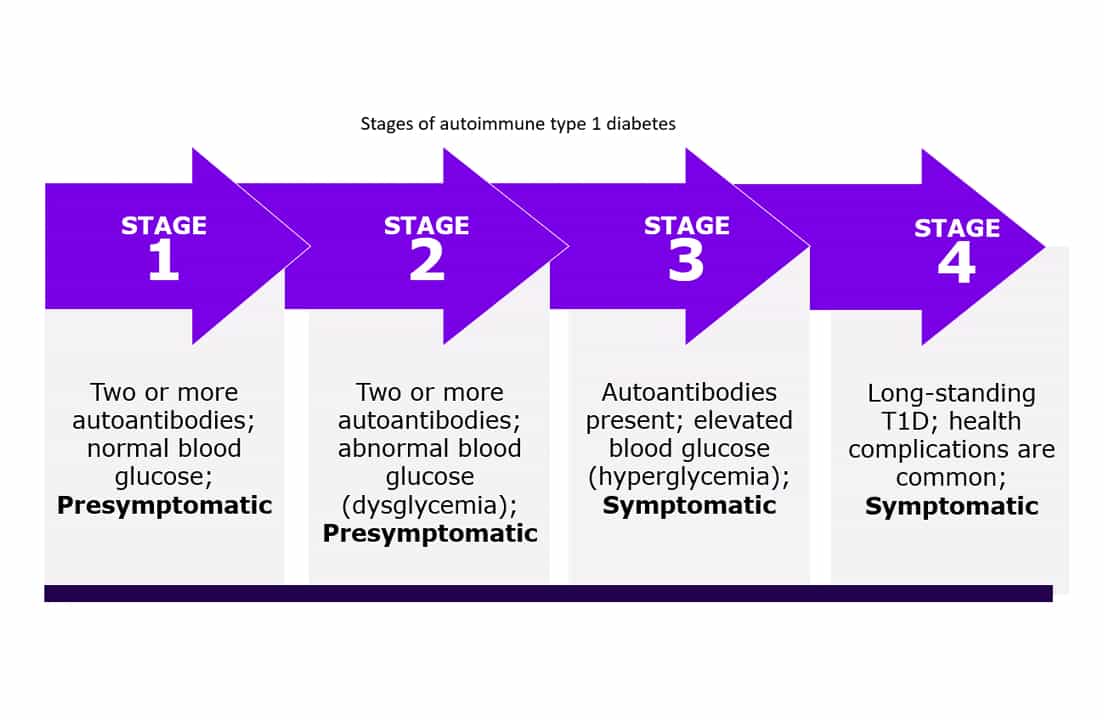
T1D Strong has spoken with several individuals who have undergone the TZIELD infusion and reported positive outcomes.
Here’s a deep dive into how the infusion works, possible side effects and how long the treatment is expected to hold off the destruction of beta cells, aka prevent type 1 diabetes.
How Tzield Works
Tzield is administered as a series of daily intravenous (IV) infusions over 14 consecutive days. It is currently approved as a one-time treatment course to delay the onset of stage 3 type 1 diabetes in at-risk individuals.
Repeat courses given every few years to indefinitely delay progression to stage 3 are not approved at this time and remain under clinical investigation. However, for newly diagnosed individuals in stage 3, ages 8-17. A second infusion is required several months after the first.
Pre-Treatment Requirements
To be eligible for Tzield, patients with stage 2 T1D must meet the following criteria:
Age: Patients must be one year old
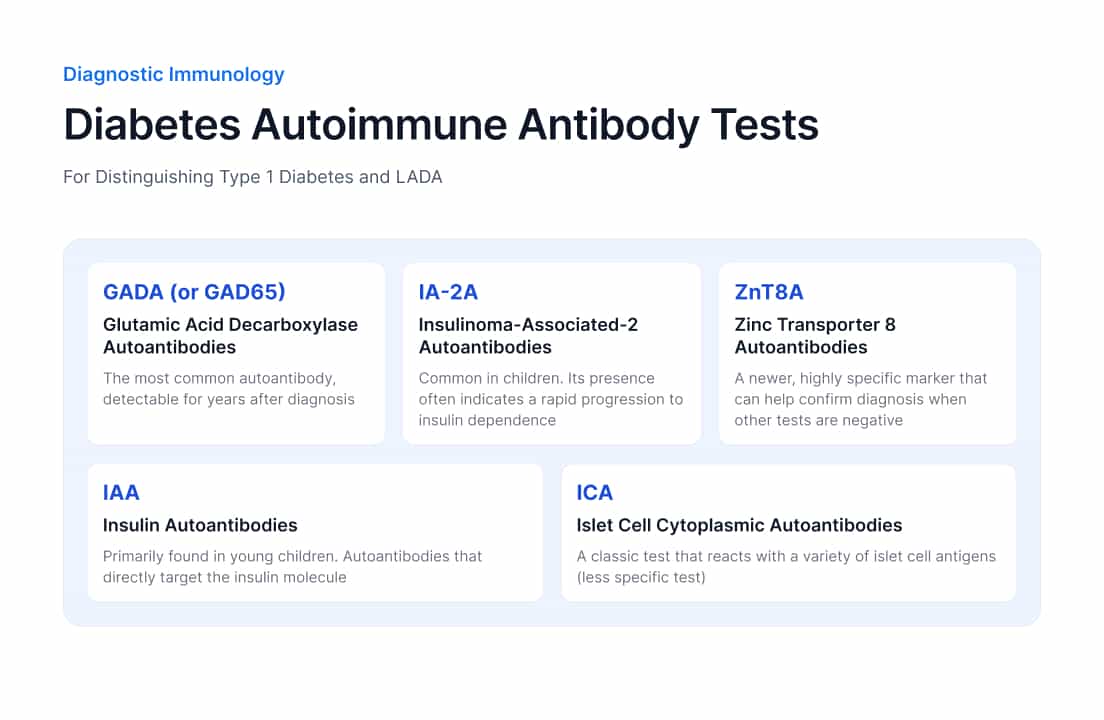
Autoantibodies: Individuals must test positive for at least two of the five islet cell autoantibodies through a simple blood draw.
The 5 Islet Autoantibodies
- GAD (Glutamic Acid Decarboxylase Autoantibodies)
- IAA (Insulin Autoantibodies)
- IA-2A (Insulinoma-associated-2 Autoantibodies)
- ZnT8A (Zinc Transporter-8 Autoantibodies)
- ICA (Islet Cell Cytoplasmic Autoantibodies)
Dysglycemia: Patients must show evidence of abnormal blood sugar levels (by an oral glucose tolerance test) without yet experiencing hyperglycemia or requiring insulin.
Additional Baseline Requirements
Before treatment, the patient must have:
- Lymphocyte count > 1,000 cells per mcL.
- Normal baseline liver enzymes (ALT and AST) and bilirubin.
- No active serious infections or evidence of Epstein-Barr (EBV) or cytomegalovirus (CMV).
- All age-appropriate vaccinations up to date (live-attenuated vaccines should be given at least eight weeks prior, and inactivated/mRNA vaccines at least 2 weeks prior)
Tzield Infusion Schedule
The actual infusion takes a minimum of 30 minutes, and the entire process (preparation, IV placement, and post-infusion monitoring) typically lasts about 2 hours per day for 14 consecutive days.
Infusions can be completed at an outpatient infusion center. For more resources, contact your healthcare provider’s policies and the Tzield Patient Support team. The dosage increases daily to help the body adjust, starting small and peaking around Day 5.
Potential Tzield Side Effects
While serious side effects are rare, the medication temporarily suppresses immune function, and commonly reported side effects include:
- Lymphopenia: A temporary drop in white blood cell counts, which typically normalizes after the 5th day of treatment.
- Mild Skin Rash: Usually resolves without medical intervention.
- Headache and body aches similar to the flu.

The New Stage 3 Protocol
The new stage 3 protocol for patients is a little different. Patients receive a modified regimen of Tzield, designed to slow the destruction of insulin-producing beta cells. Instead of the 14-day course, the stage 3 regimen consists of two separate 12-day intravenous infusion courses administered roughly 6 months apart.
Why this specific Age Group?
Tzield is approved for individuals newly diagnosed with type 1 diabetes aged 8 to 17 years. It must be administered within a few weeks of their diagnosis to help delay the decline of their remaining insulin-producing cells.
The FDA’s approval of Tzield for this specific age group is rooted in how the drug works and the clinical trials (based on the Phase 3 PROTECT trial, which tested the drug's impact on this exact age range) that demonstrated its efficacy.
In addition to the clinical trial design, the restriction excluding adults is driven by differing biological progression rates and adult safety concerns.
Dietary Changes May Help Stage 2
According to ScienceDirect, studies show that dietary changes can benefit how the cells respond in stage 2 type 1 diabetes. As they work to protect the remaining pancreatic tissue rather than to stop the autoimmune attack, they increase the workload on the remaining insulin-producing beta cells.
In stage 2, the immune system has already destroyed several cells, and the remaining ones are forced to work in overdrive to produce adequate insulin.
How Long Does Tzield Last?
For people with stage 2 type 1 diabetes, a TrialNet study reports Tzield delays the disease onset:
- Average delay: About 2 years (median ~25 months) without insulin needs
- Range: Some people progressed sooner, while others remained insulin-free for several years longer (up to ~4–5 years in some cases)
- What this means: It doesn’t permanently stop the disease, but it can buy meaningful time without insulin dependence.
For people already diagnosed (stage 3), Tzield aims to preserve remaining beta cell function for up to two years. Studies show it helps maintain the body’s own insulin production for longer (as measured by C-peptide levels), which can lead to lower insulin needs and better overall blood sugar control.
It’s important to remember Tzield is not a cure; people in stage 2 will eventually develop stage 3 T1D, and stage 3 individuals will still need insulin but possibly less and with better control.
Benefits of Early Detection with Screening
This new development only adds to the growing reasons to screen for and support early detection of type 1 diabetes. Discovering a loved one is on the path to type 1 diabetes isn’t easy, but it’s much better to be prepared than blindsided.
Catching the disease early allows for the following:
Time to Prepare
Families can use the delay to educate themselves on the condition and become emotionally prepared. It allows time to speak with insurance companies about various insulin therapies and technology, and to find doctors and support systems.

Avoid a Medical Emergency
Up to 40% of individuals diagnosed with type 1 end up in the ICU with diabetic ketoacidosis (DKA), a severe, life-threatening complication.
Technology Training
It allows time to get set up with continuous glucose monitors (CGMs) or automated insulin pumps before insulin dependence begins.
Unlocking Therapies
Tzield may be the only FDA-approved therapy on the market, but there are many other options and ongoing clinical trials. Tzield buys a patient up to two years of living completely free from insulin dependence.
Preserving Natural Pancreas Function
Catching the disease early allows you to use dietary strategies and close clinical monitoring to protect remaining beta cells. Studies now show that individuals who don’t go into DKA have better long-term A1C and glucose levels, which are easier to manage.
For full details on the clinical trial data, you can review the FDA Official Press Release and check out Sanofi’s Media Room.


.webp)

.jpeg)





















.jpg)







.jpg)





%20(1).jpg)


.jpg)
.jpg)
.jpg)
.jpg)
.jpg)
.jpg)
.jpg)

.jpg)
.jpg)

.jpg)
.jpg)
.jpg)
.jpg)
.jpg)
.jpg)
.jpg)

.jpg)
.jpg)
.jpg)

.jpg)

.jpg)
.jpg)
.jpg)


.jpg)
.jpg)


.jpg)

.jpg)
.jpg)
.jpg)
.jpg)
.jpg)
.jpg)

.jpg)
.jpg)
.jpg)


.webp)
.svg)