


T1D Guide
T1D Strong News
Personal Stories
Resources
T1D Misdiagnosis
T1D Early Detection
Research/Clinical Trials
How JDCA is Bringing Transparency to Type 1 Diabetes Cure Research
For decades, people affected by type 1 diabetes (T1D) have heard the promise that a cure is just a few years away. Yet many still wonder how close science may be and where donor dollars are making the greatest impact.
.jpeg)
The Juvenile Diabetes Cure Alliance (JDCA) was founded to answer those questions by bringing greater transparency to how charitable dollars are spent and where progress is being made.
Why JDCA Exists for T1D Donors
Many diabetes organizations focus on raising money, education or advocacy. JDCA fills a different role by gathering and analyzing publicly available information to give people a clearer picture of funding, clinical progress and the path ahead.
For decades, many people gave generously without a clear picture of how their contributions supported efforts to move the field forward.
"JDCA was born out of T1D donors asking questions about what their contributions were funding, and how more could get to cure research," the organization says. "Our reporting offers the transparency donors deserve and ensures accountability across the T1D research funding landscape."
The Gap Between Donor Priorities and Nonprofit Funding
Most people with type 1 diabetes hope their contributions will help move the field closer to a lasting solution. JDCA says that, for years, many supporters lacked the information needed to determine whether funding priorities aligned with that goal.
"In the T1D community, we've been told that a cure is just five years away for decades. Many of us feel a little burned by this promise," the organization stated.

How the Organization Tracks Funding
The organization publishes reports covering clinical trials, nonprofit spending, fundraising, and other developments. It also follows every project currently in human trials and monitors companies developing potential treatments, bringing information together that it says was not previously available in one place.
"This, we hope, allows all of our followers and supporters to reach their own informed opinions," the nonprofit says. "And, we hope, it encourages us to all speak up."
The goal is to give people a clearer picture of where T1D advancements are being made and how charitable dollars are being spent. "It keeps everyone on the same playing field," the organization adds.
What Does a Practical Cure for Type 1 Diabetes Mean?
JDCA doesn't throw the word cure around loosely. The organization defines its goal as a Practical Cure, a term shaped over years of dialogue, focus groups and surveys with the T1D community itself.
A Practical Cure is any solution that eliminates the burden of the condition and delivers a near-normal life within 15 years for people who already have the disease.
The group compares the idea to what researchers have pursued for HIV. The disease itself isn't eliminated, but symptoms disappear, and quality of life is no longer compromised.
JDCA's published clinical requirements spell out what that actually looks like. A Practical Cure would mean testing blood sugar once a week or less. It would mean eating without restriction, sleeping worry-free, and managing with a simple, minimal medication routine. It would also mean little to no diabetes-related side effects, and a fast recovery if surgery is ever needed.
Where the Science Stands Today
Achieving that vision depends on two breakthroughs happening together. Researchers need a sustainable supply of insulin-producing cells. They also need a way to protect those cells from the autoimmune attack that causes T1D in the first place.
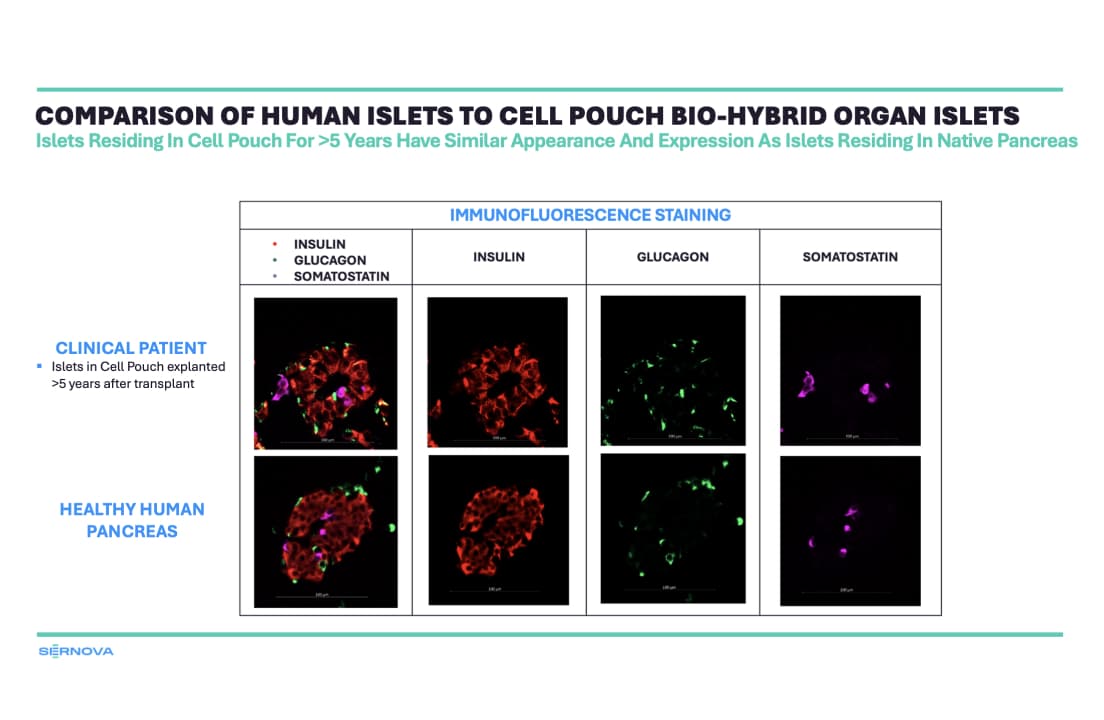
Advances in cell supply have moved quickly. Stem cell-derived beta cells can now be manufactured at scale, a shift that has pulled dozens of companies into the field over the past decade. Several are already in clinical trials, and Vertex Pharmaceuticals is furthest along, with its zimislecel treatment now in phase three trials.
But there's a catch. Patients receiving these cells today still need broad immunosuppression to avoid rejection, and JDCA doesn't count that as a real remedy. In their view, trading one lifelong treatment for another falls short of a Practical Cure.
Protecting those cells has proven more difficult. Companies are testing gene editing, encapsulation and immune modulation in preclinical and early trials, but nothing has pulled ahead yet. JDCA says it's watching this next stage closely.
What's Still Standing in the Way
When asked what still stands in the way of a ‘Practical Cure’ for type 1 diabetes, JDCA points to something less technical than biology.
"Focus, urgency, commitment and money. From years of tracking research and trials, we know promising projects can be stagnated for years or abandoned if they don't receive enough support."
Speeding that up, in their view, means keeping donor dollars and commercial investment focused on the most promising areas instead of letting the field chase whatever is easiest or most hyped in a given year.
Over the past decade, prevention and delay efforts have often taken priority, a trend the group says offers little to people already living with T1D today.
Commercial interest in stem cell-derived therapies has grown, but that momentum, the organization argues, also needs to reach cell-protection efforts, where fewer companies and fewer dollars are currently in play.
Why the 15-Year Timeline Matters
Their 15-year timeline reflects urgency, not optimism.
"JDCA references a 15-year timeframe to drive focus rather than optimism," said an organization spokesman. "This provides a time-bound framework for new projects to create goals and track milestones."
Staying focused on people living with type 1 right now, not just future generations, is the whole point of that plan. The group believes that sustained commercial momentum, paired with real donor accountability, is what actually carries the most promising research through clinical trials and into something people can actually benefit from.

A Message to the T1D Community
Despite the hurdles that remain, the organization says its mission has never changed.
"There's been hope that a cure was on the horizon in the past. But we can't cross the finish line if the focus shifts off target. Progress toward a cure shouldn't feel like a lucky break. It should be intentional."
"We won't stop working until a cure is found," the organization adds. "And we need your help. All of us working together can make it a reality."
To learn more and explore the organization's reports, visit thejdca.org.


.webp)

.webp)











.jpg)




.jpg)





.jpg)



%20(1).jpg)



.jpg)

.jpg)
.jpg)
.jpg)
.jpg)
.jpg)
.jpg)

.jpg)

.jpg)
.jpg)
.jpg)

.jpg)
.jpg)

.jpg)
.jpg)
.jpg)


.jpg)

.jpg)
.jpg)
.jpg)



.jpg)


.jpg)

.jpg)


.jpg)
.jpg)
.jpg)


.jpg)

.jpg)


.jpg)

.jpg)
.jpg)
.jpg)
.jpg)


.webp)
.svg)