


T1D Guide
T1D Strong News
Personal Stories
Resources
T1D Misdiagnosis
T1D Early Detection
Research/Clinical Trials
From Prediction to Prevention: How TrialNet Is Changing the Future of Type 1 Diabetes
T1D Strong spoke with TrialNet’s Pathway to Prevention Study Chair, Dr. Laura Jacobsen, about its 25 years of groundbreaking research, the future of disease-modifying therapies (DMTs) beyond Tzield, and how early detection is changing how we treat type 1 diabetes (T1D).

.webp)
TrialNet has transformed our knowledge of type 1 diabetes (T1D) from a chronic condition treated with insulin to an autoimmune disease with distinct stages and opportunities to delay its onset.
In fact, TrialNet’s research was instrumental in the FDA approval of teplizumab (Tzield), the first disease-modifying therapy for T1D.
TrialNet’s 25-Year Journey in Type 1 Diabetes
TrialNet is the longest-running international program for early detection and screening of individuals at risk for T1D across 100 global screening sites. The organization was one of the first to explain that type 1 diabetes has stages. It’s conducting research studies on more than ten disease-modifying therapies (DMTs) to advance T1D prevention and treatment.
About Laura Jacobsen, MD
Dr. Laura Jacobsen serves as the Study Chair for TrialNet’s Pathway to Prevention Study. She’s also a pediatric endocrinologist, researcher, and associate professor at the University of Florida in Gainesville.
Volunteering at a Florida diabetes camp in college inspired Jacobsen to enter pediatric endocrinology. “I saw these kids running around, playing soccer, then stopping to test their blood sugar. They were so resilient, like nothing could stop them.”
She learned about TrialNet during her pediatric endocrinology fellowship, and in 2024 she became the Pathway to Prevention Study Chair. “TrialNet leadership at the time was looking to extend other leadership roles to more junior but engaged investigators, and I was very excited to be chosen.”
.jpg)
Now her work focuses on predicting and preventing type 1 diabetes before the clinical symptoms appear. To date, TrialNet has reached 250,000 people screened for early-stage T1D, but Jacobsen said there’s still much work to be done.
“Last year we reached a quarter of a million screened, so that has increased, but we are probably naïve to think even every endocrinologist or pediatrician knows what stage 1 or stage 2 type 1 diabetes is. That is still a very niche topic, and now is the time to expand education to healthcare professionals and the community at large.”
In addition to her role as Study Chair, Jacobsen is the site Principal Investigator for several TrialNet studies in addition to her own trial, "Precision administration of anti-thymocyte globulin with or without verapamil in type 1 diabetes," and advocates for early detection awareness and clinical trial enrollment by speaking at community events like the CWDs Friends For Life conference.
Pathway to Prevention
TrialNet’s Pathway to Prevention officially began in 2001, through funding from the National Institute of Diabetes and Digestive and Kidney Diseases (NIDDK).
The Pathway to Prevention trial is currently enrolling and is free for eligible at-risk individuals.
Who Can Participate:
- Eligible individuals (not diagnosed with diabetes) between the ages of 2 and 45 years who have a first-degree relative: parent, sibling or child with T1D. Also, if someone doesn't have a relative with T1D but has tested positive for islet autoantibodies outside of TrialNet, they are eligible to be tested in TrialNet.
- If you have a second-degree relative, an aunt/uncle, cousin, grandparent, niece/nephew or half-sibling with T1D, and are between the ages of 2 and 20 years.
Screening can detect type 1 diabetes years before symptoms appear, but most people are unaware of this fact. What’s more, over 50% of newly diagnosed children enter hospital ERs in diabetic ketoacidosis (DKA), a serious medical emergency that, if left untreated, may cause brain swelling, coma and death.
Which raises an important question: Why are so many children still being diagnosed with T1D only after they’ve entered DKA?
“If kids are going to their pediatrician with increased thirst and frequent urination and no one is testing their blood sugar or urine, how do we teach them this can start before symptoms develop?” Jacobsen asked. “We’ve got to push the envelope and start to get that message out. We need it to be in textbooks about early-stage type 1 and disease-modifying therapies. That’s a big step.”
“We’re a little naïve to think that, yeah, we’re ready to screen everyone yet, when I don’t think all healthcare professionals can easily recognize type 1 diabetes at symptomatic diagnosis yet,” she added.
Autoantibody Screening for T1D
As screening program lead, Jacobsen provided insight into TrialNet’s screening protocol.
Increased risk of developing type 1 diabetes is linked to the presence of multiple, confirmed autoantibodies. TrialNet can test for up to five T1D autoantibodies. Detecting the disease at its earliest stage allows you time to potentially change its course. TrialNet offers clinical trials testing ways to slow or delay the disease at every stage.
.jpg)
Testing Guidelines
- Negative: TrialNet now recommends that at-risk children under the age of 18 years who tested negative for autoantibodies be retested every 2 years.
- One autoantibody: Individuals with one autoantibody should continue to be re-screened for the development of additional autoantibodies annually, but the risk of developing symptomatic T1D is much lower in someone with 1 autoantibody compared to someone with 2 or more autoantibodies.
- Two autoantibodies: If you or your child have two or more autoantibodies, the likelihood of developing T1D nears 100% over your lifetime. Individuals who test positive for two or more diabetes-related autoantibodies can be monitored every six months; TrialNet provides close monitoring.
“Increased monitoring allows us to keep a closer eye on changes nearer to disease onset and identify people most at risk, and offer them clinical trial opportunities," Jacobsen said.
Relatives of people with T1D are 15 times more likely to develop the disease than the general population. “We try to base who we screen on the science: those most likely to be identified as autoantibody positive, and at highest risk of progressing to symptomatic type 1 diabetes,” said Jacobsen.
Screening Options
TrialNet screening can be completed through a blood draw at its testing site or the following:
- In-home Test Kit: A free fingerstick blood sample kit is mailed to the home and shipped back using a free FedEx contactless at-home pickup.
- Lab Test Kit: Free screening is available at any Quest Diagnostics or LabCorp lab.
Right now, TrialNet does not allow retesting if an adult tests negative unless they are under 18. Then children are retested (if they have a relative) every other year until they reach 18.
Getting T1D as an Adult Versus Adolescent
Jacobsen said, “If you test negative as an adult, we don’t have clear recommendations on how often adults should be rescreened because the risk is lower than in children. Since the likelihood of developing autoantibodies is higher in childhood and adolescence, and if you screen only once as a child, you may miss them. General guidelines for ages 2-4, 6-8, and 10-15 are similar to these age brackets.”
“What we don’t know in many adults is when they developed type 1: Did they get those antibodies recently, or did they have them in childhood?—and it’s probably both,” Jacobsen said. “Based on the limited adult data we do have, it shows a lot of those adults developed the autoantibodies before the age of 18.”
However, if you test positive for the autoantibodies outside of TrialNet, through LabCorp or a physician’s office, for example, you can test for confirmation with TrialNet.
“From a young age, we know the immune system is more revved up—kids who are found very young tend to progress quickly with T1D, whereas if you’re found to have antibodies at an older age, it’s much slower,” she said. “We think some immune system features and genetics may help predict who will progress more quickly.”
.jpg)
T1D At-Risk Registry
TrialNet is building its database for risk markers and disease progression. In its At-Risk Registry, people can enter their antibody data, glucose data, age, and BMI, and it will provide a predicted 2-year and 5-year risk of type 1 progression.
What if You Test Positive?
If an individual tests positive for two or more autoantibodies, the next step is to retest, then monitor and explore preventive treatments.
“These tests are not perfect,” said Jacobsen. “The risk is still variable: one autoantibody may be a false positive; two is much less likely to be a false positive.” Once you have 2 or more autoantibodies confirmed on two tests, this is stage 1 type 1 diabetes.
Screening Steps for a Positive Outcome
- Retest. Some labs can yield a false positive, so it’s important to get a second blood test within about three months to confirm.
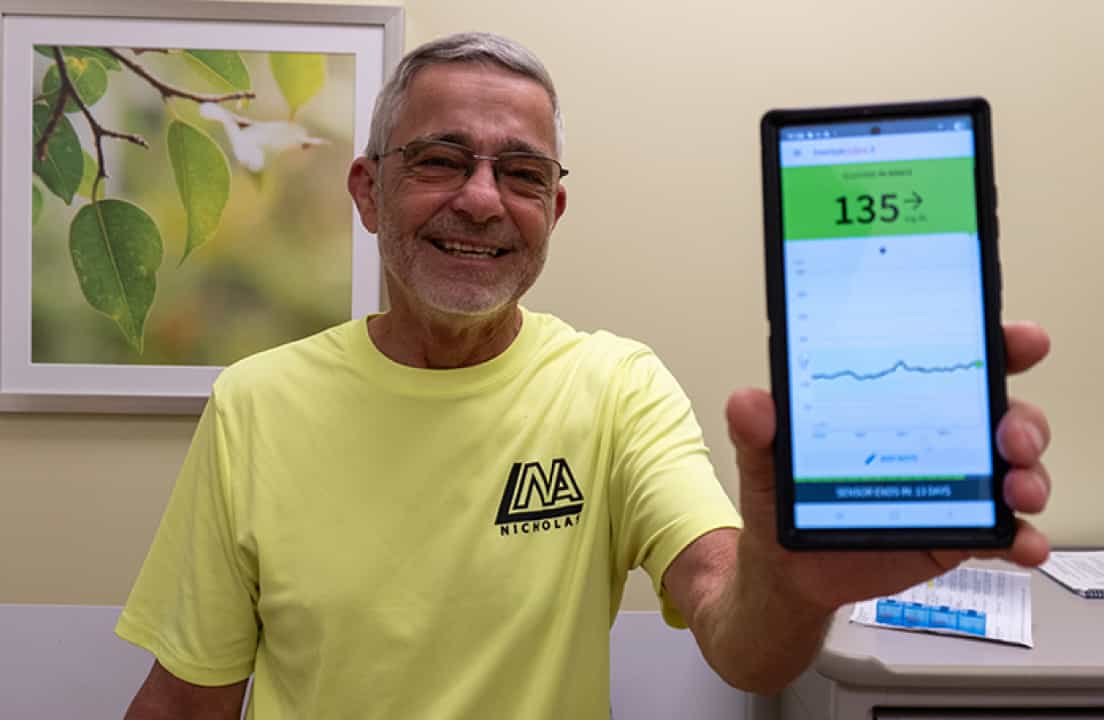
- See a Specialist and Determine the T1D Stage. An endocrinologist can test to determine how well the pancreas is currently making insulin. This can predict eligibility for therapies. Checking glucose at home or wearing a continuous glucose monitor (CGM) can help track blood sugar trends during this pre-stage. To be eligible for clinical trials, a specialized test called an oral glucose tolerance test (OGTT) is done - this is the best test to see how much insulin your pancreas is making and how that affects your overall blood sugar.
- Evaluate for Preventative Therapies to Delay Onset. Patients as young as one may qualify for the FDA-approved immunotherapy called Tzield or be eligible for clinical trial therapies.
- Establish Ongoing Monitoring. By enrolling in initiatives like Pathway to Prevention’s free clinical monitoring program, researchers can check blood sugar levels frequently. Regular monitoring is vital because it may catch T1D before dangerous side effects like DKA occur.
The Miracle of Tzield
“Tzield getting FDA approval in stage 2 and stage 3 is a really important glass ceiling that needed to be broken,” said Jacobsen. “Giving people access to FDA-approved therapy will reach far more people than something still in clinical trials. Clinical trials are historically accessed by people with means and higher socio-economic status, and we as a field need to keep pushing hard to change that.”
Tzield is considered a progressive medical breakthrough because it is the first DMT that targets the root cause of type 1 diabetes rather than just managing blood sugar symptoms.
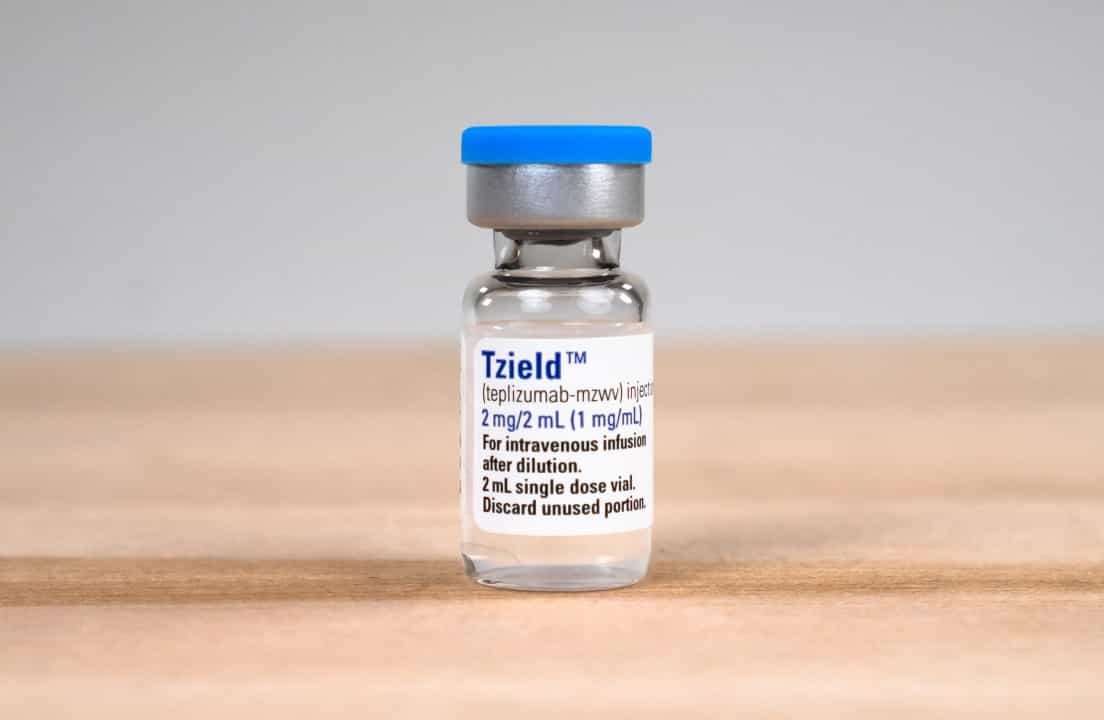
“Having an FDA-approved therapy that is treating the underlying autoimmunity of type 1 is huge because, for the past 105 years, we have been saying type 1 is an autoimmune disease, but we have not treated it as such because we’ve had insulin, so now we can actually go in and treat the underlying disease with this disease-modifying therapy,” she said.
DMTs Next Hurdle
Tzield is currently approved as a one-time infusion for individuals in stage 2 T1D. People with stage 3 T1D are approved for two infusions six months apart. Jacobsen said it took years for Tzield to achieve FDA approval, so we still need people to participate in clinical trials if we hope to get other therapies approved too.
“We’ll need to re-dose it, and we just haven’t been doing that in most of our trials. It took 10 years to test Tzield in the pivotal clinical trial, which included 76 people. It took several years to recruit people; you have to screen for them. It’s really hard to find people in the early stage—some people who’ve gotten Tzield maybe 10 years out and haven’t progressed.”
“Now the next hurdle is that this is not going to be a one-time therapy,” she said. “You’re going to have to do this forever; it’s a chronic condition. So we need to find safe side-effect profiles.”
Other Disease-Modifying Therapies for Stage 2 & 3
Most DMTs are being tested in clinical trials with patients in stage 2 T1D or newly diagnosed with stage 3 T1D. They aim to protect the beta cells that are still functioning (producing insulin).
“The challenge is that we probably have several drugs that are as effective as teplizumab, but no company to champion them and take them to the FDA,” said Jacobsen. “We’re trying to get the best data we can, so that we as investigators can convince them it’s worth taking it to market. Not 100% of people had that benefit with Tzield. I have a clinical trial looking at people’s blood to see what they would benefit from most, based on a score, for ATG therapy.”
Precision Administration of Anti-Thymocyte Globulin With or Without Verapamil in Type 1 Diabetes Study
Jacobsen designed and leads a clinical trial testing a biomarker to predict response to an immune therapy in new-onset T1D called Precision Anti-Thymocyte Globulin (ATG) and Verapamil, at the University of Florida Health. ATG given at low doses can preserve insulin production and lower HbA1c for up to 2 years.
Children and young adults diagnosed with T1D within the prior 3 months may be eligible for this study, which also combines ATG with the use of an oral medication, verapamil, thought to protect the health of the beta cells that make insulin.
WAVE T1D Study
Jacobsen is also a Principal Investigator for the WAVE T1D Study, which looks at different DMTs and whether a combination of immune-targeting and beta cell-protecting therapies can preserve the pancreas’s ability to make its own insulin in newly diagnosed T1D patients to keep those remaining insulin-producing cells alive.
“Anytime they’re making insulin on their own is better than not; so I’m really excited we’re trying to treat type 1 as an autoimmune disease,” she said.

In the WAVE T1D Study, participants receive a two-day IV infusion of anti-thymocyte globulin (ATG) and later a maintenance therapy of either adalimumab or verapamil to protect insulin cells.
“So with this, it’s a big immune therapy up front, then you’re trying to do two years of maintenance therapy to see if that makes a difference,” Jacobsen said. “Any immune-modulating therapy works differently for everyone; everyone’s immune system is unique, so some drugs will likely work only for some people.”
The WAVE T1D trial is seeking candidates who meet certain criteria:
- Age: Youth and young adults aged 9 to 20 years old.
- Newly diagnosed with T1D (usually within the prior 6 months).
- Markers: Must test positive for at least one T1D autoantibody and still show measurable signs of natural insulin.
ASCEND T1D Study
The ASCEND T1D Study is testing low-dose ATG to see how it compares to Tzield in delaying T1D onset in people in stage 2. If the ASCEND T1D Study finds ATG is comparable to teplizumab in delaying T1D in people at high risk, TrialNet may conduct an extension study to test ATG’s ability to further slow disease progression.
Who Can Participate in the ASCEND Study
- Individuals aged 4 to 34 years.
- Stage 2 T1D with at least two diabetes-related autoantibodies and slightly abnormal glucose levels.
- Not diagnosed with Stage 3 T1D (clinical diagnosis).
This study will enroll 60 people with stage 2 T1D in a randomized trial where they’re given Tzield or ATG. Everyone in the study will receive one of the study treatments. There is no placebo, and the study may take up to three years.
“Hopefully, at the end of the study, we’ll be able to say that ATG is just as good at delaying onset as Tzield,” she said. “Then we might have two options available.”

A New Era for Type 1 Diabetes
It’s a much better time to develop type 1 diabetes today than it was a decade ago, thanks to automated insulin delivery technology and preventative breakthroughs like DMTs, early screening and cell therapies using stem cell-derived beta cells.
“Parents want a cure for type 1; they want their kids to come off insulin, but we want to be realistic with our expectations using these DMT therapies – they are not strong enough, in most cases, to get someone off insulin but they do help you make your own insulin for longer which can help reduce your risk of low blood sugars and diabetes complications down the road,” said Jacobsen.
“I’m also excited for the beta cell replacements for type 1—when they can safely give an islet transplant or manufactured beta cells to people without suppressing their immune system, we will be set, but we are not there yet.”


.webp)

.jpeg)



















.jpg)









.jpg)





%20(1).jpg)


.jpg)
.jpg)
.jpg)
.jpg)
.jpg)
.jpg)
.jpg)

.jpg)
.jpg)

.jpg)
.jpg)
.jpg)
.jpg)
.jpg)
.jpg)
.jpg)

.jpg)
.jpg)
.jpg)

.jpg)

.jpg)
.jpg)
.jpg)


.jpg)
.jpg)


.jpg)

.jpg)
.jpg)
.jpg)
.jpg)
.jpg)
.jpg)

.jpg)
.jpg)
.jpg)


.webp)
.svg)