


T1D Guide
T1D Strong News
Personal Stories
Resources
T1D Misdiagnosis
T1D Early Detection
Research/Clinical Trials
Clinical Trials and Type 1 Diabetes: How They Work, Who Can Join, and What to Expect
Do you live with type 1 diabetes (T1D) and find yourself curious about clinical trials? What's actually involved, how do you find one, and what does "eligibility criteria" even mean? Here's a closer look at how it all works.

.jpeg)
Type 1 Diabetes Clinical Trials: Where to Start
Many people living with type 1 diabetes are curious about clinical trials — what they entail and how to get started. They want to play a role in improving the technology, medication and quality of life for others living with the condition, but aren't always sure where to begin or whether they'd even qualify.
The path to actually getting involved, whether that means finding a study to join or simply understanding how new treatments move from the lab to real life, isn't always clear. Clinical trials are central to that process, yet the language around them can feel more intimidating than it needs to be.
Trial or Study? What's the Difference?
"Study" and "trial" are often used interchangeably, but they're not the same thing, says Megan Rodriguez, a fellow in the COMPASS Program at UC Santa Barbara — a training initiative of the California Institute for Regenerative Medicine (CIRM) that has funded more than 100 clinical trials since California voters first approved funding for the agency in 2004, renewed again in 2020.
"A trial usually involves the actual administering of a therapy," she explains, while a study can be broader and doesn't always involve receiving a treatment at all — a survey about hypoglycemia experiences, for example, is a study but not a clinical trial.
Most legitimate clinical trials are required to register on ClinicalTrials.gov, notes Dr. Britney Pennington, the COMPASS Program's coordinator and a researcher in the biotech industry.
“There are a lot of studies out there that don't go through the legitimate phases — phase 1, 2, 3, through the FDA — with these safety criteria in place," she says, cautioning that not every effort follows an accepted research structure.
That said, registration isn't a perfect way to judge legitimacy: some legitimate research, like certain observational studies, doesn't meet the criteria for mandatory registration and won't appear in the database. So while an unregistered clinical trial should raise questions, an unregistered study isn't automatically a red flag.
The Four Phases of Clinical Research
Clinical trials for type 1 diabetes move through phases just like trials for any other condition, and each one asks a progressively bigger question:
● Phase 1 focuses on safety, using small, closely monitored trials to ask whether an intervention can be given safely. Researchers often enroll people who are medically stable so they can watch closely for problems.
● Phase 2 looks for a signal of benefit, asking whether the therapy is doing something biologically meaningful, such as preserving beta cell function or improving glucose control. Think of it like trying to hear one clear voice in a crowded room: the treatment effect is the signal, and everything else — differences between patients, day-to-day glucose swings, random chance — is noise.
● Phase 3 is about confirmation — a larger, comparative trial that tests the therapy against standard care across a broader, more diverse population to see if the benefit holds up.
● Phase 4 covers real-world monitoring, tracking how a therapy performs once it has earned FDA approval, in a far more varied patient population than the tightly defined groups from earlier trials.
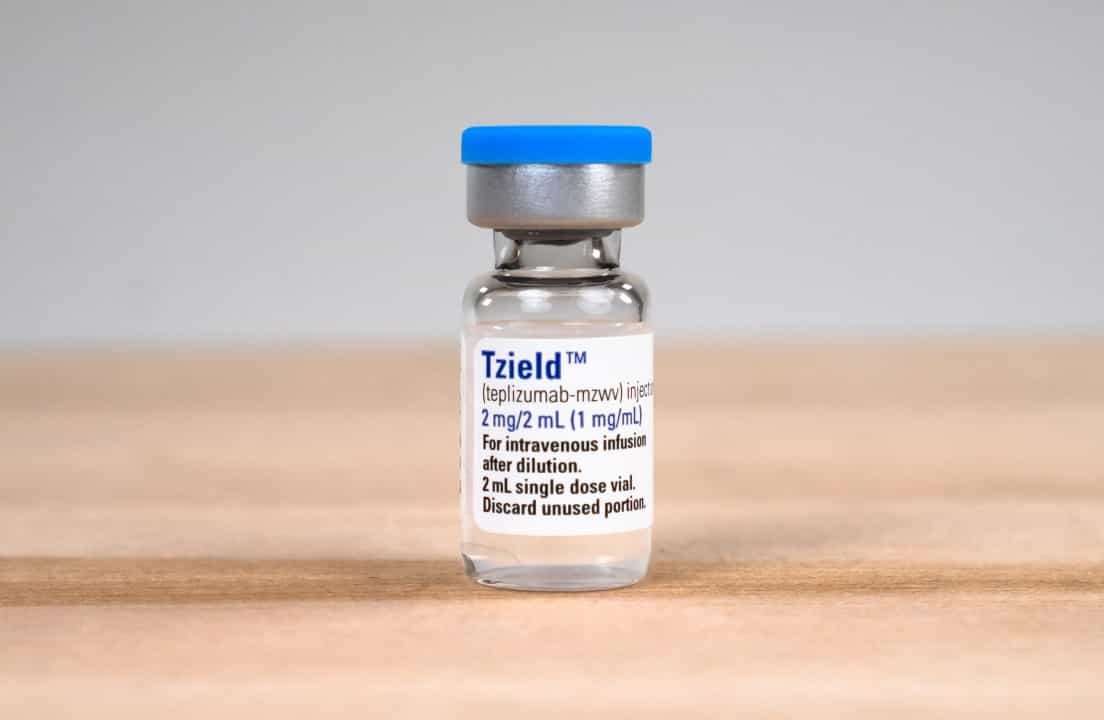
Not every promising therapy makes it through. Roughly 70% of therapies that enter Phase 1 advance to Phase 2, about a third of those go on to Phase 3, and only around 8.5% of everything that starts in Phase 1 ultimately wins approval.
The full path from first trial to market can take 10 to 15 years — a process that takes time, people and money, and depends on convincing regulators that the benefits outweigh the risks.
Clinical Trial Eligibility: How It Actually Works
"Strict eligibility criteria in T1D clinical trials don't mean some patients matter less than others," Rodriguez says. "It means that the study is trying to match that therapy to the people for whom it is safest and most scientifically meaningful to test it."
A few of the most common factors:
● Age often serves as a safety and consistency filter tied to the biology being studied, rather than a statement about who can benefit. Some therapies target newly diagnosed children, while others focus on long-standing adult disease.
● Duration of diabetes matters because early on, many people still have measurable C-peptide, a marker of how much insulin the body is still producing on its own, while after years of living with T1D that production is often gone. A therapy designed to preserve remaining beta cells needs a different population than one designed to replace cells that no longer exist.
● HbA1c gives researchers a broad picture of glycemic control; very high or very low levels can each complicate what a trial is able to measure.
● Complications and hypoglycemia history help researchers understand how medically complex a candidate's diabetes is, and whether a trial's added visits and procedures carry more risk for a particular person.
There's an important nuance for adults, especially those diagnosed later in life: LADA (latent autoimmune diabetes in adults) often doesn't follow the same pattern as childhood-onset T1D. Adults may not present with dramatic diabetic ketoacidosis (DKA) and can lose insulin production much more slowly, creating a wide spectrum of disease stage that doesn't map neatly onto age alone.

Stage-based thinking — where's your body at right now — can be more useful than age when it comes to figuring out which trials might actually be a fit.
Questions to Ask Before You Join
Qualifying on paper is only part of the decision. It's worth thinking through whether a trial fits your life, and asking:
● What phase is the study in, and what is it trying to learn?
● Where would treatment actually happen, and how experienced is that site with this specific procedure?
● What does participation actually involve — blood draws, scans, hospital stays, an extended follow-up period after the main study ends?
● Can the study team explain, in plain language, the purpose, requirements, risks and benefits?
● What are the odds of being placed in a placebo group, and would participants in that arm later have the option to receive the treatment once the study concludes?
"That's not a rule," Dr. Pennington notes, "but I think it'd be important to ask."
How to Find and Research a Trial
ClinicalTrials.gov is the best starting point for anyone curious about a specific study. A trial's page typically includes its official name and unique trial ID, an overview of what's being evaluated, contact and location information, and a participation criteria section — though that list often isn't exhaustive, and specific questions are best directed to the study's own recruitment team.
You may also come across trials labeled something like "Phase 1/2" or "Phase 2/3" — these are known as seamless trials, which combine two phases into one continuous study rather than pausing between them, an increasingly common way to move research along more efficiently.

One important thing to know: the information on ClinicalTrials.gov is submitted and updated by a study's investigators, not verified by the FDA or another government body.
"Press releases are useful for knowing what the team wants the public to hear," Rodriguez says, "but they are not a substitution for actual study record or peer-reviewed papers." That makes it worth cross-referencing a company's press releases with actual published, peer-reviewed results.
When reading published results, pay attention to who was studied, how many people were enrolled, what the primary endpoint was and whether the results reflect early safety data or true efficacy.
What to Know Before You Join a Type 1 Diabetes Study
It also helps to know a few practical things before joining a study — details that aren't always spelled out in the paperwork you're given:
● Travel and reimbursement vary widely. Some trials have a single site; others run across hundreds of locations nationwide. Many cover travel, lodging and a per-visit stipend, but the frequency of required visits — and whether that's realistic for your life — is worth asking about upfront.
● Insurance can matter indirectly. A trial itself typically doesn't require specific insurance, but if a study requires you to already have a device like a continuous glucose monitor (CGM), your coverage for that device can affect whether participation is practical.
● Not everything that could exclude you is written down. A trial's formal criteria may not mention a health issue that your own doctor still has concerns about. That's a reminder that the decision to participate sits at the intersection of a trial's stated criteria and your own relationship with your care team — both are worth weighing.
● Trust matters over time. For people who've participated in multiple trials, a research team's familiarity with your history — and yours with them — can shape how comfortable the process feels, visit after visit.
How to Get Involved in Type 1 Diabetes Research
If you're drawn to the idea of contributing to research — whether through a clinical trial, a survey-based study, or simply staying informed — start with ClinicalTrials.gov, ask direct questions of any research team you're considering, and loop in your care team along the way.
Clinical trials will shape what treatment for T1D looks like a decade from now, and the people willing to ask good questions and step forward are part of what makes that progress possible.


.webp)


.webp)












.jpg)






%20(1).jpg)
.jpg)
.jpg)
.jpg)
.jpg)
.jpg)
.jpg)
.jpg)
.jpg)
.jpg)
.jpg)
.jpg)
.jpg)
.jpg)
.jpg)

.jpg)

.jpg)
.jpg)


.jpg)
.jpg)
.jpg)
.jpg)
.jpg)

.jpg)
.jpg)


.jpg)





.webp)
.svg)