


T1D Guide
T1D Strong News
Personal Stories
Resources
T1D Misdiagnosis
T1D Early Detection
Research/Clinical Trials
Screening Around the World: How Different Countries Approach Early Detection of Type 1 Diabetes
Across the world, approaches to early screening for type 1 diabetes (T1D) vary dramatically depending on healthcare systems, national priorities, and access to resources. In some countries, screening is embedded in structured research programs that identify autoimmune activity long before symptoms appear.


In others, access depends on whether families actively request testing, while in lower-resource settings, even basic diagnostic pathways can be difficult to access.
The perspectives here were shared by members of the global diabetes community who participated in a private WhatsApp group run by Voices in Action (VIA) Diabetes. These lived experiences provide a real-world snapshot of how screening is implemented across different countries.

United Kingdom: Research-Led Early Detection
Melissa explains that in the United Kingdom, early screening for type 1 diabetes is primarily conducted through research programs rather than routine healthcare screening. Children can be screened through the study, while adults may be included in the T1DRA Study.
The ELSA Study focuses on identifying children and adolescents who may already be in the earliest stages of type 1 diabetes by testing for islet autoantibodies. These immune markers can appear years before symptoms develop, indicating that the immune system has already begun attacking insulin-producing cells in the pancreas.
Children identified through this process are not immediately diagnosed; instead, they are followed over time and may be offered the opportunity to participate in prevention studies. The T1DRA Study extends this approach into adulthood, reflecting a growing recognition that type 1 diabetes can develop at any age.
Together, these programs reflect a research-driven system aimed at understanding and detecting disease earlier, although they are not yet part of routine national screening.
John Story is a UK-based advocate who launched the “Lyla’s Law” campaign after the death of his two-year-old daughter, Lyla, from undiagnosed type 1 diabetes and diabetic ketoacidosis (DKA) in 2025. His campaign calls for a “test, don’t guess” approach in primary care, encouraging immediate blood glucose or urine testing when children present with possible diabetes symptoms rather than relying solely on clinical judgment.

The petition gathered over 120,000 signatures and was debated in the UK Parliament in 2026, sparking national discussion about earlier detection and missed diagnoses in children, although the government has not committed to introducing universal screening.
Slovakia: Specialist-Driven Access
Miroslava Calegari reported that in Slovakia, screening is not part of a national program but can be arranged proactively through endocrinologists. Families who are aware of the option can request testing, and specialists may then arrange antibody screening or other relevant assessments.
However, this access depends heavily on patient initiative. Screening is available, but it is not systematically offered to the general population. As a result, early detection is largely shaped by awareness and willingness to engage with specialist healthcare services.
Indonesia: School-Based Preventive Health Checks
Anita Sabidi described Indonesia’s approach, where screening is embedded in a broader public health program known as CKG (Cek Kesehatan Gratis – Free Medical Check-up).
This program provides free health screenings for children starting in elementary school. Rather than focusing specifically on type 1 diabetes, it covers general health indicators such as blood sugar levels, heart health, kidney function, height, and weight.
The goal is preventive health at a population level, identifying common risks early and monitoring overall well-being rather than targeting a single disease. This reflects a broad, community-wide health strategy rather than disease-specific screening.
Italy: Regional Variation and Patient Initiative
Miroslava also described Italy, where screening practices vary significantly by region. Although there has been legislative interest in early screening for type 1 diabetes, implementation is not yet uniform nationwide.
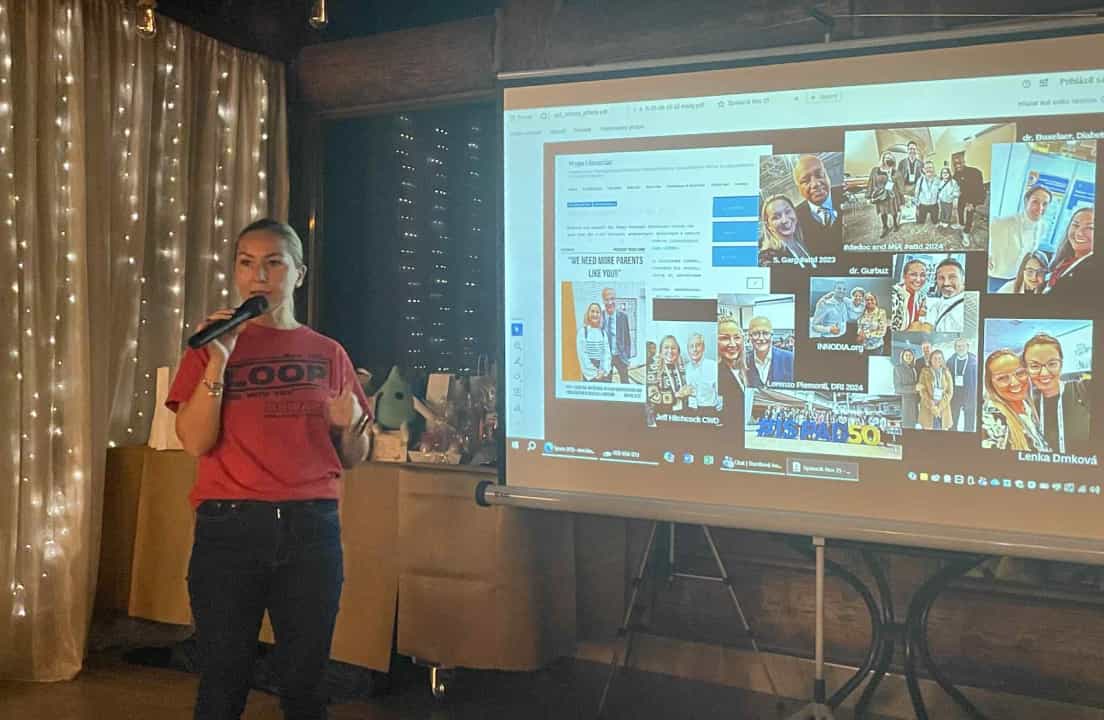
In practice, families often need to actively request screening, particularly in cities such as Milan. Miroslava shared her own experience of having to pursue screening for her child rather than being automatically included in any structured program. This results in a system in which access exists but depends heavily on awareness and proactive engagement with healthcare providers.
Saudi Arabia: Targeted High-Risk Screening
Asra Ahmed explained that in Saudi Arabia, the Riyadh Early Screening Program, also known as VISION-T1D, developed by King Saud University Medical City, is among the first of its kind in the region.
This program focuses on children aged 2 to 18 years who have a first-degree relative with type 1 diabetes. It is therefore not a population-wide screening initiative but a targeted one aimed at high-risk families. Screening includes islet autoantibodies, genetic markers, and immunological indicators of early autoimmune activity. The goal is to detect disease before symptoms appear, allowing for early monitoring and potential future intervention.
However, Asra notes that the program remains limited in reach, and there is no nationwide universal screening system. Families often need to seek out access themselves, meaning awareness remains an important factor.

Burundi: Limited Access and Need for Resources
Iranezereza Lolita reports that in Burundi, screening for type 1 diabetes is not easily accessible. There is no structured national screening program, and diagnosis often occurs only after symptoms become apparent.
Healthcare infrastructure limitations, low awareness, and resource constraints contribute to delayed detection. She also highlights the need for improved education, better healthcare resources, and stronger diagnostic capacity to support earlier diabetes diagnosis.
Kuwait: Integrated Healthcare and Research Screening
Batool Adawi explains that in Kuwait, diabetes screening is available through primary healthcare centers, Ministry of Health hospitals, and specialized diabetes clinics.
In addition to this clinical access, Kuwait also has research-based screening programs for T1D, particularly for first-degree relatives of people living with the condition. These programs are conducted through institutions such as the Dasman Diabetes Institute and government hospitals.
They include islet autoantibody testing, immunological assessment, and genetic screening to identify early autoimmune activity before clinical diagnosis. This creates a system that combines routine access to healthcare with advanced, research-driven early detection.
.jpg)
Syria: Fragmented Multi-Provider Access
Batool also describes Syria as having a mixed healthcare system where screening is available through public hospitals, Ministry of Health clinics, private laboratories, and NGO-supported health centers. However, this does not constitute a unified national screening program. Instead, access depends on service availability and location. Screening exists in multiple forms, but delivery is fragmented and inconsistent.
Early detection is therefore possible but not systematically organized nationwide.
Global Overview: A Patchwork of Systems
Taken together, these contributions from the VIA Diabetes WhatsApp community illustrate a highly uneven global landscape: In countries like the United Kingdom and Kuwait, screening is strongly linked to research and specialized programs that detect autoimmune activity before symptoms develop. Saudi Arabia represents a targeted high-risk approach, focusing on families with known genetic risk.
In Slovakia and Italy, screening is available but depends heavily on patient initiative and access to specialists. Indonesia takes a broader public health approach, embedding screening into school-based general health checks rather than disease-specific programs. Meanwhile, Syria reflects a fragmented, multi-provider system, and Burundi highlights the challenges of limited healthcare infrastructure, where even basic access to screening is not guaranteed.
Across all these settings, one consistent theme emerges: early detection is increasingly possible from a scientific perspective, but access to it remains highly dependent on geography, healthcare systems, and awareness.

These lived experiences shared by members of the Voices in Action (VIA) Diabetes global community highlight not only the scientific progress in the early detection of type 1 diabetes, but also the stark differences in how that progress is distributed worldwide. While some countries are already identifying individuals in the silent, pre-symptomatic stages of the disease, others are still working to ensure basic access to diagnostics. Between these extremes lies a wide spectrum of approaches shaped by policy, resources, and healthcare structure.
Ultimately, the global picture is one of rapid scientific advancement paired with uneven implementation. The challenge moving forward is not only to improve screening technologies but also to ensure they are more equitably accessible, regardless of where someone lives or was born.


.webp)

.jpeg)
.webp)


























.jpg)







.jpg)






%20(1).jpg)




.jpg)
.jpg)
.jpg)
.jpg)
.jpg)

.jpg)
.jpg)

.jpg)
.jpg)
.jpg)
.jpg)
.jpg)
.jpg)
.jpg)
.jpg)

.jpg)
.jpg)
.jpg)
.jpg)
.jpg)

.jpg)

.jpg)
.jpg)

.jpg)

.jpg)
.jpg)


.jpg)
.jpg)


.jpg)


.webp)
.svg)