T1D Guide
T1D Strong News
Personal Stories
Resources
T1D Misdiagnosis
T1D Early Detection
Research/Clinical Trials
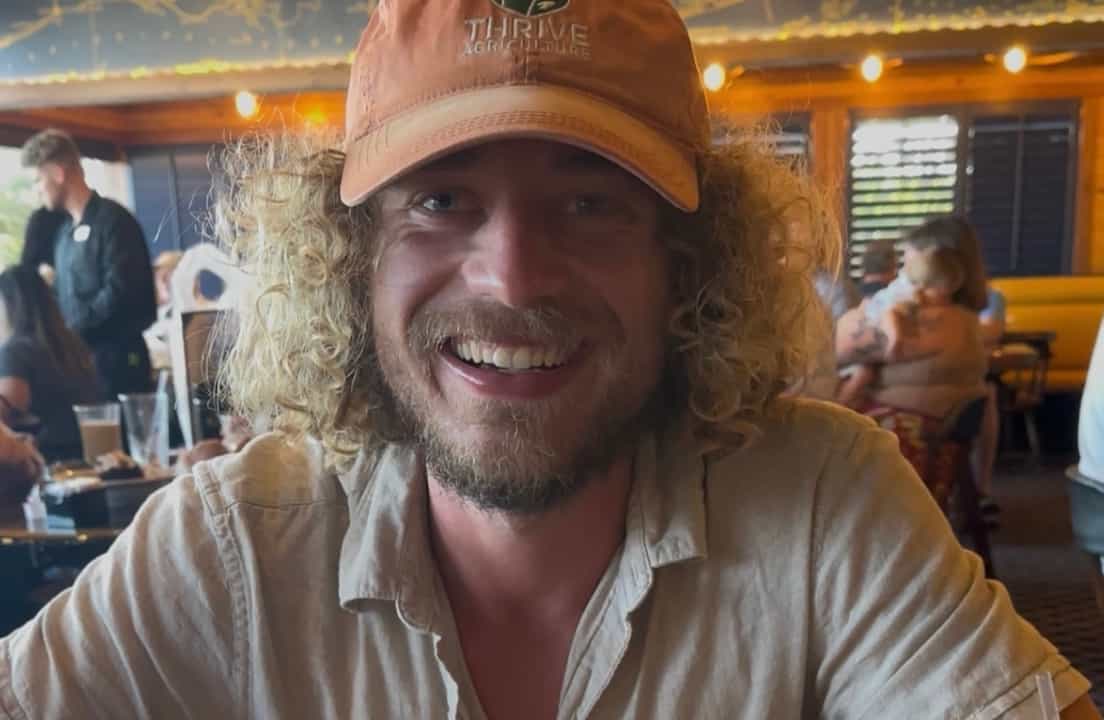
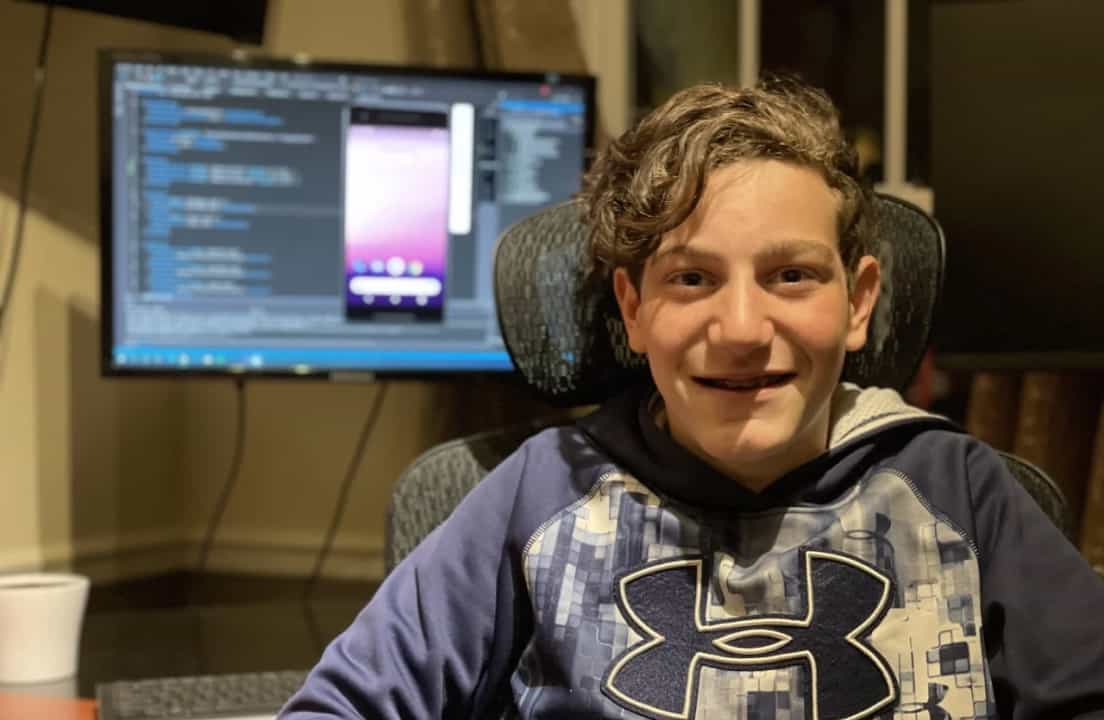
Meet Irakli Kurtanidze, Founder of Sugar Sense, a Cross-Platform CGM Companion App
One night, Irakli Kurtanidze slept through a low alert from his continuous glucose monitor (CGM). Fortunately, it wasn’t a life-or-death emergency, but it shook him enough to develop Sugar Sense, a cross-platform CGM companion app that adds an extra layer of protection.


Note: Sugar Sense is a companion app and not a medical device. Always confirm readings with your official CGM app or blood glucose meter before making treatment or insulin dosing decisions.
Based in Kutaisi, Georgia, Kurtanidze has lived with type 1 diabetes (T1D) for over 12 years and wears a CGM every day. According to the IDF’s Diabetes Voice, access to insulin pumps and continuous glucose monitors varies significantly across small and Eastern European nations.
While wealthy Western and Northern European countries offer government-funded or insurance-covered access to diabetes supplies, smaller nations often face limited public coverage and higher out-of-pocket costs, as in Georgia.
That didn’t stop Kurtanidze from researching and acquiring his CGM, which he had to do through Germany. He’s also developed a cross-platform continuous glucose companion app.
Who is Irakli Kurtanidze?
Like most at the time of his diagnosis, Kurtanidze knew nothing about diabetes and had no family history. “I was away from home when the thirst started, the kind you cannot switch off, with bathroom trips around the clock.”
He called his mother, who works in a medical laboratory. Without hesitation, she said, “Come home; we need to check your blood sugar.”
Kurtanidze went straight to his mother’s lab, and the glucose reading read 470 mg/dL. From his mother’s tears, he knew it wasn’t good news. “I learned my diagnosis from her face before any doctor said a word.”
He caught it before severe diabetic ketoacidosis (DKA) complications arose, and Kurtanidze said, “I owe that to my mother.”
After a brief hospital stay, he began using insulin pens for multiple daily injections, a regimen he continues today. Kurtanidze followed up at a diabetes specialty clinic, where he received less-than-encouraging guidance rooted more in fear and rules than support.
“I’m sure the intention was good, and careful checking is not wrong in itself, but rules without understanding just add stress.” For the first year or two, he was afraid of food and worried about his future. “It was a dark period, and I won’t romanticize it.”
Looking back, Kurtanidze said, if he could sit next to that 19-year-old, he would say, “Diabetes is not a verdict. It is a companion, an annoying one, but you can live a full life with it. I know because I do: today, at 31, I have a wife and three children; I run two companies, one of them Sugar Sense, and I still work out at the gym. Diabetes no longer decides the quality of my life.”
A Turning Point: Discovery & Recovery
Like many individuals with T1D, the advent of continuous glucose monitors was revolutionary. For Kurtanidze, it was life-changing. Kurtanidze did his own research and, piece by piece, started putting his life back together. “The more I understood why my glucose did what it did, the simpler everything became.”
Through his own research, he discovered a sensor called the FreeStyle Libre, and he learned that most doctors in Georgia at the time did not know CGMs existed. He found that he could order the sensor online in Germany, so he had it delivered. “For all I know, I was one of the first people in Georgia walking around with a sensor on my arm.”
Kurtanidze was sold and has worn CGMs consistently since that first day. “For adults in Georgia, there is still no insurance or state program that covers sensors, so I have paid for every one out of my own pocket. Things are improving: children under 18 now get sensors covered by the state, which would have sounded like science fiction in 2014.”
Founder and CEO of Sugar Sense
One of Kurtanidze’s greatest fears, along with most T1Ds, is experiencing nighttime lows. “One night, years into wearing sensors, I did not wake to an alarm. Nothing terrible happened: I woke later on my own, treated the low and went back to sleep. But I sat on the edge of the bed afterward, wide awake, with one question in my head: what if I had not woken up? By then I had a young family, and I was the only person in the house who could see my numbers.”
Kurtanidze understood he needed protection; not just a louder beep, but layers, so that no single alarm ever has to be the one that saves you. “A warning before the low instead of during the hypo event. An alert that gets through even when the phone is on silent mode, and if I still don’t react, a real phone call.”
The apps from the sensor makers do the essential job, but they are regulated medical devices. “A regulated app cannot move at the speed of today’s technology,” he said. “I understand that completely: for the part that keeps you safe, the caution is right.”
Two years after his diagnosis, Kurtanidze was studying business administration at college and working with SEO and marketing. With his background and training, Kurtanidze was well positioned to close the gap. He’d been earning his own income, helping his family since age 14.
“I live with this condition every hour of the day, and building and growing online projects is what I have done since I was a teenager. I knew exactly what was missing, and I knew how to build it.”
Enter Sugar Sense
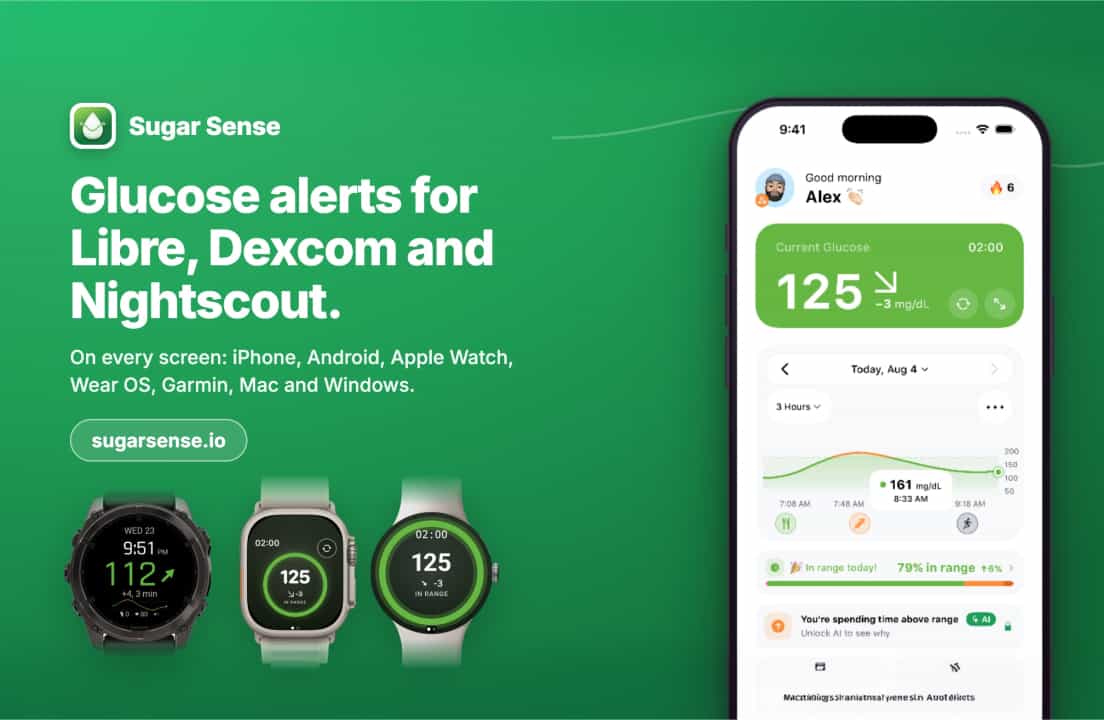
Sugar Sense is a companion app to your CGM that provides an extra level of safety if a single CGM alarm doesn’t wake you up in the middle of the night. To be clear, Sugar Sense does not dose insulin. It takes readings from CGMs and makes them visible across other available platforms and devices. Treatment decisions belong with you and your healthcare team.
The Sugar Sense app sends an alert before a low is likely to happen, and an urgent low breaks through silent mode.
Additionally, Kurtanidze said the app can phone you with an automated voice that tells you your glucose is low and asks you to press 1 if you are okay. “If you don’t respond, it calls again, then calls the emergency contact of your choice and asks them to check on you.” “Those calls work in 39 countries today,” he said.
Kurtanidze built the app for himself, but he never forgot what it was like to be 19, scared and alone. “Nobody should have to feel that, in Georgia or anywhere.”
Kurtanidze has received messages from people in varied corners of the world describing the same worries. “They are the reason I can say without hesitation that I am proud of what Sugar Sense has become, and they are what makes us want to build more.”
Sugar Sense Compatibility
Kurtanidze’s team started building Sugar Sense in 2024, with its first version reaching the App Store in April 2025. In July 2026, they released the full product, “The one I had in my head from the start. It has grown every month since, with people joining from all over the world. Today it is built by a small team and speaks seven languages.”
“Your glucose is wherever your eyes already are. I check my number dozens of times a day, and I did not want every glance to mean picking up my phone. I wanted it in the corner of my laptop while I work, on my wrist, in the car, or spoken aloud when my hands are full.”
CGMs Supported by Sugar Sense
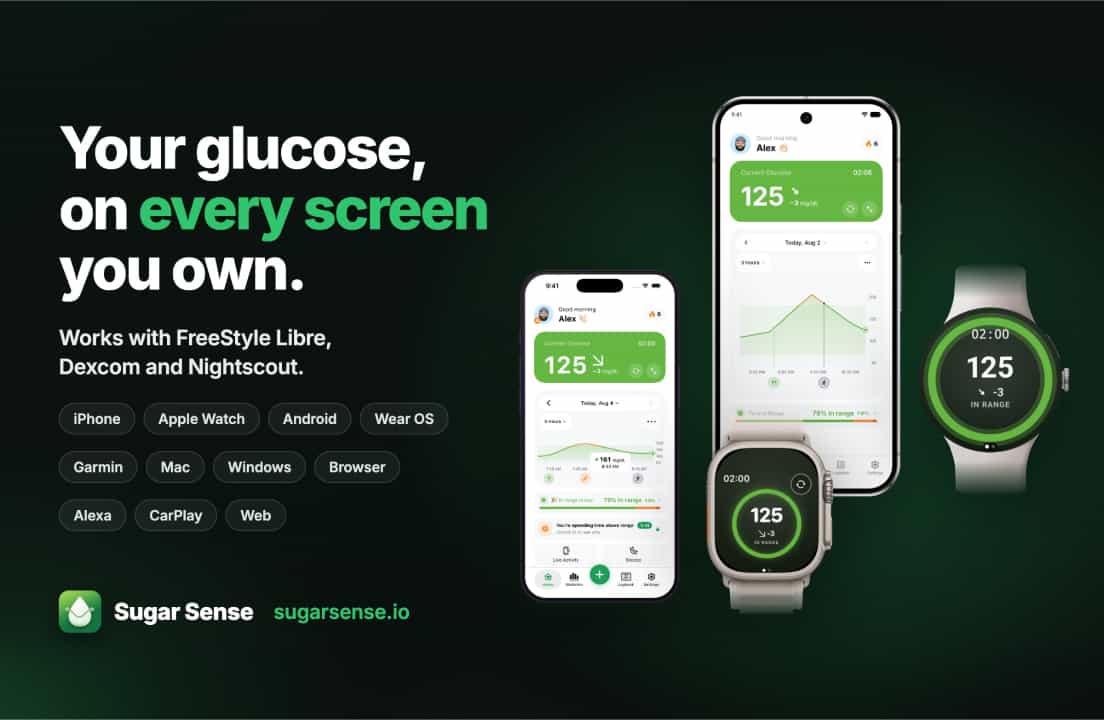
Sugar Sense connects with Abbott’s FreeStyle Libre 2, 2 Plus, 3 and 3 Plus via LibreLinkUp, with Dexcom G6, G7 and ONE via Dexcom Share, and with any Nightscout site.
The app warns you early when glucose is heading low, and it shows the same reading on iPhone, Apple Watch, Android, Wear OS and Garmin. It also runs in the Mac menu bar, the Windows system tray, browser extensions, CarPlay and Amazon Alexa, with a web dashboard at app.sugarsense.io.
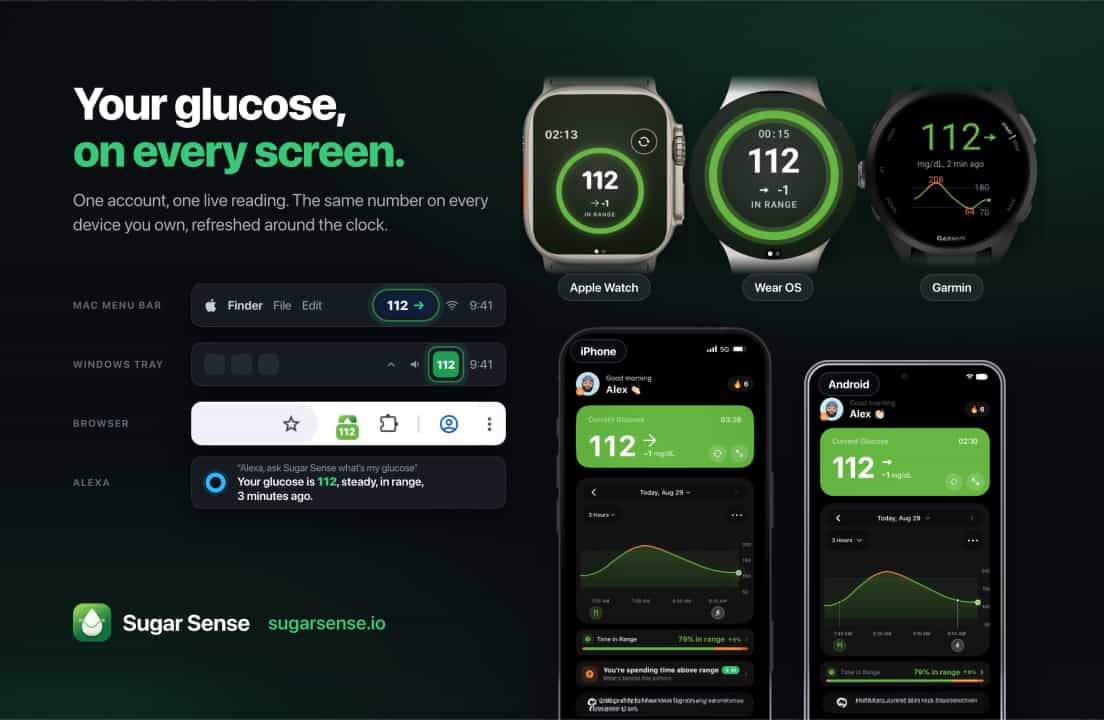
This fall, Apple granted Sugar Sense the entitlement for a full CarPlay app, so your glucose and your alerts now have their own place on the car screen.
“You can connect your data to your own AI assistant: ChatGPT, Claude, Gemini and others,” Kurtanidze said. “Not only glucose but the whole picture from your logbook: meals, activity, insulin records and notes. It is read-only, it is entirely your choice, and you can disconnect it at any time. Then you can simply ask your assistant how your nights went this week.”
“Sugar Sense runs on more screens than any diabetes app we know of,” he added, “and we would gladly hear about one we have overlooked.”
“We try to cover every screen where a glucose number can live. My own time in range sits between 85 and 90 percent, and I credit seeing the number everywhere for holding it there.”
Because Sugar Sense also connects to Nightscout, glucose readings from any CGM setup you route into Nightscout show up in Sugar Sense too.
“To be clear, Sugar Sense does not replace the official app from your sensor maker,” Kurtanidze said. “It works alongside it and takes care of everything around the number, where we can move fast. Alerts are built against alarm fatigue. When everything beeps, you eventually stop hearing the beep that matters. So urgent lows are loud, highs are patient, and every alert can be tuned to your own day.”
Sugar Sense’s Care Circle
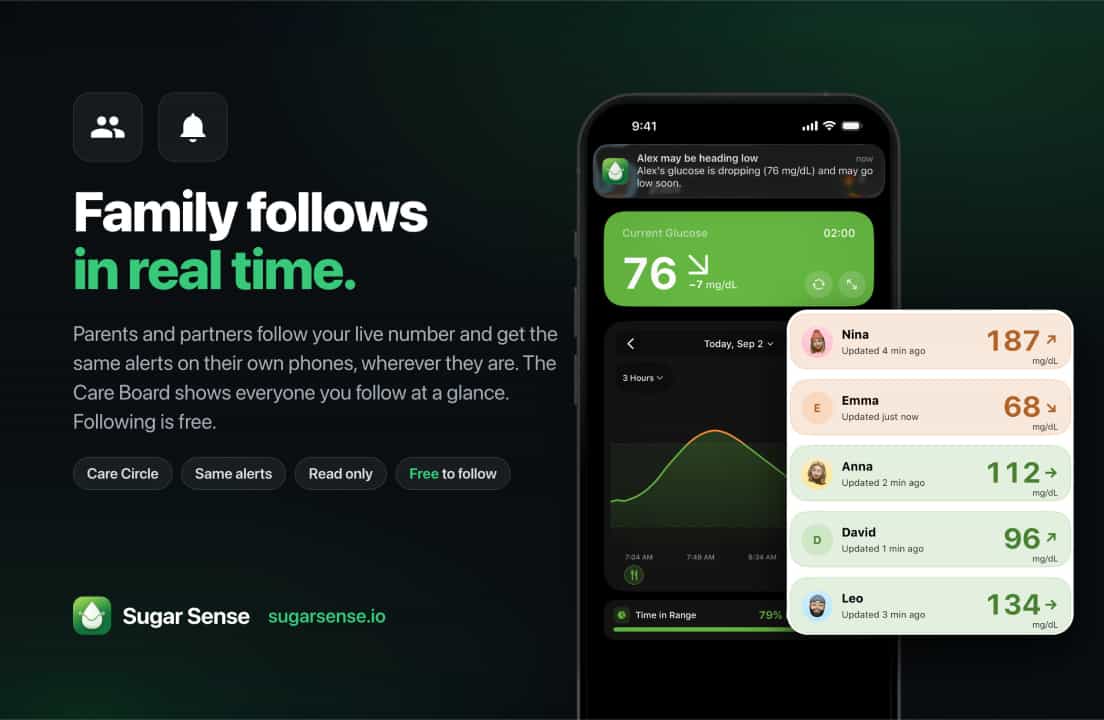
Care Circle lets family and friends follow along on their own phones and receive the alerts, with their own alert settings. Following is free, and up to 10 people can follow one person.
How Much Does the App Cost?
Sugar Sense offers a Free forever version for iOS and Android with real-time glucose monitoring, high/low alerts, the early heading-low warning, family sharing through Care Circle, glucose logging, time in range statistics, and Apple Health/Android Health Connect integration.
Sugar Sense Pro (Premium) adds:
- AI food scanning and glucose pattern insights.
- The detailed night view in the Morning Report and PDF report exports.
- Live glucose displays on Apple Watch, Wear OS, and Garmin.
- Lock screen widgets, Dynamic Island, and Apple CarPlay integration.
- Emergency calling for severe lows.
- Medication reminders and calendar sync.
- Connecting your own AI assistant (ChatGPT, Claude, Gemini and others).
Pricing:
- Solo: $39.99 a year or $9.99 a month, for one person.
- Family: $59.99 a year, shares Premium with up to six people in one Care Circle.
Kurtanidze emphasized that the safety net version is free. “Real-time monitoring, alerts and family following cost nothing. A parent, a partner or a friend follows on their own phone, with their own alert settings.” He added, “Premium pays for our servers and our work, and covers what costs money to run or adds comfort: the phone calls, the watch apps, the AI features, reports and integrations.”
Sugar Sense developers have learned a great deal from users and have adapted the app with quiet hours for alerts and alerts that clear themselves once you are back in range. “In a real sense, the people who use Sugar Sense are the ones developing it now,” he said.
Three Practical Things
For newly diagnosed people with type 1, Kurtanidze offers this sage advice: “The dark days at the start are normal, so do not be ashamed of them. Learn your own condition, and keep asking why until it makes sense: rules you understand are easy to live with; rules you fear are not.” Most importantly, “Do not carry the numbers alone. If you can get a CGM, get one, share your glucose with someone who loves you, and find other people with type 1.”
Sugar Sense is free to download on the App Store and Google Play, and Premium starts with a free trial. For more information, visit Sugar Sense. To read Kurtanidze’s blog articles, go here.